
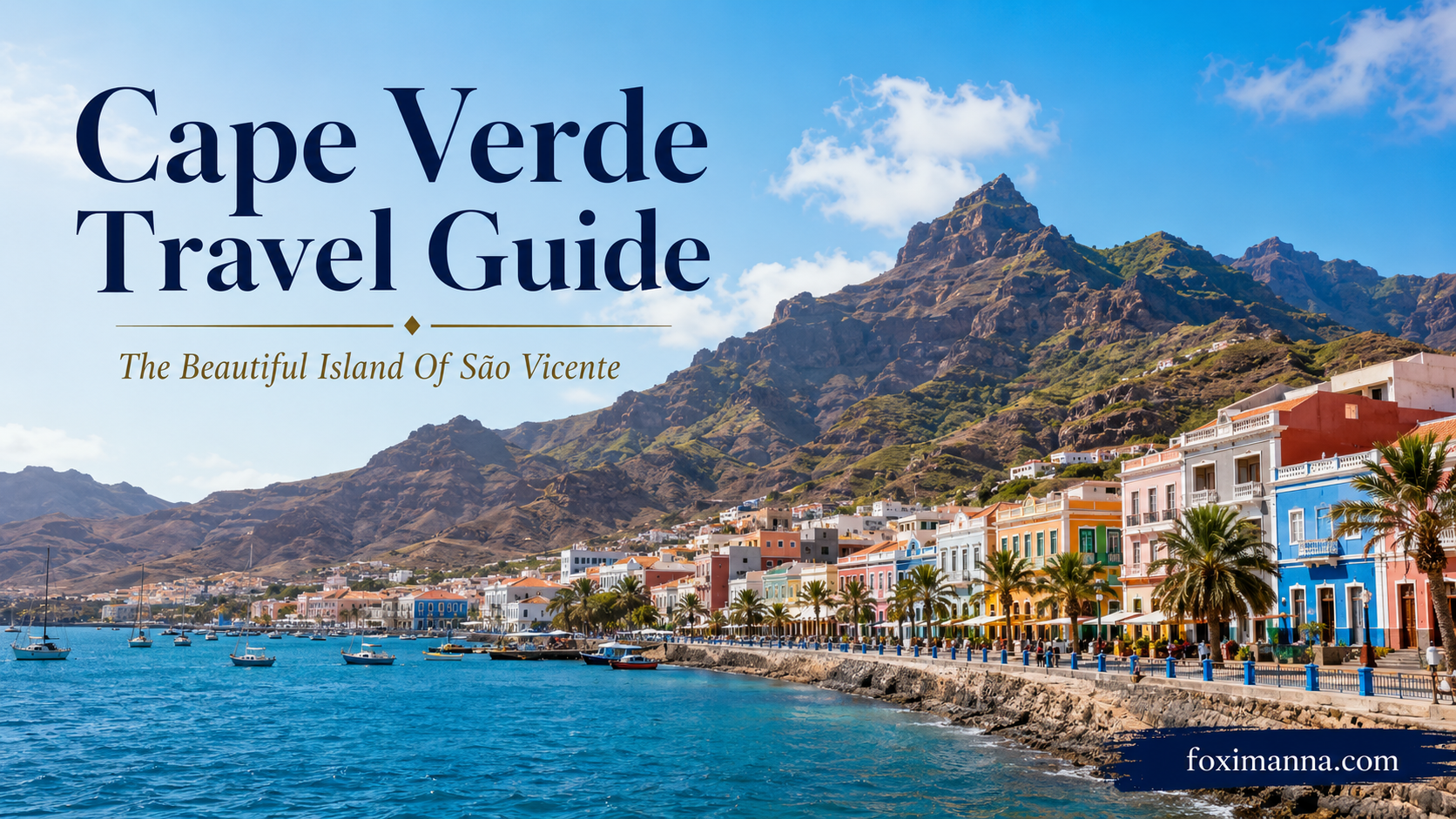
Cape Verde is one of those places that often surprises travellers. Many people know the name because of package holidays to Sal or Boa Vista, where long beaches, resort hotels and warm Atlantic sunshine attract visitors looking for winter sun. But beyond the better-known beach islands, Cape Verde has another side that feels deeper, more cultural and more dramatic. That side can be found on São Vicente.
São Vicente is not simply another island with pretty views. It is a place where music, mountains, harbour life, colonial architecture, African identity, Portuguese influence and Atlantic island calm come together in a way that feels completely different from the usual tropical holiday image. At the centre of it all is Mindelo, a colourful port city often described as the cultural capital of Cabo Verde. Above the city rises Monte Verde, the island’s highest point, where dry volcanic land gradually gives way to cooler mountain air and sweeping views across the ocean.
Officially known as the Republic of Cabo Verde, the country is an archipelago in the Atlantic Ocean made up of ten volcanic islands. São Vicente itself covers around 227 square kilometres, and Monte Verde reaches about 774 metres above sea level, making it the highest point on the island.
What makes São Vicente so memorable is not one single attraction. It is the feeling of movement between contrasts. You can begin the morning walking along the waterfront of Mindelo, watching people exercise, drink coffee, meet friends and gaze across Porto Grande Bay. Later, you can wander through streets lined with colourful colonial-era buildings, hear music drifting from bars and restaurants, and explore markets that show the rhythm of everyday island life. By the afternoon, you can drive upwards through hillside neighbourhoods until the city opens beneath you and the road begins curling towards Monte Verde.
This is the Cape Verde that many travellers miss. It is not only a beach escape. It is an island of views, culture, order, music and identity. For travellers who want somewhere warm, scenic and fascinating without feeling overdeveloped or overly commercial, São Vicente deserves far more attention.
Cape Verde At A Glance
Cape Verde sits in the Atlantic Ocean off the coast of West Africa. It is close enough to the African mainland to share deep cultural, historical and geographic connections with the region, yet far enough into the ocean to feel like its own world. The islands are volcanic, windswept and varied, with landscapes ranging from flat sandy islands to rugged mountain terrain.
The country is often called Cape Verde in English, but its official name is Cabo Verde. This matters because the name reflects the country’s own identity and Portuguese-language heritage. Travellers may see both names used in guidebooks, flight searches, hotel listings and official travel advice.
Although Cape Verde is geographically small and has limited natural resources, it has developed a reputation as one of Africa’s more stable democracies. The World Bank describes Cabo Verde as a small island nation that has made notable social and economic progress since independence in 1975, supported by political stability, tourism, foreign investment and remittances.
Tourism plays a major role in the country’s economy. According to the World Bank’s 2025 economic update, the services sector, particularly tourism, was the main driver of growth in 2024, with tourist arrivals reaching 1.18 million. This explains why Cape Verde has become increasingly visible to travellers from Europe, especially those searching for sunshine during colder months.
However, Cape Verde is not one single type of destination. Each island has its own character. Sal and Boa Vista are best known for beach resorts, sand dunes and easy fly-and-flop holidays. Santiago has the capital, Praia, and important historical sites. Santo Antão is loved for hiking and green valleys. Fogo is famous for its volcano. São Vicente is where many travellers go for culture, music, city life, mountain views and a more local Atlantic atmosphere.
São Vicente belongs to the Barlavento, or windward, island group. Its capital and main city, Mindelo, is the island’s beating heart. The island is dry for much of the year, with rocky hills and volcanic scenery, yet it also has beaches, fishing villages, music festivals, harbour views and mountain landscapes.
For first-time visitors, São Vicente is ideal if you want a Cape Verde trip that feels less like a standard resort holiday and more like a real island experience. It offers enough comfort for travellers, but still keeps a strong sense of place. You can enjoy good food, walks by the sea, live music, historic streets, viewpoints, local markets and day trips without feeling overwhelmed.
It is also a useful base for combining islands. Many travellers visit São Vicente before continuing to Santo Antão, which is known for some of the most dramatic hiking landscapes in the archipelago. This makes Mindelo not only a destination in its own right, but also a gateway to one of Cape Verde’s most spectacular nature islands.
Why São Vicente Feels Different From Other Island Escapes
São Vicente does not fit neatly into the typical image of a tropical island. It is not covered in thick jungle. It is not dominated by endless resort strips. It is not simply a place where visitors arrive, stay beside a swimming pool and leave with little sense of the local culture. Instead, São Vicente feels alive, lived-in and layered.
The island’s beauty is more rugged than soft. The land is shaped by volcanic hills, dry slopes, brown ridges, rocky coastlines and sudden views of deep blue sea. In some places, the scenery feels almost lunar. In others, especially near Monte Verde, the land becomes greener and more varied. The contrast between dry volcanic terrain and fresh Atlantic light gives São Vicente a distinctive look.
Mindelo adds another dimension. It brings colour, music and architecture to the island. Cape Verde’s official tourism site describes Mindelo as vibrant and colourful, known for its musical scene and colonial architecture. This is one of the reasons São Vicente feels more cultural than many beach destinations. You do not come only to look at scenery. You come to feel a rhythm.
Music is central to the island’s identity. São Vicente has produced some of Cape Verde’s most important musicians, writers and cultural figures. The island is strongly associated with Cesária Évora, the legendary singer whose voice carried Cape Verdean music to audiences around the world. The official Visit Cabo Verde site also notes São Vicente’s connection with Cesária Évora and describes the island as the capital of Cape Verdean music.
This cultural confidence gives the island a special atmosphere. In Mindelo, music is not just entertainment for tourists. It is part of daily life. It appears in bars, restaurants, festivals, family gatherings and public celebrations. Travellers who enjoy places with soul will quickly understand why Mindelo is often spoken about with affection.
São Vicente also feels more balanced than many destinations where tourism has created sharp contrasts between polished visitor areas and neglected local districts. One of the most striking impressions when moving through Mindelo is how smoothly many neighbourhoods seem to blend into each other. The transition from waterfront to city streets, from commercial areas to residential hillsides, and from modest homes to larger houses often feels gradual rather than jarring.
Of course, no destination is perfect, and visitors should avoid romanticising any country. Cape Verde still faces challenges, including vulnerability to climate change, dependence on imports and economic pressures common to small island states. The World Bank notes that Cabo Verde remains vulnerable to external shocks and climate-related events. But as a visitor, São Vicente can still give a strong impression of civic pride, public order and local identity.
Cleanliness is another part of that impression. In many parts of Mindelo, public spaces appear tidy and well kept. Waterfront areas, streets and squares often feel relaxed and pleasant to explore on foot. This matters because cleanliness influences how travellers experience a city. It makes walking more enjoyable, photography easier and spontaneous wandering more comfortable.
The island is also compact enough to explore without feeling rushed. You can move from Mindelo to beaches, villages and mountain roads in a relatively short time. This makes São Vicente a good choice for travellers who want variety without long internal journeys. In one day, you can experience a historic city, a local market, a beach, hillside viewpoints and the mountain road to Monte Verde.
That variety is the real appeal. São Vicente is not the most famous island in Cape Verde, but it may be one of the most rewarding for curious travellers.
Mindelo And The Beautiful Waterfront Of Porto Grande Bay
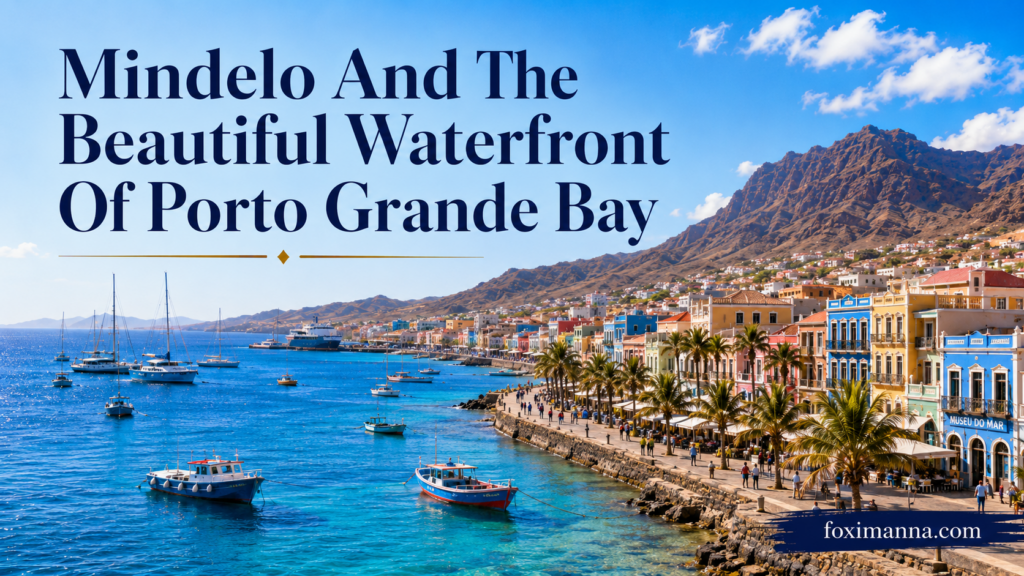
Mindelo is the kind of city that slowly wins people over. It does not need huge monuments or busy tourist crowds to feel memorable. Its appeal comes from the way the city sits beside the water, the colour of its buildings, the calm movement of daily life and the dramatic natural harbour that gives it such a strong sense of place.
The city lies around Porto Grande Bay, one of the most recognisable natural harbours in Cape Verde. From the waterfront, the view opens across the bay towards the surrounding volcanic landscape. Boats move in and out of the harbour, people stroll along the promenade, and the Atlantic light changes throughout the day. In the morning, the city feels fresh and active. In the late afternoon, the waterfront becomes especially atmospheric as the sun lowers and the sea takes on deeper shades of blue.
The waterfront is one of the best places to begin exploring Mindelo. It gives visitors an immediate sense of the city’s rhythm. You may see residents walking, jogging, chatting, relaxing in cafés or simply pausing to enjoy the view. It is not only a scenic space. It is part of the city’s everyday life.
A walk along Avenida Marginal is one of the simplest pleasures in Mindelo. This seafront route connects the harbour area with views towards Laginha Beach, the city’s popular beach close to the centre. Local tourism information highlights Laginha as Mindelo’s city beach, located very close to the centre and reached by walking along Avenida Marginal. For visitors who want an easy mix of city and sea, this is one of Mindelo’s great advantages.
The waterfront also helps explain Mindelo’s history. Its harbour made the city strategically important, especially during the age of Atlantic trade and shipping. Over time, this helped shape Mindelo into a cosmopolitan port city with cultural influences from Africa, Portugal, Brazil and the wider Atlantic world.
That history can still be felt in the architecture. Many buildings in Mindelo reflect Portuguese colonial influence, with colourful facades, balconies, public squares and streets that feel more European than many travellers expect from an African island nation. Yet Mindelo is not simply European in character. It has its own Atlantic identity, shaped by Creole culture, island life, music, migration and the sea.
One of the best ways to enjoy Mindelo is to avoid rushing. Begin with the waterfront, then wander inland through the city centre. Look for public squares, market buildings, cafés, churches, old facades and street scenes. The pleasure is in the details. A painted wall. A doorway. A group of friends talking in the shade. A musician carrying an instrument. A view of the harbour appearing unexpectedly between buildings.
Mindelo is also a good city for travellers who like manageable urban spaces. It is large enough to feel lively, but not so large that it becomes intimidating. Many of its central areas can be explored on foot, especially if you are comfortable walking in warm weather. As always, sensible travel awareness is important, but the general pace can feel relaxed compared with larger cities.
Food is another reason to spend time here. Cape Verdean cuisine reflects African, Portuguese and Brazilian influences. The national dish, cachupa, is a slow-cooked stew usually made with corn, beans, vegetables and either meat or fish. Local seafood, grilled fish and simple island cooking are also part of the experience. If you enjoy eating where local life is visible, Mindelo offers cafés, small restaurants and home-style meals that feel more personal than resort dining.
By night, the city becomes even more closely tied to music. Live performances, bars and restaurants create a warm cultural atmosphere. São Vicente is known for music and nightlife, and travel specialists describe Mindelo as a place where visitors can hear music across pubs, restaurants and nightclubs. For travellers who want Cape Verde beyond the beach, an evening of live music in Mindelo may become one of the most memorable parts of the trip.
Colourful Streets Music Culture And Everyday Island Life
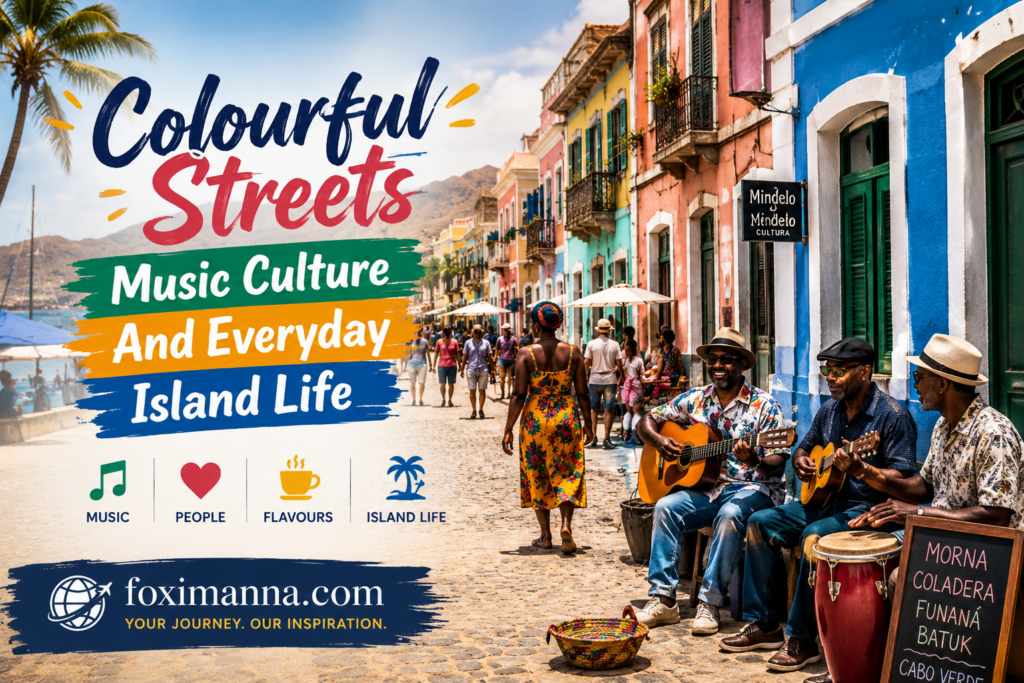
Mindelo’s charm is not limited to its waterfront. The deeper you walk into the city, the more you begin to notice how much of its identity lives in ordinary streets and everyday spaces. This is where São Vicente becomes more than a scenic stop. It becomes a cultural experience.
The city centre is full of colour. Buildings are often painted in soft yellows, blues, pinks, greens and whites. Some are elegant, some weathered, some freshly maintained, but together they create a warm visual character. The streets feel shaped by history without being frozen in the past. There is movement everywhere, but the pace is rarely aggressive.
Public squares are important in Mindelo. They provide meeting points, shade, open space and a sense of community. These are places where people sit, talk, wait, watch and pass through. For travellers, they are useful pauses during a walking route. Instead of treating Mindelo like a checklist, it is better to move slowly from square to street, from café to market, from harbour view to shaded corner.
Markets are especially useful for understanding the city. The official Visit Cabo Verde site describes Mindelo’s Mercado Municipal as a place with more than a century of history, with fresh produce, dry goods, cafés, shops, crafts and other local services. Markets like this are not just attractions. They are part of the practical life of the city.
A market visit gives you a different kind of travel memory. You see what people buy, smell local produce, hear the sounds of conversation and notice the details that never appear in polished resort brochures. For photographers, markets and surrounding streets can be rich with colour and texture, but it is always polite to ask before photographing people closely.
Music remains the soul of São Vicente. The island is closely associated with morna and coladeira, two important Cape Verdean music styles. Even travellers who do not know the musical history before arriving will quickly sense that music is woven into the island’s identity. It is there in the way Mindelo markets itself, in the venues that host live performances, in the memory of Cesária Évora and in the pride residents have in their cultural life.
Carnival is another major expression of Mindelo’s cultural energy. Mindelo’s Carnival is often considered the biggest and most famous in Cape Verde, with music, costumes, parades and street celebrations. Local tourism sources describe Carnival, Baía das Gatas Festival and New Year’s Eve as among Mindelo’s biggest events. Travellers visiting during festival periods should expect higher demand for accommodation and a much livelier atmosphere.
But even outside festival dates, Mindelo has cultural depth. This is important for travellers who cannot plan around Carnival. You do not need to visit during one major event to enjoy the city. A normal evening with live music, a simple meal and a walk near the harbour can still feel special.
The city’s everyday life also reveals a lot about Cape Verde’s wider story. Cape Verde has a large diaspora, with communities across Europe, North America and other parts of the world. This diaspora connection influences culture, investment, music, language and identity. It helps explain why Mindelo can feel both local and international at the same time.
Language adds to this layered identity. Portuguese is the official language, while Cape Verdean Creole is widely spoken in daily life. Visitors who know a little Portuguese may find it useful, but many people working in tourism may also speak some English, French or other European languages. Learning a few polite words still makes a difference and shows respect.
Mindelo is also a place where travellers should pay attention to the idea of morabeza. This Cape Verdean concept is often used to describe warmth, hospitality and friendliness. It is not something that can be reduced to a tourist slogan. It is better understood through small interactions, greetings, conversations and the relaxed human atmosphere that many visitors notice across the islands.
For Foxi Manna readers who enjoy destinations with culture, Mindelo is a reminder that island travel does not have to be only about beaches. Sometimes the most powerful travel experiences come from cities that are small enough to understand, musical enough to feel alive and beautiful enough to stay in your memory long after you leave.
From Hillside Neighbourhoods To Sweeping Harbour Views

One of the most beautiful experiences in São Vicente begins when you leave the flat waterfront and start climbing into the hillside neighbourhoods above Mindelo. The city changes gradually. Streets rise, homes become more spread out, the air feels more open, and Porto Grande Bay begins to reveal itself from above.
This upward movement is one of the best ways to understand the island’s geography. From sea level, Mindelo feels like a harbour city. From the hills, it becomes part of a much wider volcanic landscape. The bay curves below, mountains frame the horizon, and the Atlantic stretches outward in almost every direction.
The hillside areas also show another side of local life. Homes are built to take advantage of views and breezes. Some streets feel residential and quiet, while others offer sudden panoramas that make you stop and look back. As you climb higher, the colours of the city become more striking. Roofs, walls, roads, hills and sea all form a layered picture.
For travellers who enjoy photography, this part of São Vicente is excellent. The best images are not always from the most obvious viewpoints. Sometimes they come from a bend in the road, a gap between buildings or a moment when the harbour appears behind a hillside street. Morning light can be clear and crisp, while late afternoon gives warmer tones.
This gradual transition from city to mountain is also what makes the drive to Monte Verde so appealing. The journey is not only about reaching the summit. The road itself is part of the attraction. It begins in the human world of Mindelo, then slowly moves into open countryside and volcanic terrain.
As the city falls away, the landscape becomes more rugged. The dry slopes remind you that São Vicente is an arid island for much of the year. The earth is often brown, ochre or grey, with sparse vegetation and exposed rock. This might sound harsh, but in reality it gives the island a raw beauty. The lack of dense greenery allows the shape of the land to stand out clearly.
Views back towards Mindelo are among the highlights of the ascent. From above, the city appears tucked into the bay, protected by the natural harbour and surrounded by volcanic forms. The contrast between colourful urban life and bare mountain scenery is striking.
This is also where visitors begin to understand why São Vicente feels different from islands that are only marketed for beaches. Its beauty has height, shape and drama. The cliffs, ridges, slopes and roads create a sense of movement. The island feels sculpted by wind, sea and volcanic history.
If you are driving, it is worth taking your time. Roads can be winding, and stops should be made safely. If you are on a guided tour, ask for viewpoint stops along the way. Many local drivers know the best places to pause for photos. If hiking or cycling, be realistic about heat, wind, sun exposure and fitness.
The hillside route also gives a sense of social continuity. Unlike some destinations where wealthy areas feel completely separated from ordinary neighbourhoods, Mindelo’s residential districts often seem to shift gradually. This gives the city a more cohesive feeling from a visitor’s perspective. It is one of the subtle reasons the island can feel orderly and balanced.
By the time you approach the higher slopes, Mindelo begins to feel far below, even though the distance is not great. This compactness is part of São Vicente’s magic. In a short journey, you can move from waterfront cafés to mountain air, from street music to silence, from harbour life to open Atlantic views.
Monte Verde And The Wild Mountain Road Above São Vicente
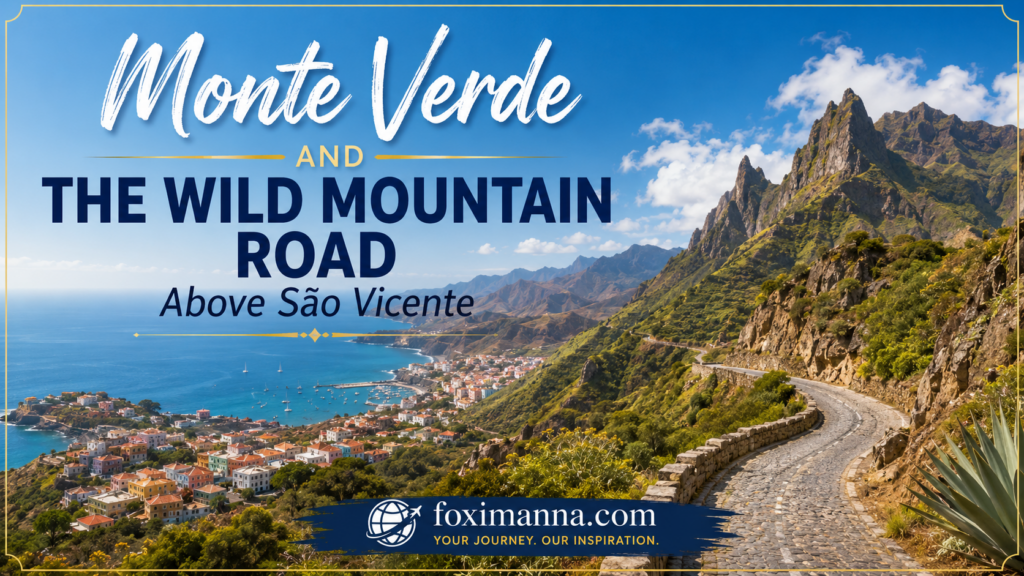
Monte Verde is one of the most rewarding places to visit on São Vicente. Rising to around 774 metres, it is the island’s highest point and one of its most dramatic viewpoints. The name means Green Mountain, and although São Vicente is generally dry, Monte Verde has a different atmosphere from much of the surrounding landscape.
The mountain’s higher elevation helps capture moisture from passing clouds. This creates a greener microclimate compared with the drier volcanic terrain below. The contrast can be surprising. After travelling through arid slopes and rocky land, visitors may suddenly notice more vegetation, cooler air and a softer mountain environment.
The drive to Monte Verde is one of the island’s great travel experiences. The road climbs through rugged scenery, with bends that reveal new views at almost every turn. On clear days, the panoramas can stretch across São Vicente and out towards neighbouring islands. The Atlantic appears endless, wrapping around the island in deep blue.
From Monte Verde, Mindelo looks completely different. The city no longer feels like streets and buildings around you. It becomes a pattern beside Porto Grande Bay. The harbour, coastline, mountains and ocean all fit together in one wide view. This is the kind of place that helps travellers understand an island in a single glance.
The mountain is also popular with hikers. Visit Cabo Verde notes that the Monte Verde trail begins in São Pedro and climbs rocky, steep slopes to the island’s highest point, requiring a good level of fitness. For active travellers, hiking offers a slower and more physical way to experience the landscape. However, it should not be underestimated. Heat, wind, uneven ground and steep sections can make the walk challenging.
For many visitors, a guided drive or half-day tour is the easiest option. This allows you to enjoy the viewpoints without worrying about navigation or road conditions. It is especially useful if you want to combine Monte Verde with other parts of the island, such as São Pedro, Salamansa, Calhau or Baía das Gatas.
Monte Verde is not a place of big commercial attractions. Its value is natural and atmospheric. You go for the road, the silence, the air, the views and the feeling of standing above an island surrounded by ocean. That simplicity is part of its beauty.
Weather matters. Because Monte Verde can catch cloud, views are not guaranteed at every moment. Some travellers may reach the top and find mist, while others arrive on a clear day and see across the island. This unpredictability is part of mountain travel. If views are important to you, ask locally about the best time of day before setting off.
The mountain also shows the ecological contrast of São Vicente. At lower elevations, the island can feel dry and exposed. Around Monte Verde, there is more life in the landscape. This does not make it lush in the way Santo Antão can be lush, but it gives São Vicente a surprising green crown.
For photographers, Monte Verde offers several types of images. Wide shots of the island. Road curves through dry mountains. Cloud movement over ridges. Mindelo from above. Atlantic horizon views. Close details of plants and rock. The best approach is to keep your camera ready throughout the journey, not only at the summit.
For travellers who love quiet scenic places, Monte Verde may become the highlight of São Vicente. It gives the island scale. It reminds you that Cape Verde is not only a beach destination, but a volcanic Atlantic archipelago with powerful landscapes and strong natural drama.
Practical Travel Tips For Planning A São Vicente Journey

São Vicente is a rewarding island to visit, but planning well will help you get more from the experience. It is especially useful to understand how the island fits into a wider Cape Verde trip.
Most international visitors arrive in Cape Verde through larger tourism gateways such as Sal, Boa Vista, Praia or São Vicente, depending on flight routes. São Vicente is served by Cesária Évora Airport near São Pedro, a short drive from Mindelo. Flight availability can change by season, so travellers should check current routes before building an itinerary.
A good first visit to São Vicente usually needs at least three nights. This gives you time to explore Mindelo, walk the waterfront, enjoy live music, visit Laginha Beach, drive or tour to Monte Verde and see another part of the island. If you want a slower pace, four or five nights would be better.
São Vicente also pairs extremely well with Santo Antão. Many travellers spend time in Mindelo before taking the ferry to Santo Antão for hiking, valleys and mountain scenery. This combination gives you culture on São Vicente and dramatic green landscapes on Santo Antão, making it one of the best multi-island experiences in Cape Verde.
For accommodation, Mindelo is the most practical base. Staying in or near the city centre makes it easier to walk to restaurants, music venues, the waterfront and markets. Laginha is a good area for travellers who want beach access while remaining close to the city. Hillside accommodation may offer better views, but check transport options if you do not plan to rent a car.
When it comes to getting around, taxis and local tours are useful for short stays. If you are confident driving abroad, renting a car can give more freedom, but roads to viewpoints and rural areas may require care. For Monte Verde, many visitors prefer a guided tour because local drivers understand the roads, viewpoints and weather conditions.
The climate is generally warm, but São Vicente can be windy. This is important when packing. Bring light clothing, sun protection, sunglasses, comfortable walking shoes and a light layer for breezy evenings or higher elevations. If hiking, take proper footwear, water and sun protection.
Food and water safety should be taken seriously, as with any island destination. Drink bottled or properly treated water if advised, be cautious with hygiene, and use common sense when eating street food or buffet food. The UK Foreign, Commonwealth and Development Office travel advice for Cape Verde was current on 9 July 2026 and had been updated on 27 May 2026 with information on entry requirements and health risks.
Entry rules should always be checked before travelling. UK government advice states that travellers must complete a traveller entry form at least five days before arrival and pay the airport security fee, known as the TSA, through the official online platform. From 1 July 2026, travellers who do not complete pre-registration or cannot show proof may have to pay double the TSA fee at border control.
Travel insurance is also important. The FCDO advises travellers to take out appropriate insurance that covers their itinerary, planned activities and emergency expenses, and notes that UK Global Health Insurance Cards are not accepted in Cape Verde. This is especially relevant if you plan to hike, take boat trips or travel between islands.
The best time to visit depends on what you want. Cape Verde is often popular for winter sun, particularly from late autumn to spring. The islands are generally warm year-round, though conditions vary by island and month. Wind can be stronger at certain times of year, which is excellent for wind sports but may affect beach days. If festivals matter to you, check dates for Carnival and major music events in Mindelo before booking.
Culturally, travellers should approach São Vicente with respect and curiosity. Dress comfortably but sensibly in town, greet people politely, ask before photographing individuals and support local businesses where possible. Try cachupa, listen to live music, visit markets and spend money beyond hotel chains when you can.
Most importantly, do not treat São Vicente as a quick stopover only on the way to somewhere else. It deserves time. Mindelo has enough atmosphere for slow wandering, and Monte Verde gives the island a dramatic natural viewpoint that stays with you. Together, they show why Cape Verde is one of the world’s most underrated island nations.
São Vicente is not perfect, polished or predictable in the way some resort destinations try to be. That is exactly why it is special. It feels real. It has working streets, music-filled evenings, mountain roads, clean neighbourhoods, harbour views and a culture shaped by movement across the Atlantic.
For travellers who want a destination that combines African heritage, Portuguese influence, ocean scenery and volcanic beauty, São Vicente is one of Cape Verde’s most compelling islands. Mindelo gives it heart. Monte Verde gives it height. The Atlantic gives it space. And together, they create a journey that feels far richer than many people expect from a small island nation in the middle of the ocean.
Disclaimer
The information provided in this article is for general informational and educational purposes only. While every effort has been made to ensure the accuracy of the information at the time of writing, travel conditions, entry requirements, opening hours, ticket prices, local regulations, and accessibility may change without notice.
Readers are encouraged to verify all travel information with official tourism boards, government agencies, airlines, accommodation providers, and local authorities before making travel plans or bookings.
The destinations featured in this article are based on their historical, cultural, natural, and tourism significance. The opinions expressed are for informational purposes only and should not be considered professional travel, legal, health, safety, or financial advice.
FoxiManna.com and its authors are not responsible for any losses, injuries, inconveniences, travel disruptions, or damages that may result from the use of information contained in this article. Travelers are responsible for conducting their own research and making informed decisions based on their individual circumstances.
By using this website and reading this article, you agree that any reliance on the information provided is at your own risk.