
Albania is one of Europe’s most fascinating travel destinations. It is a country of dramatic mountains, turquoise beaches, Ottoman stone towns, ancient ruins, wild rivers, deep canyons, peaceful lakes and traditions that still feel close to everyday life. For years, Albania sat quietly on the edge of mainstream European tourism, often overlooked by travellers rushing toward Greece, Italy, Croatia or Montenegro. Today, more visitors are beginning to realise that this small Balkan nation offers one of the most varied travel experiences in the Mediterranean.
Known in Albanian as Shqipëria, meaning the land of eagles, Albania has a landscape that feels much larger than its size. The country faces both the Adriatic Sea and the Ionian Sea, giving it a long and diverse coastline. In the north, wide beaches and historic towns sit near lakes and rivers. In the south, the Albanian Riviera reveals white pebble coves, blue water, cliffside roads and villages that look across the sea toward Corfu. Inland, mountain valleys, castles, Ottoman bazaars, archaeological parks and natural springs show another side of the country.
Albania is not just a beach destination. It is also a place where cultures and empires have met for centuries. Illyrian, Greek, Roman, Byzantine, Venetian, Ottoman and communist histories have all left traces across the land. UNESCO recognises several important heritage areas in Albania, including Butrint, the historic centres of Berat and Gjirokastër, and the Albanian part of the Lake Ohrid region. The Vjosa River has also become globally important as Europe’s first Wild River National Park, protecting one of the continent’s last major free-flowing river systems.
For travellers, this means Albania can be many trips in one. You can hike through the Cursed Mountains, swim in the Ionian Sea, walk through stone-built Ottoman towns, visit ancient theatres, explore remote valleys, drink strong coffee in Tirana, take a ferry through Lake Komani, relax by Lake Ohrid or stand above the Riviera from the Llogara Pass. Albania rewards slow travel, curiosity and a willingness to move beyond the obvious.
Albania At A Glance
Albania sits in the western Balkans, bordered by Montenegro, Kosovo, North Macedonia and Greece. To the west, it faces the Adriatic Sea, while to the southwest it opens onto the Ionian Sea. This position gives Albania a rare geographical mix. It feels Mediterranean along the coast, mountainous in the north and east, Ottoman in its old towns, Balkan in its villages and deeply unique in its language, traditions and identity.
One of the first things travellers notice about Albania is the contrast. In one journey, you can pass from busy Tirana to high mountain passes, from quiet villages to lively seaside resorts, from ancient ruins to communist bunkers, from old mosques to Orthodox churches and from wild rivers to polished beach clubs. Albania does not fit neatly into one image, and that is what makes it so interesting.
The country has more than 400 kilometres of coastline, with beaches that vary from sandy stretches in the north to hidden coves and white pebble beaches in the south. The Albanian Riviera is often compared with better-known Mediterranean coastlines, but it still has places where the rhythm feels local and relaxed, especially outside the peak summer months. Dhërmi, Himarë, Qeparo, Gjipe, Porto Palermo, Sarandë and Ksamil are among the names that appear again and again in Albanian travel dreams.
Inland, the mountains rise quickly. The Albanian Alps, also called the Cursed Mountains, are among the most dramatic landscapes in the Balkans. Valleys such as Theth and Valbona are surrounded by sharp peaks, forests, waterfalls and stone houses. These are places where hiking, guesthouse stays and mountain hospitality are central to the experience.
Albania also has a strong cultural character. The Albanian language is its own branch of the Indo-European language family, giving the country a linguistic identity that stands apart from its Slavic, Greek, Latin and Germanic neighbours. Daily customs also carry small surprises. One famous example is that in some Albanian contexts, head gestures for yes and no may be different from what many visitors expect, so it is always worth listening carefully rather than assuming.
Coffee is another important part of everyday life. In Tirana, Shkodër, Berat, Gjirokastër and seaside towns, cafés are not just places to drink espresso. They are social spaces, meeting points and part of the rhythm of the day. Albania is also known for religious tolerance, with Muslim, Orthodox and Catholic communities living side by side.
Then there are the bunkers. During the communist dictatorship, Albania became one of the most isolated countries in Europe, and thousands of concrete bunkers were built across the landscape. Today, some remain abandoned in fields, beaches and hills, while others have been transformed into museums, cafés, art spaces or unusual reminders of a difficult past.
For practical planning, Albania is best approached as a destination that rewards variety. A first-time visitor could combine Tirana, Berat, Gjirokastër, the Riviera, Butrint and the Blue Eye. A nature-focused traveller could prioritise Theth, Valbona, Lake Komani, Osum Canyon and the Vjosa River. A beach lover could move slowly between Dhërmi, Himarë, Gjipe, Qeparo, Sarandë and Ksamil. Before booking, travellers should always check current entry requirements, safety guidance, travel insurance needs and local rules, as official advice can change.
Tirana Shkodër Krujë And The Historic North
Tirana is the natural starting point for many visitors. As Albania’s capital, it is energetic, colourful, chaotic and constantly changing. It is not a polished museum city, and that is part of its appeal. Tirana feels alive. Old Italian-era buildings stand near modern towers. Street art brightens neighbourhoods. Markets, cafés, restaurants, parks and nightlife districts all compete for attention.
Skanderbeg Square is the symbolic heart of the city. Around it, visitors find the National History Museum, the Et’hem Bey Mosque, government buildings and wide public spaces that show how the city has changed through different political eras. But Tirana is best understood by walking beyond the main square. The Blloku district, once reserved for communist officials, is now filled with cafés, bars, restaurants and boutiques. Parks and green spaces give locals somewhere to slow down, especially in the evenings when families and friends gather outdoors.
Tirana also offers a direct way to understand Albania’s communist history. Bunk’Art and other museums help explain the isolation, surveillance and fear that shaped the country for decades. These experiences can be sobering, but they add important context to any journey through Albania. They also help visitors understand why Albania’s modern transformation feels so dramatic.
Just outside the capital, Mount Dajti rises like a green balcony above the city. A cable car climbs from the edge of Tirana into forested slopes, giving wide views over the capital, surrounding hills and distant landscapes. In summer, the mountain offers cooler air and walking paths. In winter, it can feel completely different, with snow and silence replacing the heat and movement of the city below.
Petrela Castle, south of Tirana, is another easy escape. Built on a rocky spur above the Erzen Valley, it connects visitors with Albania’s medieval history and the era of Skanderbeg, the national hero who resisted Ottoman expansion. The castle is not huge, but its setting is memorable. Olive groves, hills and villages spread below, reminding travellers that much of Albania’s beauty is found in the meeting of history and landscape.
Further north, Shkodër is one of the oldest and most atmospheric cities in the Balkans. It sits close to the meeting point of the Buna, Drin and Kiri rivers, near Lake Shkodër and the road toward the Albanian Alps. Shkodër has long been a gateway between cultures, religions and trade routes. Its centre has a relaxed rhythm, with cafés, 19th-century architecture, courtyards, bicycles and local life moving at an unhurried pace.
The great landmark of Shkodër is Rozafa Castle. Built on a hill above the city, it offers sweeping views over the lake, rivers and northern mountains. The castle is linked to one of Albania’s most famous legends, the story of Rozafa, a woman said to have been walled into the foundations so the fortress would stand. Whether taken as myth, memory or symbol, the legend gives the castle emotional power. Standing on its walls, it is easy to understand why this place mattered to Illyrians, Venetians, Ottomans and Albanians across the centuries.
Krujë is another essential northern stop. Nestled on the slopes of Mount Sari Salltiku, it is closely associated with Skanderbeg. The old bazaar is one of the most charming places in Albania, with stone lanes, wooden-fronted shops, carpets, antiques, crafts and traditional souvenirs. Above the bazaar, the castle area and Skanderbeg Museum tell the story of resistance and national identity. Krujë is close enough to Tirana for a day trip, but it deserves more than a quick visit if you enjoy history, mountain views and traditional markets.
Together, Tirana, Shkodër and Krujë show three different sides of Albania. Tirana represents change and modern energy. Shkodër carries ancient layers and northern character. Krujë speaks to national memory and resistance. For a traveller arriving in Albania for the first time, these places create a strong introduction before heading toward the coast, mountains or southern heritage towns.
Berat Gjirokastër And The Stone Cities Of Memory
Berat and Gjirokastër are two of Albania’s greatest cultural treasures. Both are UNESCO-recognised historic centres, and both preserve distinctive examples of Ottoman-era urban life in the Balkans. Yet they are not identical. Berat feels bright, layered and river-facing, while Gjirokastër feels heavier, stone-built and dramatic, rising along a ridge above the Drino Valley.
Berat is often called the city of a thousand windows. The nickname comes from the rows of white Ottoman houses that climb the hillside, their windows facing outward in tight patterns above the Osum River. The neighbourhoods of Mangalem and Gorica sit on opposite sides of the river, connected by an old bridge. From a distance, the houses appear almost stacked on top of each other, creating one of the most recognisable views in Albania.
The castle of Berat is not just a ruin. It is a living citadel where people still reside within ancient walls. Walking through the castle area reveals churches, viewpoints, stone lanes, small homes and quiet corners where history feels woven into daily life. Berat is especially meaningful because it reflects coexistence. Mosques, churches and old neighbourhoods show how different communities shaped the city over centuries.
The Osum River and surrounding mountains add to Berat’s atmosphere. From the walls and upper paths, the view opens across the valley, rooftops and hills. In the town itself, small shops sell olive wood crafts, embroidery and local products. Berat is also a place to enjoy Albanian food slowly, especially dishes influenced by the region’s agricultural traditions.
Gjirokastër is known as the stone city, and the name fits perfectly. Its steep streets, slate roofs, fortified houses and heavy walls make it feel almost carved from the mountain. The traditional tower houses, known as kullë-style homes, were built for protection, status and family life. Many have thick walls, enclosed courtyards and interior spaces that reflect the social structure of past centuries.
Above the city stands Gjirokastër Castle, one of the largest and most impressive fortresses in the Balkans. Its dark stone mass dominates the valley. Inside, visitors find galleries, weapons, historical displays and reminders of different political eras, including the communist period. From the terraces, the view stretches across the Drino Valley toward the Zagoria mountains.
Gjirokastër is also associated with culture, literature and music. Its old bazaar is filled with craft shops, cafés and guesthouses, while the wider city preserves a strong sense of tradition. Folk music, handmade textiles, woodwork and local cuisine all form part of the experience. It is a place where walking is essential, although the steep cobbled lanes require comfortable shoes.
Near Gjirokastër, visitors can also find remains connected with Ali Pasha of Tepeleni, including aqueduct and bridge structures that speak to Ottoman engineering and regional power. These stone works are quieter than the main castle, but they help complete the picture of southern Albania’s layered past.
Berat and Gjirokastër should not be rushed. Many travellers make the mistake of treating them as quick photo stops, but their real beauty comes from slow wandering. Morning light on Berat’s windows, evening shadows in Gjirokastër’s bazaar, the sound of footsteps on stone, the view from castle walls, the quiet of old churches and mosques, and the warmth of guesthouses all make these towns memorable.
Butrint Sarandë Ksamil And The Southern Coast
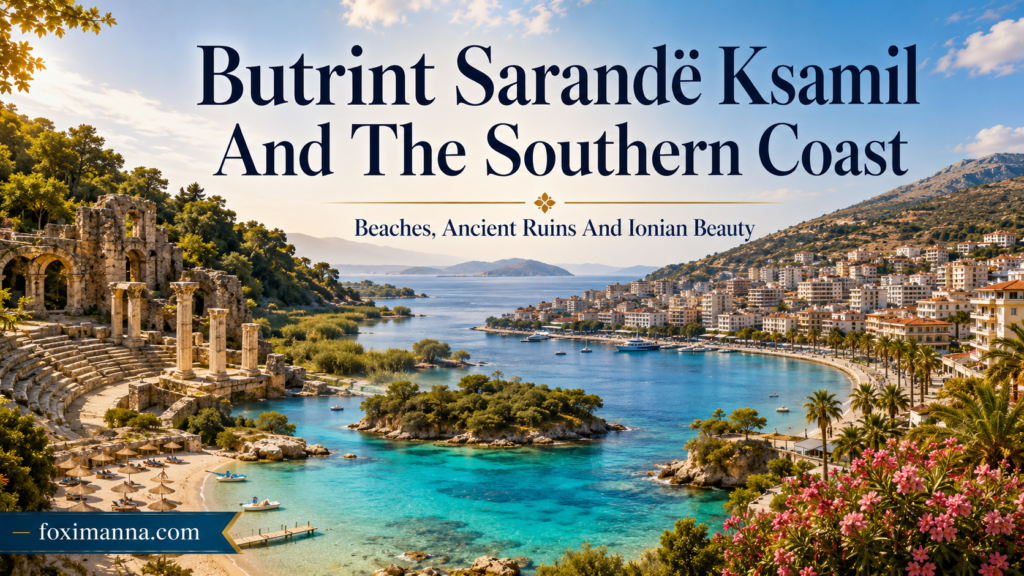
Southern Albania is where history and sea meet most beautifully. The area around Sarandë, Ksamil and Butrint is one of the most popular regions in the country, especially for travellers who want beaches, archaeological sites, boat trips and easy access to the Ionian coast.
Sarandë is one of Albania’s main seaside cities. Built around a wide bay facing Corfu, it has a lively waterfront lined with palm trees, restaurants, hotels and ferries. In summer, it becomes busy with visitors from Albania, neighbouring countries and beyond. It is more developed than some smaller Riviera villages, which makes it convenient for accommodation, transport, food and excursions.
Yet Sarandë is not only a beach base. The city has ancient roots, including remains linked to ancient Onchesmos, synagogue ruins and Byzantine mosaics. Behind the waterfront, hills rise with olive trees and Mediterranean vegetation. From higher points, the view across the bay toward Corfu is beautiful, especially at sunset.
Ksamil, just south of Sarandë, is one of Albania’s most famous beach destinations. It is known for pale sand, clear water and small islands just offshore. These islands can be reached by boat, pedal boat or, for strong swimmers in suitable conditions, from the coast. The scenery is instantly attractive: bright Ionian water, white sand, beach restaurants and views that feel almost tropical.
In peak summer, Ksamil can be crowded and expensive compared with quieter Albanian destinations. Beach clubs, sunbeds and restaurants dominate much of the shore. For some travellers, this is part of the fun. For others, the best time to visit is shoulder season, when the crowds thin and the village feels more relaxed. Outside the busiest months, Ksamil still reveals a simpler side, with fishermen, gardens and quieter coastal life.
Close to Ksamil is Butrint National Archaeological Park, one of Albania’s most important historic sites. UNESCO describes Butrint as a place with a special atmosphere created by archaeology, monuments and nature, located near Sarandë in southern Albania. The site has been shaped by Greek, Roman, Byzantine and Venetian periods, giving it the feeling of a Mediterranean time capsule.
Walking through Butrint, visitors encounter a theatre, baths, a baptistery, basilica remains, walls, gates and a Venetian castle that now functions as a museum space. What makes Butrint especially powerful is not only the archaeology, but the setting. The ruins sit among wetlands, trees, lagoons and water channels. Birds, turtles and dense vegetation give the site a living quality. It feels less like a dry ruin and more like a place where nature and history are still speaking to each other.
The Blue Eye, near Sarandë, is another major natural attraction in the south. This karst spring is famous for its deep blue and green water, which rises from underground with remarkable force. Wooden walkways and viewing areas allow visitors to experience the colour and movement of the spring. It is a popular stop, so arriving early or outside peak hours can make the visit more enjoyable.
The southern coast also includes hidden beaches and boat-only coves. Kroreza Bay, for example, is often described as one of the more secluded coastal escapes near Sarandë, reached by boat or longer trails. This is part of the charm of Albania’s coast. Some places are easy and developed, while others still require effort, timing or local knowledge.
For first-time visitors, Sarandë, Ksamil and Butrint make a strong combination. Sarandë gives convenience, Ksamil gives postcard beach scenery, and Butrint gives historical depth. Add the Blue Eye and nearby coastal bays, and the region becomes one of the easiest ways to experience Albania’s mix of nature, culture and sea in a short trip.
The Albanian Riviera From Dhërmi To Gjipe And Himarë
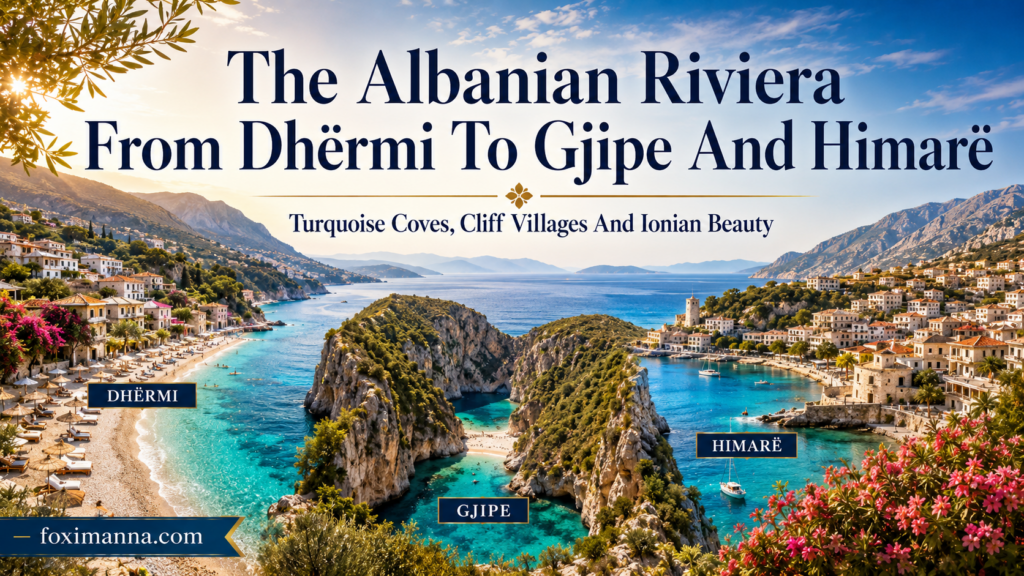
The Albanian Riviera is one of the main reasons Albania has become such an exciting travel destination. Stretching along the Ionian coast, it is a landscape of steep mountains, turquoise water, cliff roads, olive groves, stone villages, hidden coves and beach towns that change character from place to place.
The journey itself is part of the experience. The Llogara Pass separates the inland mountains from the Riviera below. The road climbs through pine forests, sharp bends and open viewpoints before revealing the Ionian Sea in a dramatic sweep. From the top, the coastline appears far below, with cliffs, bays and sometimes Greek islands on the horizon. The pass sits within a national park area and offers cooler air, hiking opportunities and some of the most memorable views in Albania.
Dhërmi is one of the best-known villages on the Riviera. It has two identities. The old village sits higher on the slope, with stone alleys, churches, terraces and quiet houses. Below, the beach area comes alive in summer with bars, restaurants, hotels and beach clubs. The sea is clear, the mountains rise behind, and the contrast between old village and modern beach life makes Dhërmi especially interesting.
Near Dhërmi, the coast breaks into coves and quieter corners. Even in areas that have become popular, walking a little further can reveal a more peaceful side. Olive trees, wild herbs, stone paths and views over the water remind visitors that the Riviera is not only about sunbeds. It is also about landscape and atmosphere.
Gjipe Beach is one of Albania’s most beautiful coastal places. Reaching it usually requires either a boat journey or a walk from the road along a dusty path. This effort is part of its magic. The beach appears suddenly between high rock walls, with a mix of sand and pebbles facing clear water. Behind the beach, Gjipe Canyon cuts into the land, offering a dramatic natural corridor shaped by water over time.
Gjipe feels wilder than many easier beaches. There are no large roads running directly to the shore, and the surrounding cliffs create a sense of separation from the modern world. Travellers should bring water, sun protection and suitable footwear if walking, especially in hot weather. It is a place best enjoyed with respect for nature, leaving no rubbish and avoiding unnecessary noise.
Himarë is another Riviera highlight. It is calmer than Sarandë and often feels more balanced than some of the busier resort areas. The lower town faces a bay with restaurants, guesthouses and a relaxed seaside promenade. Higher up, the old village and castle area preserve stone houses, lanes and views over the coast. Around Himarë, beaches such as Livadhi and smaller coves provide excellent swimming and coastal scenery.
The area also reflects Albania’s complex cultural history. Greek language and identity can still be heard and felt in parts of the region, a reminder that borders, communities and histories along the Ionian coast have long been intertwined. This adds another layer to the travel experience, especially for visitors interested in culture as well as scenery.
Qeparo is quieter and more reflective. Like several Riviera settlements, it has an upper old village and a lower coastal section. The old village, once partly abandoned, has gradually seen restoration, with stone houses, gardens and paths returning to life. From above, the view over the sea and coast is exceptional. Below, the newer area offers hotels, restaurants and beach access.
Porto Palermo is famous for its castle, set on a small peninsula extending into the Ionian Sea. Often associated with Ali Pasha of Tepeleni, the fortress has thick walls, narrow openings and a powerful sense of isolation. The bay around it is calm and deep, with dark blue water and rocky scenery. The castle interior is simple and shadowy, but the roof and surrounding views make it a rewarding stop.
The Albanian Riviera is best explored slowly. A rushed itinerary can turn it into a checklist of beaches, but the real charm comes from moving between villages, stopping at viewpoints, eating simple seafood, swimming in clear water, walking old lanes and watching how the mountains meet the sea. It is beautiful in summer, but shoulder seasons may offer a more relaxed and authentic experience.
Theth Valbona Lake Komani And The Cursed Mountains
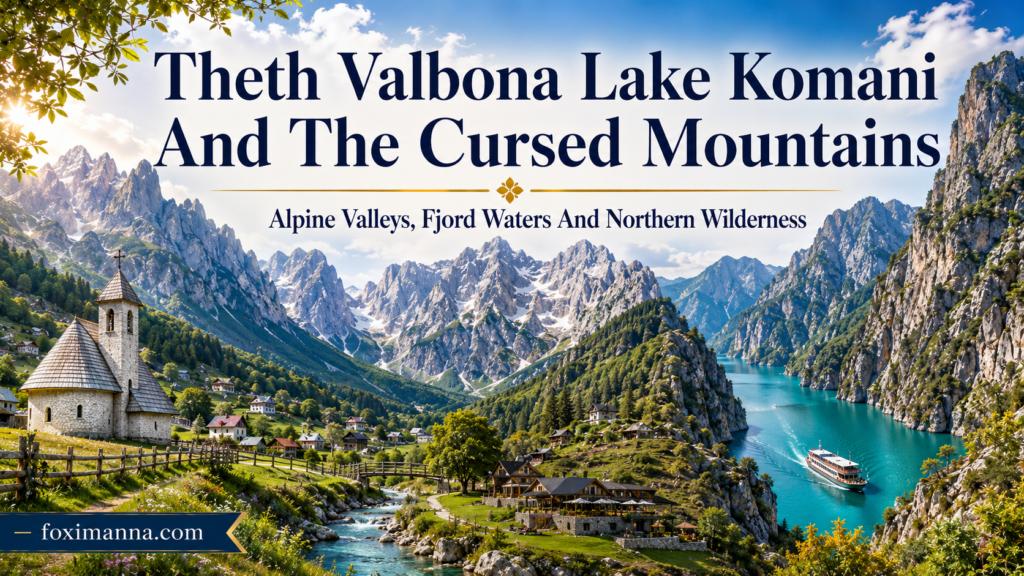
Northern Albania offers a completely different kind of beauty. Instead of beach clubs and Ionian coves, the north is defined by alpine valleys, stone houses, waterfalls, rivers, forests and high mountain passes. The Albanian Alps, often called the Cursed Mountains, are among the most dramatic mountain ranges in the Balkans.
Theth National Park is one of the most famous mountain destinations in Albania. Reached by a winding road through valleys and peaks, Theth feels like a remote world. The village sits in a narrow valley surrounded by sharp mountains, beech forests and fast-flowing streams. Traditional stone houses, guesthouses, fields and a small church create one of the most recognisable mountain scenes in the country.
Theth is popular with hikers, but it is also a place to slow down. Visitors can walk to waterfalls, natural pools, viewpoints and old defensive towers. These towers are connected to the history of blood feuds and traditional mountain law, reminding travellers that the landscape is not only beautiful but also shaped by complex human stories.
One of the most famous hikes in Albania links Theth with Valbona. The route crosses a mountain pass and offers unforgettable views of peaks, forests, scree slopes and valleys. It is not a casual city walk, so travellers should prepare properly, check local conditions, wear suitable footwear and consider guides if unsure. Weather in mountain areas can change quickly, and the safest experience comes from respecting the terrain.
Valbona Valley is another jewel of the Albanian Alps. The valley opens between jagged peaks, forests and meadows. In summer, it is green and full of light. In autumn, the landscape turns red, gold and brown. Villages and guesthouses are scattered through the valley, where mountain hospitality often includes warm bread, dairy products and simple local food.
Valbona is ideal for travellers who want nature without losing the comfort of guesthouses and marked trails. Eagles, wolves, lynx and other wildlife are associated with the protected mountain environment, although visitors are more likely to experience the quiet grandeur of the landscape than direct wildlife encounters.
Lake Komani is one of the most unusual journeys in Albania. Created by a dam on the Drin River, it is often compared to a fjord because of its narrow waterway, steep limestone walls and remote mountain scenery. The ferry journey through Lake Komani is not just transport; it is one of the great travel experiences of the country.
As the boat moves through narrow passages, mountains rise directly from the water. Small homes, shepherd paths, stone steps and isolated settlements appear along the shore. In some places, the landscape feels almost untouched. For travellers heading between Shkodër, Valbona and other northern areas, Lake Komani can become a highlight rather than simply a connection.
The north is also linked with Lake Shkodër, the largest lake in the Balkans, shared by Albania and Montenegro. On the Albanian side, the village of Shiroka offers a peaceful lakeside atmosphere with restaurants, promenades and views toward the water and mountains. Birds, fishermen and evening walks give the lake a gentle rhythm after the drama of the high Alps.
The Cursed Mountains are not for travellers who want everything polished and predictable. Roads can be slow, weather can change, and services may be simpler than in major beach towns. But for many visitors, this is exactly the appeal. Northern Albania feels raw, generous and unforgettable. It shows a side of Europe that still feels deeply connected to land, season, family and tradition.
Rivers Lakes Canyons And Hidden Natural Wonders
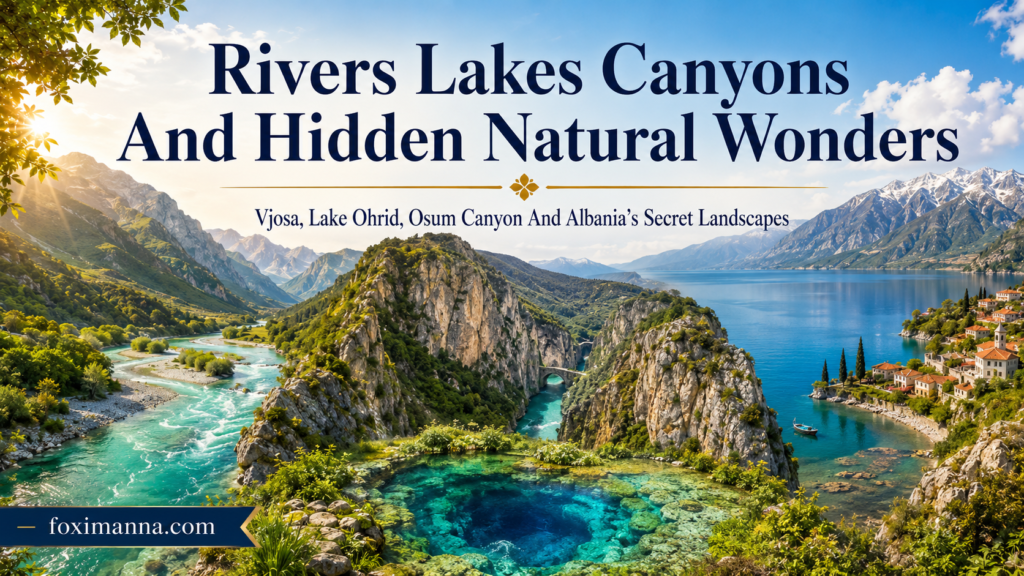
Albania’s natural beauty does not stop at its beaches and mountains. Some of the country’s most memorable places are found in rivers, lakes, canyons, springs and hidden valleys. These landscapes give Albania a sense of wildness that is increasingly rare in Europe.
The Vjosa River is one of the most important natural landmarks in the country. Flowing through southern Albania, it is widely recognised as one of Europe’s last major wild rivers. In 2023, the Albanian government declared the Vjosa a national park, making it Europe’s first Wild River National Park. This protected status matters because free-flowing rivers support complex ecosystems, seasonal floodplains, fish habitats, river islands, forests and traditional communities along their banks.
Përmet is one of the best places to experience the Vjosa region. The town sits among green hills and has a calm, local atmosphere. It is known for nature, food, hospitality and access to outdoor experiences. Nearby, the Ottoman bridge of Katiu leads toward the Benjë thermal baths, where warm pools emerge among stone and mountain scenery. The combination of river, bridge, steam and canyon-like landscape makes this one of the most relaxing natural stops in southern Albania.
Osum Canyon is another spectacular inland destination. Carved by the Osum River in central Albania, the canyon stretches for many kilometres, with high vertical walls, narrow passages, caves and seasonal waterfalls. In spring, when water levels rise, rafting is possible in certain conditions. At other times, walking viewpoints and exploring the surrounding rural landscapes can be the better option. Osum Canyon is an excellent reminder that Albania’s inland regions deserve as much attention as its coast.
Lake Ohrid, shared with North Macedonia, is one of Europe’s oldest and most significant lakes. The Albanian side includes Pogradec and the Lin Peninsula, both of which offer a gentler, quieter travel experience than the busy Riviera. The Lake Ohrid region is recognised by UNESCO for its natural and cultural value, including exceptional biodiversity and long human history.
Pogradec sits along the lakefront, with clear cold water, small boats, family guesthouses and restaurants serving local fish, including the famous koran trout. The atmosphere is relaxed and domestic, especially compared with the larger coastal resorts. Nearby Drilon is known for springs, channels, greenery, swans and cafés, making it a peaceful short trip from town.
The Lin Peninsula is even quieter. It extends into Lake Ohrid with houses, gardens, fishing nets and old archaeological traces. Remains of an early Christian basilica on the promontory connect the landscape with Albania’s ancient religious history. Lin is the kind of place where the pleasure comes from simplicity: walking slowly, looking across the lake, listening to water and watching village life unfold.
Lake Bovilla, near Tirana, has become increasingly popular with locals and visitors looking for a quick nature escape from the capital. The lake was created by a dam and provides drinking water to Tirana, but its setting among limestone cliffs and mountain roads gives it a wild appearance. Viewpoints above the lake reveal turquoise and green water surrounded by rugged slopes. Because it is close to the capital, it can be visited as a day trip, but the road and terrain require care.
Cape of Rodon is another lesser-known natural and historical destination. This Adriatic promontory extends into the sea, covered with vegetation, small beaches and the remains of Skanderbeg Castle. Unlike the more developed southern Riviera, Cape of Rodon feels windswept and quiet. It is a good choice for travellers who enjoy coastal walking, ruins and places without heavy tourist infrastructure.
Voskopojë, in southeastern Albania, offers a completely different atmosphere. Once an important cultural and religious centre in the Balkans, it is now a mountain village surrounded by pines, pastures and stone streets. Its churches preserve frescoes and memories of a time when the village was a centre of learning, printing and faith. Today, Voskopojë is peaceful, cool and ideal for travellers interested in heritage away from the main tourist routes.
Albania’s springs also deserve attention. The Blue Eye near Sarandë is the most famous, but the Cyclops Eye near Tirana offers another mysterious water landscape. These springs are admired not only for their colour, but for the feeling they create. Deep, cold, clear water emerging from the earth has a way of making people stop and look in silence.
What makes Albania special is how close many of these experiences are to one another. A traveller can move from a wild river to a thermal bath, from a canyon to a UNESCO lake, from a mountain village to a seaside castle, from Tirana to a high viewpoint, and from ancient ruins to a quiet fishing village. Albania is compact, but it is full of depth.
For anyone planning a journey, the best approach is to choose a theme and then build around it. Beach lovers should focus on the Riviera and south coast. History lovers should include Berat, Gjirokastër, Butrint, Krujë and Shkodër. Mountain lovers should head north to Theth, Valbona and Lake Komani. Nature lovers should add Vjosa, Përmet, Osum Canyon, Lake Ohrid, Lake Bovilla and Cape of Rodon.
Albania is not perfect, and travellers should not expect every road, service or destination to feel fully developed. That is part of the reality of visiting a country still growing as a tourism destination. But for those who travel with patience, respect and curiosity, Albania offers something increasingly rare: a European journey that still feels surprising.
From the stone roofs of Gjirokastër to the blue waters of Ksamil, from the silence of Lake Komani to the energy of Tirana, from the old bazaar of Krujë to the wild flow of the Vjosa, Albania is a land of contrasts and beauty. It is a place where mountains meet seas, rivers remain free, castles watch over valleys and villages hold onto memory. For travellers searching for a destination that feels rich, scenic, historic and still full of discovery, Albania truly deserves a place on the travel list.
Disclaimer
The information provided in this article is for general informational and educational purposes only. While every effort has been made to ensure the accuracy of the information at the time of writing, travel conditions, entry requirements, opening hours, ticket prices, local regulations, and accessibility may change without notice.
Readers are encouraged to verify all travel information with official tourism boards, government agencies, airlines, accommodation providers, and local authorities before making travel plans or bookings.
The destinations featured in this article are based on their historical, cultural, natural, and tourism significance. The opinions expressed are for informational purposes only and should not be considered professional travel, legal, health, safety, or financial advice.
FoxiManna.com and its authors are not responsible for any losses, injuries, inconveniences, travel disruptions, or damages that may result from the use of information contained in this article. Travelers are responsible for conducting their own research and making informed decisions based on their individual circumstances.
By using this website and reading this article, you agree that any reliance on the information provided is at your own risk.