
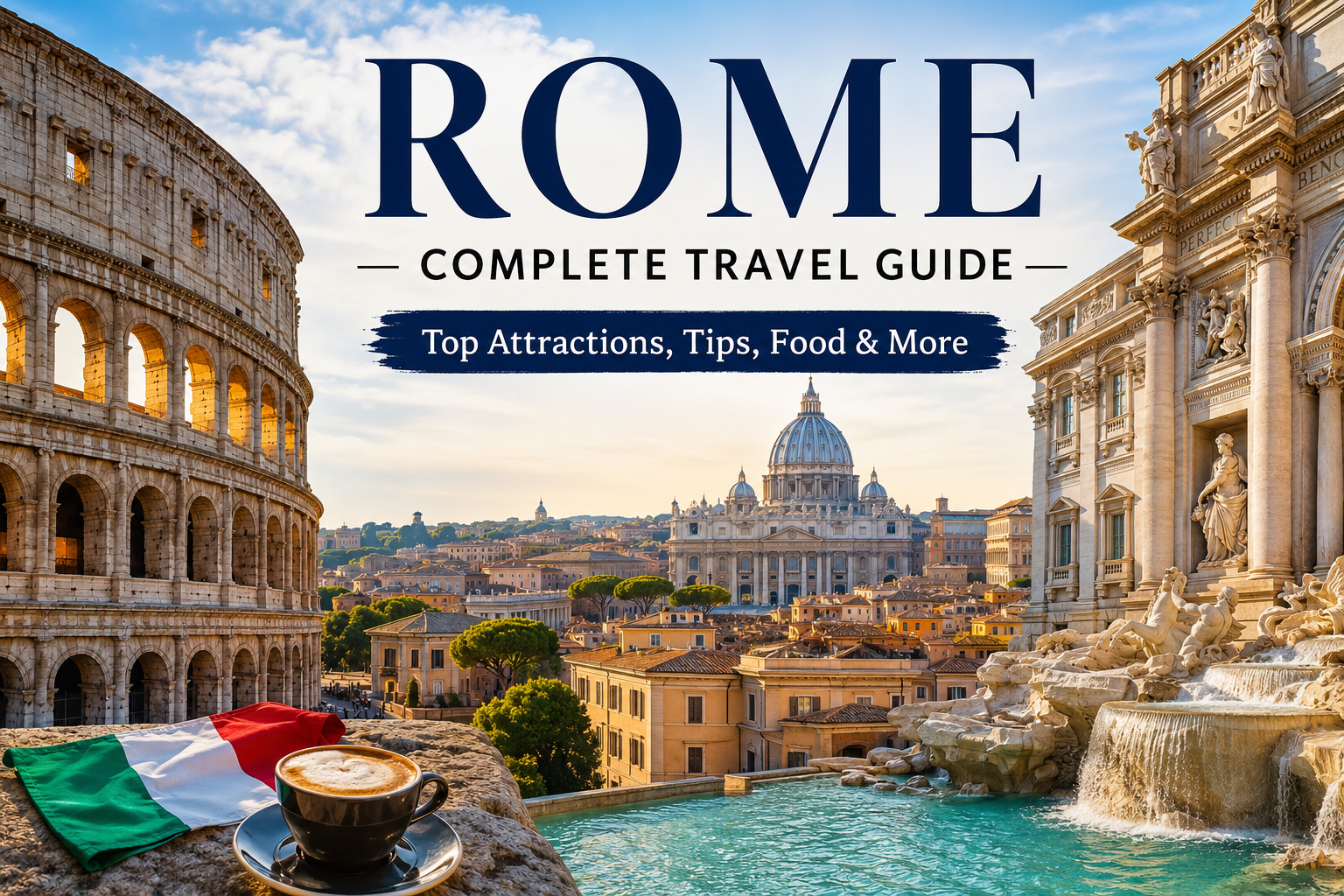
Rome is one of those rare cities that exceeds expectations. Long before you arrive, you have already seen images of the Colosseum, the Trevi Fountain, Vatican City, and countless ancient ruins. Yet nothing truly prepares you for the feeling of standing in the heart of a city that has shaped world history for more than two thousand years.
Known as the Eternal City, Rome offers a unique combination of history, culture, architecture, religion, food, and atmosphere. Every street seems to reveal another ancient monument, another magnificent church, or another charming piazza filled with life.
For travellers, Rome is more than just a destination. It is a journey through time. One moment you are exploring the remains of the Roman Empire, and the next you are enjoying authentic Italian cuisine in a centuries old neighbourhood. Whether you are a history enthusiast, an art lover, a foodie, or simply someone looking for an unforgettable city break, Rome has something for everyone.
This complete guide will help you discover the best attractions, neighbourhoods, food experiences, travel tips, and practical advice to make the most of your visit.
Why Rome Is One Of The Most Fascinating Cities In The World

Rome is unlike any other city on Earth.
As the capital of Italy, it is home to nearly three million people. At the same time, it contains some of the world’s most important historical and religious landmarks. The city was once the centre of the Roman Empire, which influenced much of Europe, North Africa, and the Middle East.
What makes Rome special is how history and modern life coexist. Ancient ruins stand beside busy roads. Historic churches are surrounded by modern cafes. Local residents go about their daily lives while millions of visitors admire the treasures around them.
Every neighborhood has its own personality. Some areas showcase the grandeur of Ancient Rome. Others highlight Renaissance art and architecture. Meanwhile, districts like Trastevere provide a glimpse into authentic Roman life away from the busiest tourist attractions.
Many travelers arrive expecting great history and leave talking about the atmosphere, food, and beauty of the city itself.
Arriving In Rome And Getting Around

Most international visitors arrive through one of two airports.
Fiumicino Airport
Fiumicino Airport is Rome’s primary international airport. The fastest way to reach the city center is via the Leonardo Express train, which connects directly to Rome Termini Station in approximately twenty to twenty five minutes.
Ciampino Airport
Ciampino Airport mainly serves budget airlines and European routes. Travelers typically take the Ciampino AirLink bus to the town of Ciampino before transferring to a train bound for Rome Termini.
Rome Termini Station
Rome Termini is the city’s main transportation hub. From here, visitors can access the metro, buses, trams, and regional trains.
Purchasing a travel pass is highly recommended. These passes provide unlimited travel on much of Rome’s public transportation network and make exploring the city significantly easier.
Walking Through Rome
Although public transportation is excellent, walking remains one of the best ways to experience Rome.
Many of the city’s most famous attractions are relatively close together. Walking allows visitors to discover hidden churches, charming side streets, local cafes, and unexpected historical sites that rarely appear in guidebooks.
Exploring Ancient Rome

No visit to Rome would be complete without exploring the remains of the ancient world.
The Colosseum
The Colosseum is the symbol of Rome and one of the most famous landmarks on Earth.
Built nearly two thousand years ago, this massive amphitheater once hosted gladiatorial contests, theatrical performances, and public spectacles for over fifty thousand spectators.
Standing inside the Colosseum is a remarkable experience. The sheer scale of the structure is astonishing, especially considering it was built without modern machinery.
Visitors should consider purchasing tickets that include access to the arena floor and underground sections. These areas provide a deeper understanding of how events were organized and how gladiators prepared before entering the arena.
The Arch Of Constantine
Located immediately beside the Colosseum, the Arch of Constantine commemorates Emperor Constantine’s victory in battle.
The monument is one of the best preserved triumphal arches from Ancient Rome and serves as an excellent introduction to Roman architecture and symbolism.
Roman Forum
The Roman Forum was once the political, commercial, and social heart of the Roman Empire.
Walking through the ruins allows visitors to imagine what life was like when senators debated important issues and citizens gathered in public squares.
Ancient temples, government buildings, and marketplaces remain visible today, providing a fascinating glimpse into Roman civilization.
Palatine Hill
Palatine Hill offers some of the best views of the Roman Forum and surrounding ruins.
According to legend, this is where Romulus founded Rome. The area later became home to emperors and wealthy aristocrats.
Today, visitors can wander among ancient palaces while enjoying panoramic views across the city.
Rome’s Magnificent Churches And Basilicas

Rome is home to hundreds of churches, many of which contain artistic and architectural treasures that rival the world’s greatest museums.
Basilica Of Saint John Lateran
Often overlooked by first time visitors, this is actually the official cathedral of Rome and the seat of the Pope as Bishop of Rome.
The interior is breathtaking, featuring towering marble statues, ornate decorations, and an immense sense of grandeur.
Santa Maria Maggiore
Santa Maria Maggiore is one of Rome’s most beautiful basilicas.
The richly decorated interior features intricate ceilings adorned with gold and stunning works of art. The level of detail is extraordinary, making it a must visit destination for architecture and history enthusiasts.
Exploring Rome’s Hidden Churches
One of the joys of Rome is stepping into churches that may appear ordinary from the outside but reveal spectacular interiors.
Many churches are free to enter and provide peaceful escapes from the crowds. Travelers should never hesitate to explore interesting religious buildings they encounter during their walks.
Discovering Rome’s Famous Squares And Fountains

Rome’s public spaces are among the most beautiful in Europe.
Piazza Del Popolo
This impressive square welcomes visitors with its Egyptian obelisk, elegant fountains, and surrounding churches.
It is a wonderful place to relax, people watch, and admire the city’s architecture.
The Spanish Steps
The Spanish Steps are among Rome’s most photographed landmarks.
Connecting Piazza di Spagna with the Trinita dei Monti church, the staircase attracts visitors from around the world.
While the steps themselves may seem simple, the atmosphere and surrounding area make them a popular gathering place.
Trevi Fountain
Few attractions capture the imagination quite like the Trevi Fountain.
This magnificent Baroque masterpiece is often considered the most beautiful fountain in Europe.
The tradition of tossing a coin into the fountain remains extremely popular. According to legend, doing so ensures a return visit to Rome.
Because of its popularity, the Trevi Fountain can become extremely crowded. Visiting early in the morning or late in the evening often provides a more enjoyable experience.
Piazza Venezia
Piazza Venezia serves as one of Rome’s major intersections and is dominated by the impressive Altar of the Fatherland.
The monument celebrates the unification of Italy and offers excellent viewpoints over the city.
Sunset is one of the best times to visit, as the changing light creates beautiful photographic opportunities.
Art Museums And Cultural Attractions

Rome is a paradise for art lovers.
Borghese Gallery
Located within the beautiful Borghese Gardens, this museum contains masterpieces by some of Italy’s greatest artists.
The combination of world class art and peaceful surroundings makes it one of Rome’s finest cultural experiences.
Villa Medici
This historic villa offers both artistic significance and stunning views across Rome.
Nearby observation points provide excellent opportunities for photography and sightseeing.
Leonardo Da Vinci Museum
Visitors interested in innovation and invention will enjoy exploring exhibits dedicated to Leonardo da Vinci.
The museum highlights his remarkable contributions to science, engineering, art, and human understanding.
Museum Of Rome
Located near Piazza Navona, the Museum of Rome provides valuable insight into the city’s history and development.
For travelers wishing to deepen their understanding of Rome, this museum is well worth a visit.
Experiencing Authentic Roman Life In Trastevere

Many locals consider Trastevere to be the true heart of Rome.
Located across the River Tiber, this neighborhood feels noticeably different from the city’s more tourist focused districts.
Narrow streets, colorful buildings, and lively squares create an atmosphere that is both charming and authentic.
Food In Trastevere
One of the biggest reasons to visit Trastevere is the food.
Restaurants here often offer more authentic dining experiences and better value compared to establishments located directly beside major tourist attractions.
Traditional Roman dishes such as carbonara, cacio e pepe, amatriciana, and saltimbocca are widely available.
The neighborhood is ideal for leisurely lunches, relaxed dinners, and discovering local flavors.
Santa Maria In Trastevere
This beautiful church serves as the neighborhood’s spiritual center.
Its impressive mosaics and welcoming atmosphere make it one of Rome’s most rewarding religious sites.
Gianicolo Hill
Visitors willing to climb Gianicolo Hill are rewarded with some of the best views in Rome.
The panoramic vistas stretch across rooftops, domes, and historic landmarks, creating unforgettable memories and photographs.
Vatican City And The Spiritual Heart Of Catholicism

No trip to Rome is complete without visiting Vatican City.
Although it is the smallest country in the world, Vatican City contains some of humanity’s greatest artistic and religious treasures.
Saint Peter’s Square
Saint Peter’s Square is an extraordinary public space surrounded by grand colonnades and impressive statues.
When the Pope addresses the faithful, the square becomes one of the most significant gathering places in the Christian world.
Saint Peter’s Basilica
Saint Peter’s Basilica is widely regarded as the greatest church on Earth.
Its immense size, artistic beauty, and spiritual significance make it one of the most unforgettable buildings ever constructed.
Inside, visitors encounter magnificent sculptures, stunning decorations, and the tomb of Saint Peter himself.
The scale of the basilica is almost impossible to appreciate until experienced in person.
Vatican Museums
The Vatican Museums house one of the world’s most important collections of art and historical artifacts.
The galleries contain works from numerous civilizations and periods of history.
Visitors should allow several hours to fully appreciate the collections.
The Sistine Chapel
The Sistine Chapel represents the highlight of many visits to Vatican City.
Michelangelo’s masterpieces adorn the ceiling and walls, creating one of the most celebrated artistic achievements in human history.
Photography is prohibited inside, encouraging visitors to focus entirely on the experience itself.
Climbing The Dome
For those willing to tackle hundreds of steps, the climb to the top of Saint Peter’s Basilica provides breathtaking views over Vatican City and Rome.
The effort is considerable, but the reward is unforgettable.
Castel Sant’Angelo And The River Tiber

Originally built as a mausoleum, Castel Sant’Angelo has served many purposes throughout history.
Today it stands as one of Rome’s most interesting attractions.
Visitors can explore historical exhibits, climb through ancient passageways, and enjoy spectacular views from the upper terraces.
The nearby bridge, lined with angel statues, creates one of the most picturesque scenes in Rome.
Sunset is particularly magical in this area, when warm light reflects across the River Tiber and illuminates the surrounding architecture.
Roman Food You Must Try

Food is a central part of any visit to Rome.
Pizza
Roman style pizza is famous for its thin, crispy crust and simple yet flavorful toppings.
Gelato
Authentic Italian gelato is available throughout the city.
Sampling different flavors becomes an enjoyable activity in itself.
Carbonara
This classic Roman pasta dish combines eggs, pecorino cheese, black pepper, and guanciale.
Authentic carbonara contains no cream, despite what many visitors may have encountered elsewhere.
Cacio E Pepe
Simple yet delicious, cacio e pepe combines pasta, cheese, and black pepper to create one of Rome’s signature dishes.
Suppli
These fried rice balls filled with cheese make excellent snacks while exploring the city.
Practical Travel Tips For Visiting Rome

Start Early
Many major attractions become extremely crowded later in the day.
Arriving shortly after opening can save hours of waiting.
Dress Appropriately
Religious sites often require shoulders and knees to be covered.
Failure to follow dress codes may result in denied entry.
Wear Comfortable Shoes
Rome involves a significant amount of walking.
Comfortable footwear is essential.
Stay Alert For Pickpockets
Busy tourist areas attract pickpockets.
Keep valuables secure and remain aware of your surroundings.
Use Contactless Payments
Most businesses accept cards, though carrying some cash remains useful.
Learn Basic Italian Phrases
Although many people speak English, learning a few Italian words is appreciated and can enhance interactions.
Watch Traffic Carefully
Pedestrian crossings do not always guarantee that vehicles will stop.
Cross roads with caution.
Where To Stay In Rome

Location is one of the most important considerations when choosing accommodation.
Many travelers find hotels near Termini Station particularly convenient because of easy transportation connections.
Others prefer staying near major attractions to maximize sightseeing time.
Neighborhoods such as Trastevere offer a more local atmosphere, while central areas provide easy access to famous landmarks.
Regardless of where you stay, examining the location carefully before booking can save considerable time and effort.
Why Rome Deserves A Place On Every Traveller’s Bucket List

Few destinations offer the depth, diversity, and beauty of Rome.
It is a city where ancient history meets modern life. A city where world famous landmarks stand beside hidden treasures. A city where incredible food, magnificent architecture, and unforgettable experiences await around every corner.
Whether you spend three days or three weeks exploring Rome, you will almost certainly leave wishing you had more time.
From the grandeur of the Colosseum to the spiritual significance of Vatican City, from the charming streets of Trastevere to the elegance of the Trevi Fountain, Rome consistently delivers moments that remain with travelers for a lifetime.
The Eternal City has inspired artists, writers, emperors, saints, and explorers for centuries. Today it continues to captivate millions of visitors every year.
If Rome is not already on your travel bucket list, it deserves a place at the very top.
Because once you experience Rome for yourself, you will understand why so many people fall in love with this extraordinary city and why they keep returning again and again.
Disclaimer
The information provided in this article is for general informational and educational purposes only. While every effort has been made to ensure the accuracy of the information at the time of writing, travel conditions, entry requirements, opening hours, ticket prices, local regulations, and accessibility may change without notice.
Readers are encouraged to verify all travel information with official tourism boards, government agencies, airlines, accommodation providers, and local authorities before making travel plans or bookings.
The destinations featured in this article are based on their historical, cultural, natural, and tourism significance. The opinions expressed are for informational purposes only and should not be considered professional travel, legal, health, safety, or financial advice.
FoxiManna.com and its authors are not responsible for any losses, injuries, inconveniences, travel disruptions, or damages that may result from the use of information contained in this article. Travelers are responsible for conducting their own research and making informed decisions based on their individual circumstances.
By using this website and reading this article, you agree that any reliance on the information provided is at your own risk.