
Seoul is one of the most exciting cities on Earth. It is a destination where ancient royal palaces sit beneath towering skyscrapers, where centuries-old traditions blend seamlessly with futuristic technology, and where street food vendors operate just steps away from luxury boutiques and world-famous skincare stores.
South Korea’s capital city has become a global cultural powerhouse thanks to K-pop, Korean dramas, Korean beauty products, and its rapidly growing influence on fashion, food, and entertainment. Yet Seoul offers much more than pop culture. It is a city filled with history, beautiful parks, incredible architecture, vibrant neighbourhoods, and some of the friendliest people you will meet while travelling.
Whether you are visiting because of your love for Korean dramas, your obsession with Korean skincare, or simply because Seoul has been sitting on your bucket list for years, this four-day itinerary will help you experience the very best the city has to offer.
Choosing The Best Area To Stay In Seoul
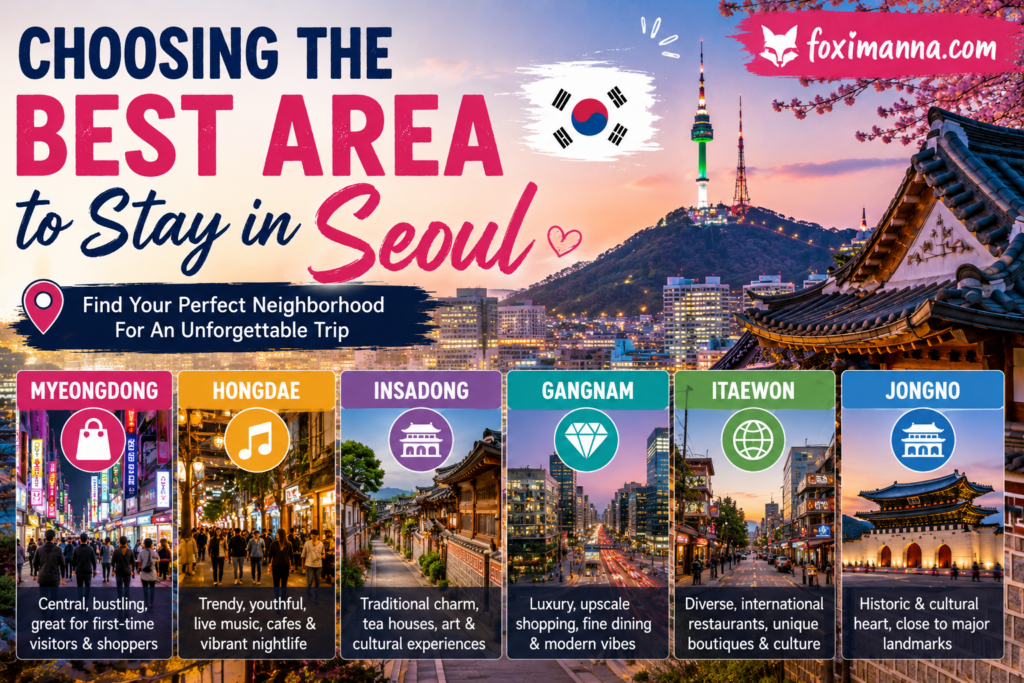
One of the first decisions you’ll make when planning your trip is deciding where to stay. Fortunately, Seoul offers neighbourhoods suitable for every type of traveller.
For first-time visitors, Myeongdong is often considered the ideal location. It sits in a central area with excellent transport connections, endless shopping opportunities, and some of the city’s best street food. During the evening, the streets come alive with food stalls, performers, and visitors from around the world.
Hongdae is perfect for younger travellers and anyone who enjoys nightlife. Located near several universities, the area is packed with trendy cafes, live music venues, boutique shops, arcades, and entertainment options. The atmosphere here feels energetic from morning until the early hours of the morning.
Those interested in experiencing traditional Korean culture may prefer staying near Insadong or Bukchon Hanok Village. These areas offer beautiful historic streets, traditional architecture, tea houses, and a slower pace compared to the city’s more modern districts.
Travellers seeking luxury accommodation, designer shopping, and upscale restaurants often choose Gangnam. Made famous worldwide by the hit song Gangnam Style, the district offers a polished and sophisticated side of Seoul.
For a more international atmosphere, Itaewon provides a multicultural experience with diverse restaurants, unique boutiques, and a lively social scene.
No matter which district you choose, Seoul’s excellent transportation system makes it easy to explore the city.
Day One Exploring Hongdae And Experiencing Modern Seoul
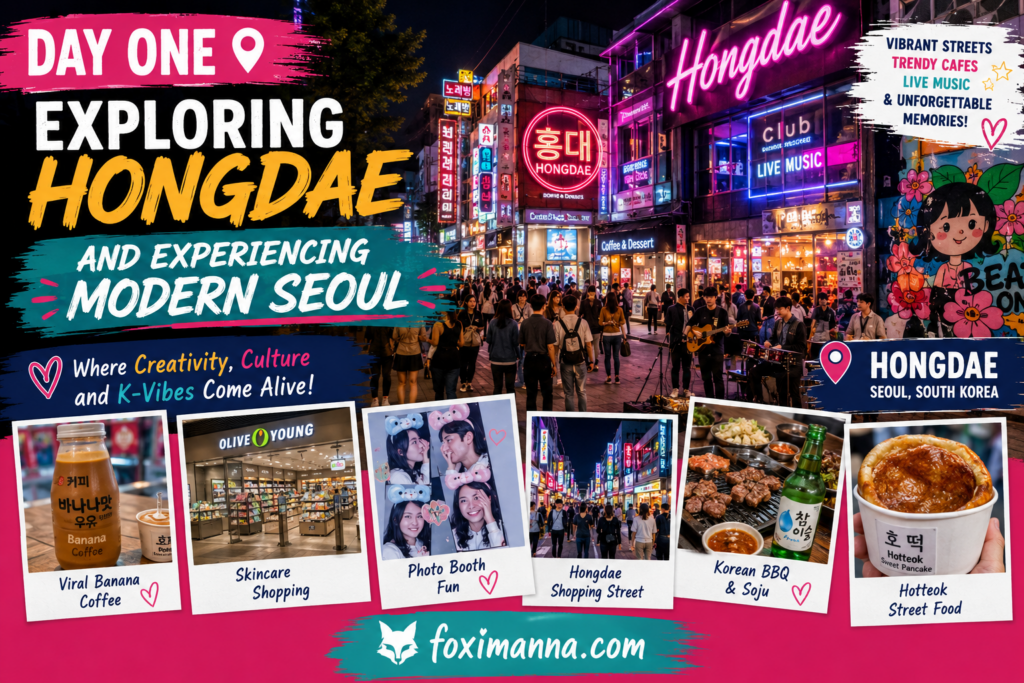
The perfect introduction to Seoul begins in Hongdae, one of the city’s most vibrant and youthful neighbourhoods.
Named after nearby Hongik University, Hongdae has become the creative heart of Seoul. The streets are filled with artists, musicians, performers, students, and entrepreneurs creating a unique atmosphere unlike anywhere else in the city.
One of the first things visitors quickly discover is South Korea’s obsession with skincare and beauty products. Seoul is widely regarded as one of the world’s skincare capitals, making it an ideal place to shop for beauty products at significantly lower prices than many international markets.
Stores such as Olive Young have become legendary among skincare enthusiasts. Walking into one feels like entering a beauty paradise, with shelves packed full of face masks, cleansing oils, serums, toners, moisturisers, and innovative skincare treatments.
Even if skincare isn’t normally your thing, Seoul makes it difficult not to become interested. Korean skincare culture places great importance on healthy skin regardless of gender, and many visitors find themselves leaving with bags full of products.
Beyond shopping, Hongdae offers countless entertainment options. The district is famous for its live street performances, talented dancers, musicians, and aspiring K-pop artists hoping to be discovered.
One particularly fun Korean experience is visiting a self-service photo booth. These photo studios can be found throughout the city and allow friends, couples, and families to create memorable keepsakes from their trip. Many offer props, filters, and editing options that have become hugely popular among both locals and tourists.
As the sun sets, Hongdae transforms into an entirely different experience.
Neon signs illuminate the streets while restaurants, bars, cafes, and clubs fill with people looking to enjoy Seoul’s nightlife. The atmosphere becomes electric, creating one of the city’s most exciting evening destinations.
Even if you have no interest in clubbing, simply walking through the streets provides an unforgettable glimpse into modern Korean culture.
Discovering Korean Food And Street Food Culture
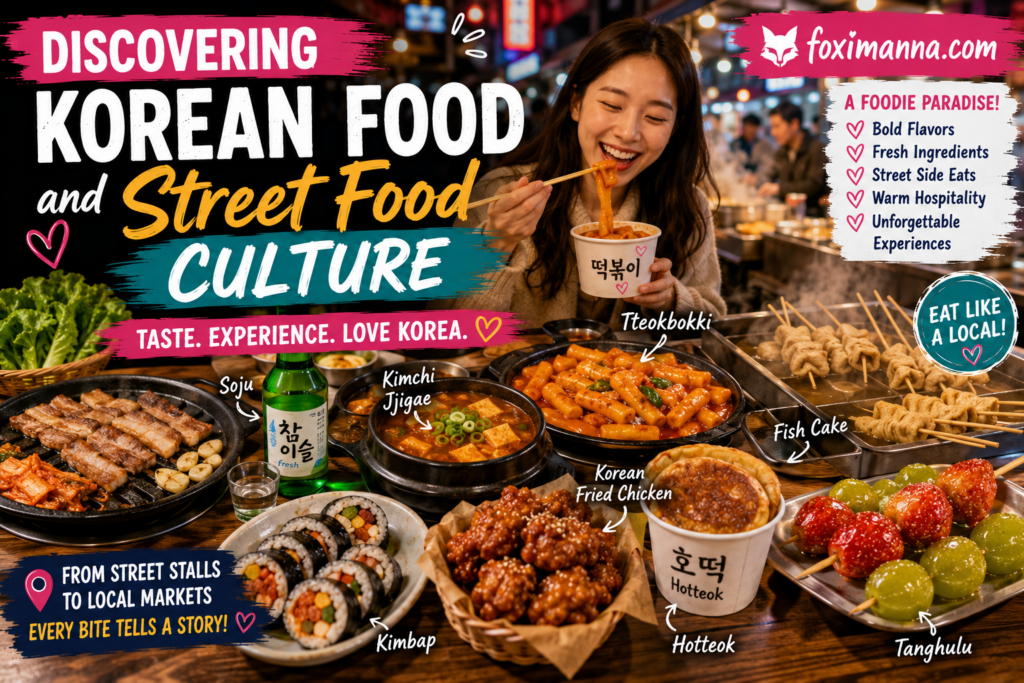
No trip to Seoul would be complete without experiencing the incredible food scene.
Korean cuisine has gained worldwide popularity for good reason. The combination of bold flavours, fresh ingredients, unique cooking techniques, and social dining traditions creates unforgettable meals.
One of the most iconic experiences is Korean barbecue.
Unlike traditional restaurant dining in many countries, Korean barbecue places diners at the centre of the cooking process. Fresh cuts of meat are grilled directly at the table before being cut into bite-sized pieces and wrapped in lettuce with rice, garlic, kimchi, and various sauces.
The interactive nature of Korean barbecue makes it both delicious and entertaining.
Kimchi, perhaps Korea’s most famous food, appears alongside nearly every meal. This fermented vegetable dish delivers a unique combination of spicy, sour, and savoury flavours while providing important health benefits.
Another popular Korean drink is soju. Often described as Korea’s national alcoholic beverage, soju is enjoyed during meals, celebrations, and social gatherings throughout the country.
Street food lovers will find themselves in paradise throughout Seoul.
Popular treats include:
- Tteokbokki
- Hotteok
- Fish cakes
- Korean corn dogs
- Tanghulu
- Fried chicken
- Kimbap
- Dumplings
Hotteok deserves special mention. This delicious Korean pancake is filled with brown sugar syrup and often includes nuts and seeds. Freshly cooked hotteok provides an irresistible combination of crispy exterior and sweet molten filling.
Convenience stores also play an important role in Korean food culture.
Many operate 24 hours a day and offer extensive selections of instant noodles, snacks, drinks, and ready-made meals. Some even feature automated noodle cooking machines that prepare ramen perfectly based on barcode scanning technology.
These stores become especially popular late at night when hungry revellers seek post-party snacks.
Day Two Visiting Gyeongbokgung Palace And Bukchon Hanok Village
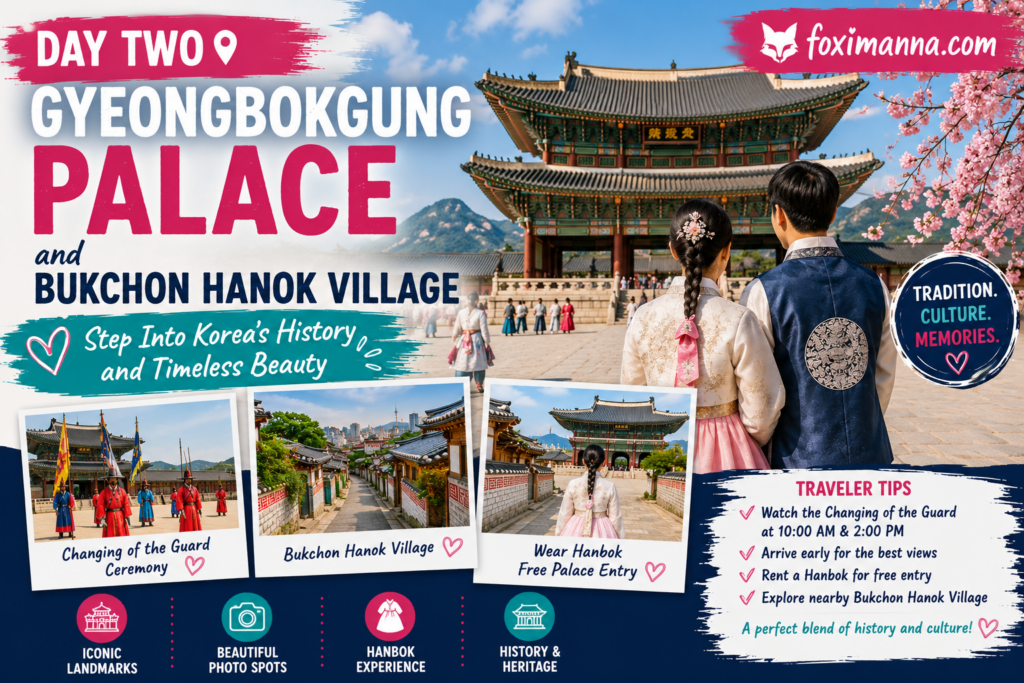
While Seoul is famous for modern attractions, its historical sites reveal the city’s fascinating past.
Gyeongbokgung Palace stands as Seoul’s most important royal landmark and should be high on every visitor’s itinerary.
Originally built in 1395 during the Joseon Dynasty, the palace served as the primary royal residence for centuries. Although it suffered destruction during invasions and colonial rule, extensive restoration efforts have returned much of the complex to its former glory.
One of the highlights is the Changing of the Guard Ceremony.
Held twice daily, this colourful reenactment showcases traditional uniforms, ceremonial weapons, and historical customs from Korea’s royal era. Arriving early ensures the best viewing position.
Many visitors choose to rent traditional Hanbok clothing before visiting the palace. Wearing a Hanbok not only creates beautiful photographs but also grants free entry to the palace grounds.
Walking through the grand gates and courtyards dressed in traditional Korean clothing creates an immersive cultural experience that feels like travelling back in time.
After exploring the palace, continue to Bukchon Hanok Village.
This charming neighbourhood preserves hundreds of traditional Korean homes known as Hanoks. The narrow streets wind up hills overlooking the city, offering stunning views and countless photographic opportunities.
Unlike many historical districts that exist solely for tourism, Bukchon remains a living residential community where people still reside in traditional houses.
The contrast between ancient architecture and modern skyscrapers visible in the distance perfectly captures Seoul’s unique character.
Exploring Traditional Markets And Authentic Korean Culture
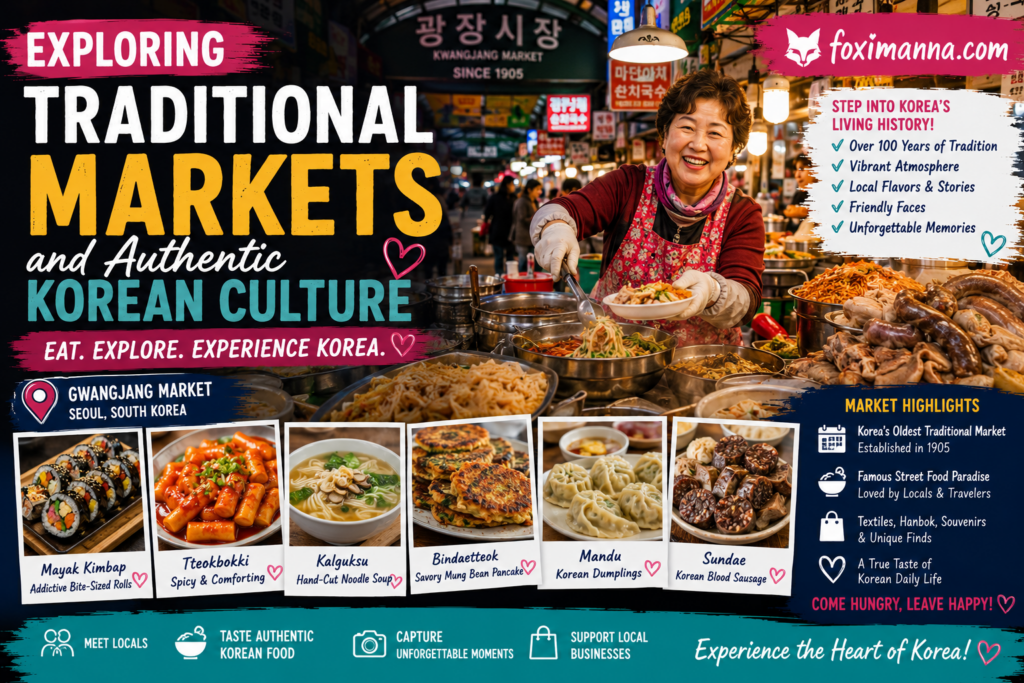
To truly understand Seoul, visitors should spend time exploring its traditional markets.
Gwangjang Market stands among the city’s most famous examples.
Established in 1905, it originally specialised in textiles and fabrics before evolving into one of Seoul’s premier food destinations.
Today, visitors flock here to sample authentic Korean dishes prepared by vendors who have perfected their recipes over decades.
Popular market foods include:
- Mayak Kimbap
- Tteokbokki
- Handmade noodles
- Mung bean pancakes
- Korean dumplings
- Fresh seafood
The atmosphere inside Gwangjang Market is energetic and authentic. Locals sit alongside tourists, creating a genuine cultural experience rarely found in modern shopping centres.
The market gained international recognition after appearing on popular food documentaries and travel programmes, but it still retains its traditional charm.
Food lovers could easily spend several hours wandering through the aisles, sampling dishes and interacting with vendors.
Beyond food, the market also offers textiles, clothing, household goods, and souvenirs.
Experiences like Gwangjang Market provide valuable insight into everyday Korean life while delivering some of the most memorable meals of any Seoul itinerary.
Day Three Shopping And Street Food In Myeongdong
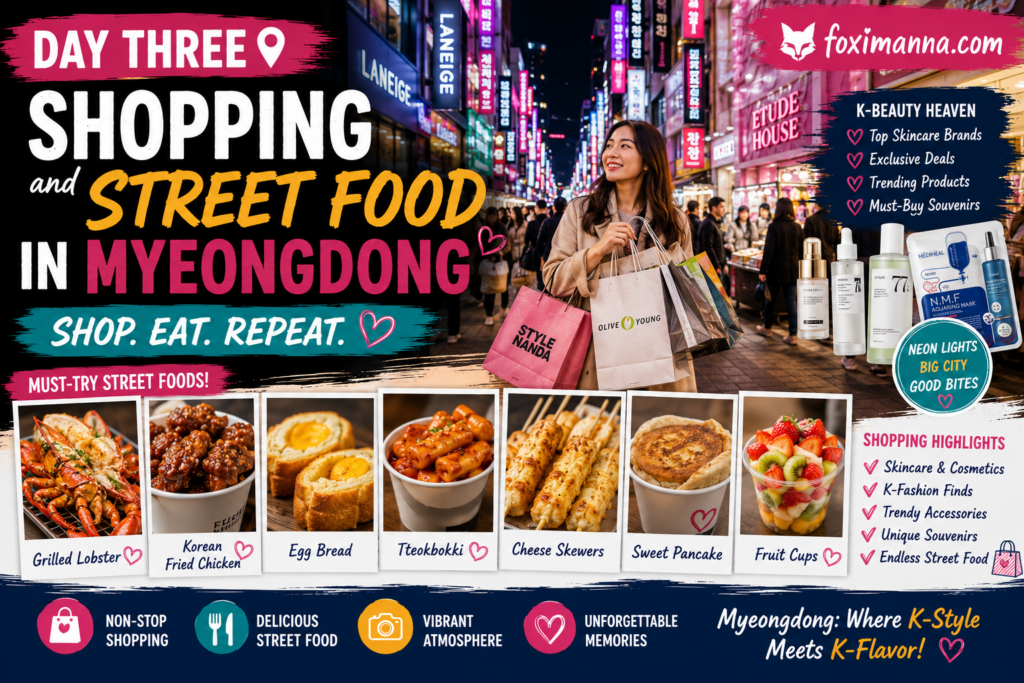
Few places better represent modern Seoul than Myeongdong.
This bustling district attracts millions of visitors every year and serves as one of the city’s primary shopping destinations.
The area combines fashion, beauty, entertainment, and food into a single vibrant neighbourhood.
Walking through Myeongdong feels like entering a giant open-air shopping centre.
International brands sit alongside local boutiques while giant cosmetic stores compete for attention with colourful displays and promotional offers.
For skincare enthusiasts, Myeongdong is paradise.
Nearly every major Korean beauty brand operates stores here, allowing visitors to compare products, receive samples, and discover the latest beauty trends.
However, shopping is only part of the experience.
As evening approaches, food stalls begin lining the streets, transforming the district into one of Seoul’s best street food destinations.
Popular options include:
- Grilled lobster
- Korean fried chicken
- Egg bread
- Cheese skewers
- Tornado potatoes
- Fruit cups
- Sweet pancakes
- Rice cakes
The combination of bright lights, energetic crowds, delicious aromas, and endless entertainment creates an atmosphere that keeps visitors returning night after night.
Even those who don’t enjoy shopping will appreciate simply wandering through the streets and soaking up the excitement.
Myeongdong perfectly demonstrates why Seoul has become one of Asia’s most popular travel destinations.
Day Four Experiencing Gangnam And The Han River
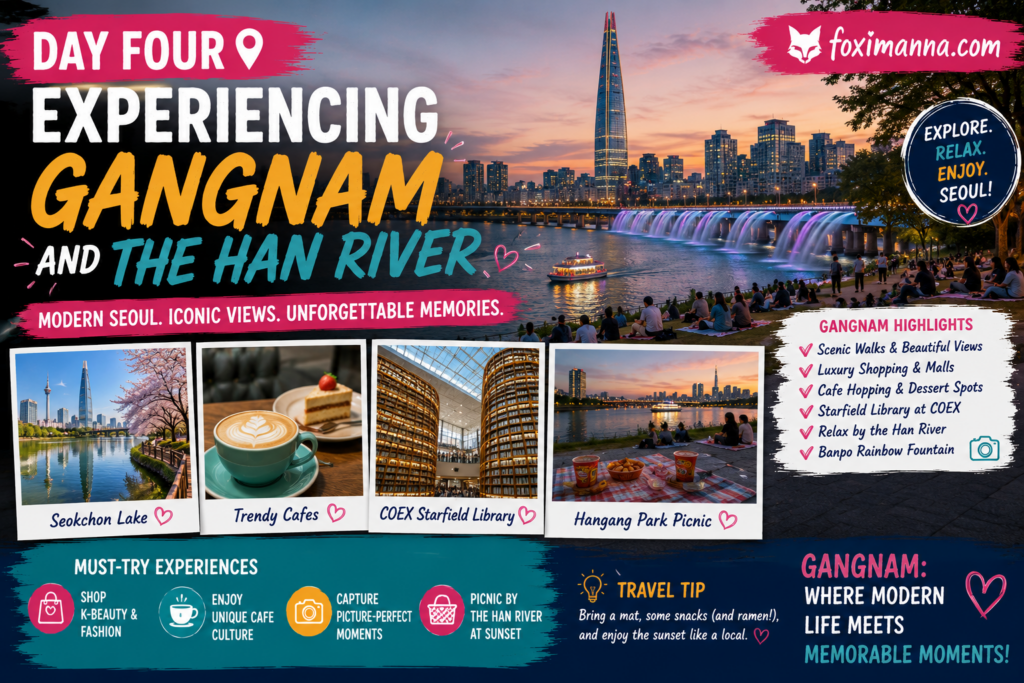
The final day takes visitors south to Gangnam, Seoul’s most famous modern district.
Gangnam represents wealth, sophistication, and contemporary Korean culture.
Wide boulevards, luxury shopping centres, stylish cafes, and modern architecture define the area.
One of the most pleasant attractions is Seokchon Lake.
Surrounded by walking paths and seasonal flowers, the lake offers a peaceful escape from the city’s busy streets. During spring and autumn, it becomes particularly beautiful and attracts photographers from across the country.
Gangnam is also known for its cafe culture.
Korean cafes often elevate coffee shops into artistic experiences featuring unique designs, themed interiors, and exceptional desserts.
After enjoying a coffee break, head to COEX Mall.
Inside you’ll find the famous Starfield Library, one of Seoul’s most photographed locations. Towering bookshelves stretch toward the ceiling beneath a beautiful skylight, creating an impressive visual spectacle.
The library has become a symbol of modern Seoul and offers a perfect location for photographs.
Later in the day, visit Hangang Park along the Han River.
This enormous public space serves as Seoul’s outdoor living room. Families, couples, friends, and tourists gather here to cycle, picnic, exercise, and relax.
One popular activity involves renting picnic equipment and enjoying instant noodles while watching the sunset over the river.
The nearby Banpo Rainbow Fountain adds another memorable experience. Recognised by Guinness World Records as the world’s longest bridge fountain, it creates spectacular water displays after dark.
The combination of sunset, river views, and city lights provides a perfect ending to a Seoul adventure.
Essential Travel Tips For Visiting Seoul
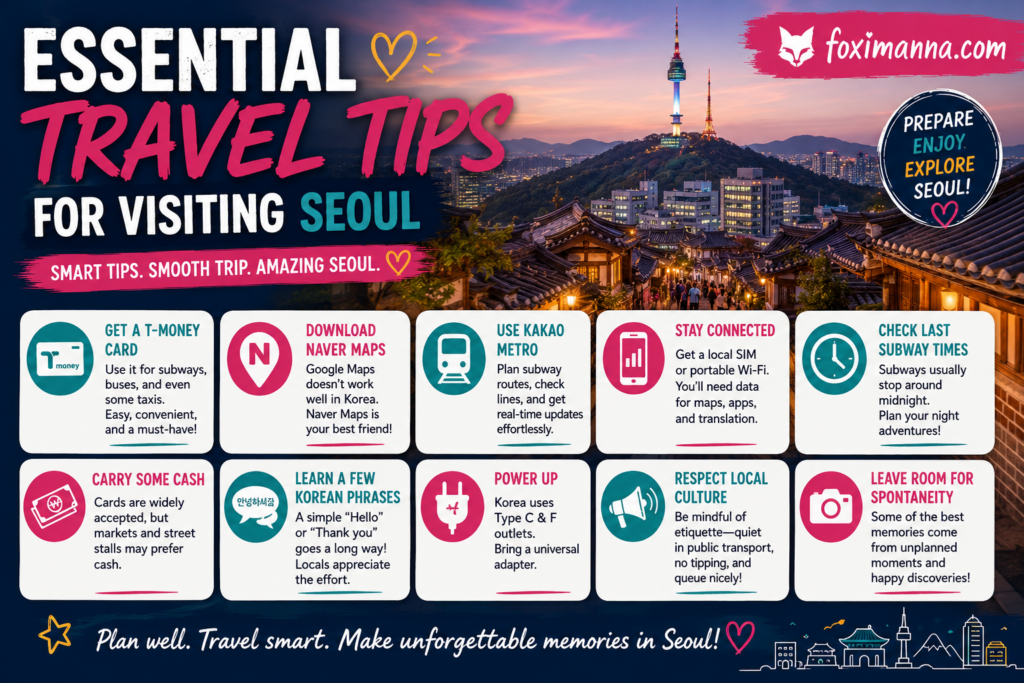
Before finishing this guide, here are several practical tips that will make your trip much easier.
Purchase a T-Money card shortly after arrival. This rechargeable card allows convenient access to buses, subways, and some taxis.
Download Naver Maps before arriving. Google Maps has limited functionality in South Korea, making Naver Maps a far more reliable navigation tool.
Download Kakao Metro to simplify subway travel.
Ensure you have sufficient mobile data. Translation apps and navigation tools become essential throughout your visit.
Remember that Seoul’s subway system generally stops operating around midnight.
Carry some cash. While card payments are widely accepted, certain markets and street food vendors still prefer cash.
Learn a few basic Korean phrases. Although many younger Koreans speak some English, making an effort with the local language is always appreciated.
Finally, leave room in your itinerary for spontaneity.
Some of Seoul’s best experiences come from wandering through neighbourhoods, discovering hidden cafes, stumbling across live performances, or finding unexpected food stalls.
Seoul is a city that rewards curiosity. Every street seems to offer something new, whether it’s a centuries-old palace, a futuristic shopping centre, a hidden restaurant, or a breathtaking view.
Four days provides an excellent introduction, but many travellers leave already planning their return. Between its fascinating history, incredible food, world-class shopping, vibrant culture, and welcoming atmosphere, Seoul delivers an unforgettable travel experience that deserves a place on every traveller’s bucket list.
Once you’ve experienced the energy of Seoul, tasted its food, explored its palaces, and watched the city lights reflect across the Han River, you’ll understand why so many visitors fall in love with South Korea’s remarkable capital.
Disclaimer
The information provided in this article is for general informational and educational purposes only. While every effort has been made to ensure the accuracy of the information at the time of writing, travel conditions, entry requirements, opening hours, ticket prices, local regulations, and accessibility may change without notice.
Readers are encouraged to verify all travel information with official tourism boards, government agencies, airlines, accommodation providers, and local authorities before making travel plans or bookings.
The destinations featured in this article are based on their historical, cultural, natural, and tourism significance. The opinions expressed are for informational purposes only and should not be considered professional travel, legal, health, safety, or financial advice.
FoxiManna.com and its authors are not responsible for any losses, injuries, inconveniences, travel disruptions, or damages that may result from the use of information contained in this article. Travelers are responsible for conducting their own research and making informed decisions based on their individual circumstances.
By using this website and reading this article, you agree that any reliance on the information provided is at your own risk.