
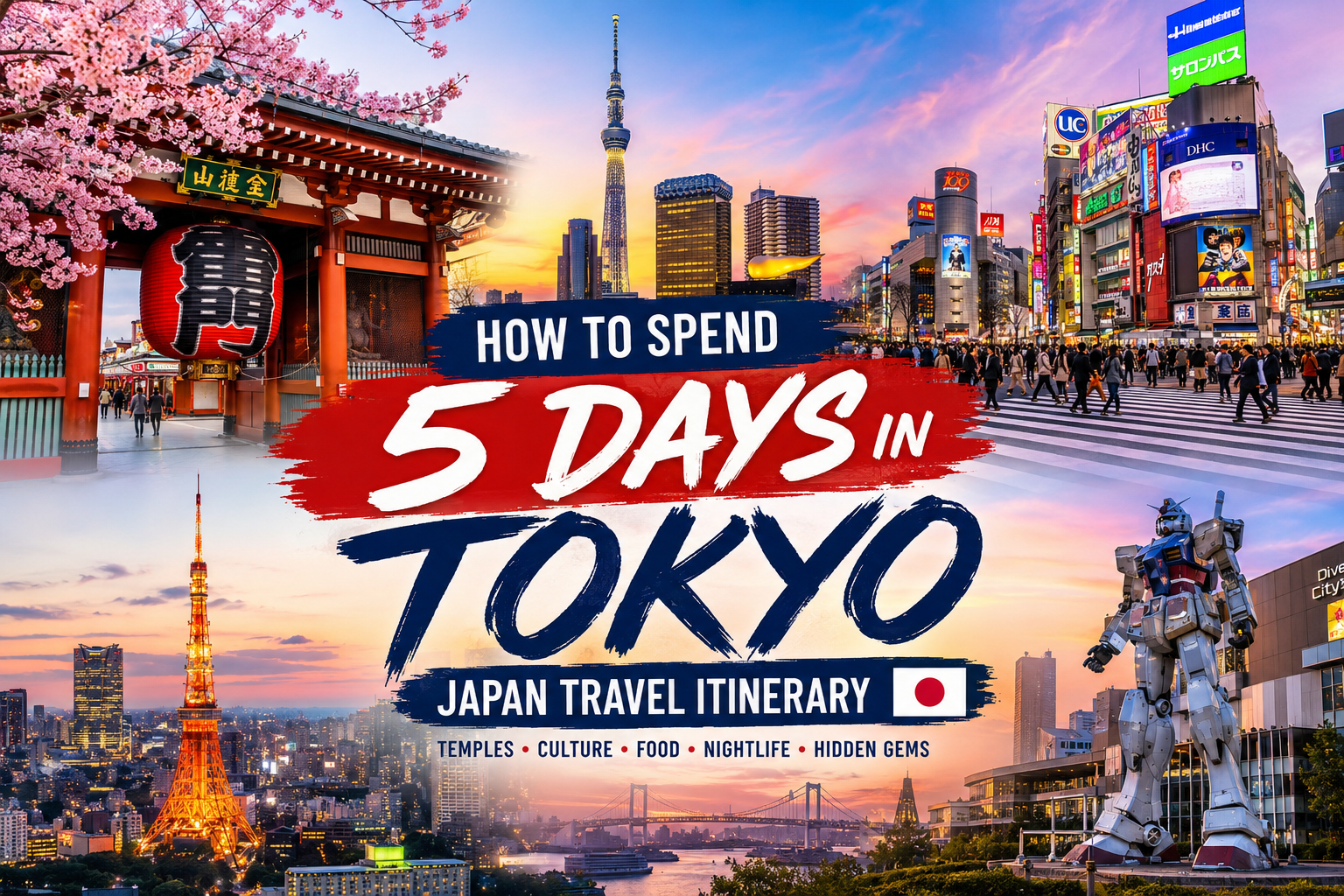
Tokyo is unlike any city on Earth. It is a place where ancient temples stand beside futuristic skyscrapers, where centuries-old traditions coexist with cutting-edge technology, and where peaceful gardens offer refuge from one of the world’s busiest urban environments.
Home to more than 14 million people, Tokyo can seem overwhelming at first glance. The vast train network, endless neighborhoods, flashing neon lights, and seemingly infinite attractions can leave first-time visitors wondering where to begin.
The good news is that Tokyo is surprisingly easy to navigate once you understand its transport system. The famous Yamanote Line connects many of the city’s major districts, making it possible to explore most of Tokyo efficiently and comfortably.
This five-day Tokyo itinerary is designed to help first-time visitors experience the very best of Japan’s capital city. From ancient temples and tranquil gardens to vibrant nightlife and modern attractions, this itinerary combines the classic highlights with authentic local experiences.
By the end of these five days, you will understand why Tokyo consistently ranks among the most exciting destinations in the world.
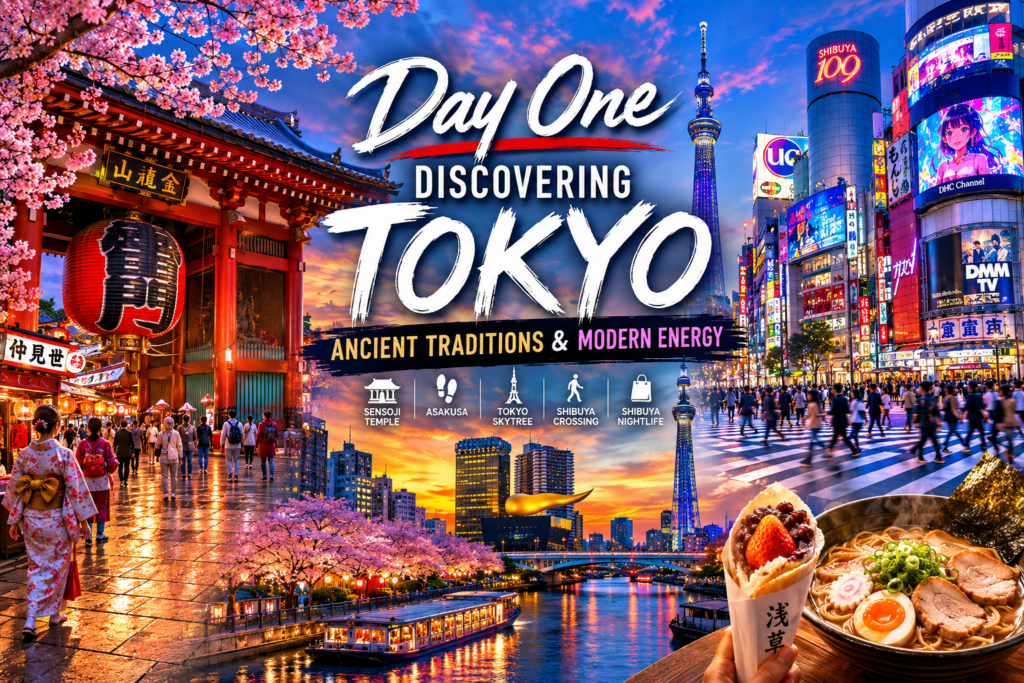
Day One Discovering Tokyo’s Ancient Traditions And Modern Energy
The perfect introduction to Tokyo begins with one of its most iconic landmarks.
Start your day early at Sensoji Temple in Asakusa. As Tokyo’s oldest temple, Sensoji offers visitors a glimpse into Japan’s rich spiritual heritage. Arriving early is essential because crowds quickly fill the area throughout the day.
Walking through the famous Kaminarimon Gate is an unforgettable experience. The giant red lantern hanging beneath the gate is one of Tokyo’s most photographed sights.
Beyond the gate lies Nakamise Street, a bustling shopping avenue lined with traditional stalls selling souvenirs, snacks, and handcrafted goods. The atmosphere feels distinctly Japanese and serves as the perfect introduction to the city.
At the end of the street stands the magnificent temple itself. Incense smoke drifts through the air while visitors offer prayers and participate in centuries-old traditions.
After exploring the temple grounds, spend time wandering the surrounding streets of Asakusa. This neighborhood preserves much of old Tokyo’s character and charm.
Stop for a traditional Japanese breakfast or lunch. Fresh sushi, tempura, soba noodles, or a simple bento box provide an authentic culinary introduction to Japan.
A short walk from Sensoji brings you to the Sumida River. During cherry blossom season, the riverbanks become one of Tokyo’s most beautiful locations as thousands of sakura trees burst into bloom.
From here, you’ll enjoy impressive views of Tokyo Skytree.
Standing at 634 meters, Tokyo Skytree dominates the skyline and serves as one of the tallest structures in the world. On clear days, visitors can enjoy panoramic views extending across the city and even glimpse Mount Fuji in the distance.
While admission requires an additional fee, the breathtaking views make it worthwhile if weather conditions are favorable.
As evening approaches, head toward Shibuya.
Few places capture Tokyo’s energy better than Shibuya Crossing. Every few minutes, thousands of pedestrians flow across the intersection from every direction, creating one of the most famous urban scenes on the planet.
The experience is far more impressive in person than any photograph can convey.
Spend time exploring the surrounding streets filled with shopping centers, restaurants, entertainment venues, and vibrant nightlife.
For dinner, consider trying Japanese barbecue, ramen, sushi, or izakaya-style dining.
As your first day comes to an end, enjoy the electric atmosphere of Shibuya’s illuminated streets. The combination of tradition and modernity experienced throughout the day perfectly captures Tokyo’s unique character.
Day Two Exploring Gardens Anime Culture And Shinjuku Nightlife

After an action-packed first day, the second day offers a more balanced mix of relaxation and urban exploration.
Begin your morning at the Tokyo Imperial Palace East Gardens.
Located in the heart of the city, these beautifully maintained grounds provide a peaceful escape from Tokyo’s constant activity. Walking paths wind through traditional gardens, historic stone walls, and carefully landscaped areas.
The contrast between ancient greenery and modern skyscrapers creates a uniquely Tokyo experience.
During spring, cherry blossoms transform the gardens into one of the city’s most picturesque locations.
Visitors can spend hours strolling through the grounds, enjoying the tranquility and observing local residents enjoying the scenery.
Nearby lies Yasukuni Shrine, one of Tokyo’s most visually striking religious sites. While the shrine’s historical associations remain controversial, its architecture and grounds are undeniably impressive.
Summer visitors may witness the famous Mitama Festival, during which thousands of lanterns illuminate the shrine in a breathtaking display.
After lunch, make your way to Akihabara.
Known as Tokyo’s Electric Town, Akihabara represents the heart of Japan’s anime, manga, gaming, and technology culture.
Bright signs, electronic stores, themed cafes, and anime shops fill the district. Whether you’re a devoted fan or simply curious, Akihabara offers a fascinating look into modern Japanese pop culture.
Browse multi-story electronics stores filled with gadgets and technology unavailable elsewhere.
Explore anime merchandise shops showcasing everything from collectibles to rare memorabilia.
Visit arcades packed with gaming enthusiasts enjoying everything from classic machines to cutting-edge virtual reality experiences.
As evening arrives, head to Shinjuku.
Shinjuku Station is among the busiest transportation hubs in the world, serving millions of passengers daily.
Nearby lies Omoide Yokocho, a narrow alleyway packed with tiny restaurants and bars. Originally a post-war black market, the area now offers one of Tokyo’s most atmospheric dining experiences.
Order yakitori skewers, local beer, and traditional Japanese dishes while soaking in the nostalgic atmosphere.
Later, walk through Kabukicho.
Tokyo’s entertainment district comes alive after dark. Neon lights illuminate the streets while restaurants, bars, and entertainment venues create an exciting atmosphere.
Although often referred to as Japan’s largest red-light district, Kabukicho is generally safe and far less intimidating than many visitors expect.
Finish the evening at Golden Gai.
This legendary collection of narrow alleys contains hundreds of tiny bars, each with its own unique personality.
Many bars accommodate only a handful of customers at a time, creating intimate and memorable experiences that are difficult to find elsewhere in the world.
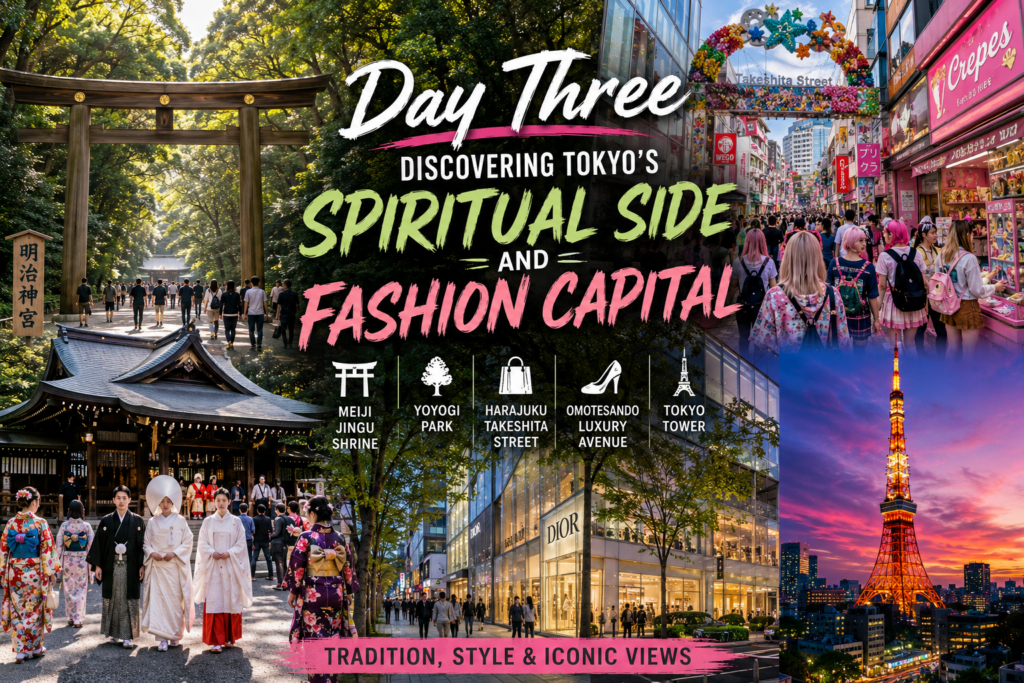
Day Three Discovering Tokyo’s Spiritual Side And Fashion Capital
Day three begins with one of Tokyo’s most serene destinations.
Meiji Jingu Shrine sits within a vast forested area adjacent to Yoyogi Park. Despite being located in one of the world’s largest cities, the shrine feels remarkably peaceful.
Towering trees line the pathways leading to the shrine, creating a calming atmosphere from the moment you arrive.
Dedicated to Emperor Meiji and Empress Shoken, the shrine serves as an important spiritual center for many Japanese people.
Visitors often witness traditional ceremonies, prayers, and occasionally even Japanese weddings.
The tranquil environment offers a refreshing contrast to Tokyo’s bustling urban districts.
Next, explore Yoyogi Park.
The park attracts joggers, families, musicians, and picnickers throughout the year. During cherry blossom season, it becomes one of Tokyo’s most popular hanami locations.
Continue toward nearby Harajuku.
Harajuku is famous for youth fashion, creativity, and individuality. Takeshita Street serves as the neighborhood’s colorful centerpiece.
The narrow pedestrian street is lined with quirky boutiques, themed cafes, sweet shops, and fashion outlets.
Visitors can sample famous Japanese crepes loaded with fruit, whipped cream, and chocolate.
The district constantly evolves, making every visit slightly different from the last.
Just a short distance away lies Omotesando.
Often referred to as Tokyo’s luxury boulevard, Omotesando features designer boutiques, upscale shopping centers, and remarkable architecture.
The tree-lined avenue feels elegant and sophisticated, offering a completely different atmosphere from Harajuku’s youthful energy.
Architecture enthusiasts particularly enjoy walking through Omotesando because many buildings were designed by internationally renowned architects.
As night falls, head toward Tokyo Tower.
Inspired by the Eiffel Tower, Tokyo Tower remains one of the city’s most recognizable landmarks despite newer observation towers.
Illuminated against the night sky, the tower creates a stunning visual spectacle.
Visitors can ascend to observation decks offering beautiful nighttime views across Tokyo’s endless skyline.
Even if you choose not to go up, the area surrounding the tower provides excellent photo opportunities.
The evening atmosphere perfectly concludes a day focused on Tokyo’s unique blend of spirituality, fashion, and architecture.
Day Four Exploring Beyond Central Tokyo

By day four, you’ll have experienced many of Tokyo’s highlights. This is the ideal time to explore beyond the city centre.
One of the greatest advantages of Tokyo is its location. Excellent rail connections make day trips incredibly convenient.
Among the best options is Yokohama.
Located less than an hour away, Yokohama is Japan’s second-largest city yet feels noticeably more relaxed than Tokyo.
The waterfront district of Minato Mirai features impressive modern architecture, shopping centers, museums, and scenic harbor views.
The giant Ferris wheel provides excellent views across the bay.
Yokohama Chinatown is another must-visit attraction.
As one of the largest Chinatowns in the world, it offers exceptional dining opportunities and vibrant cultural experiences.
For nature lovers, Hakone provides an excellent escape.
Famous for hot springs, mountain scenery, and views of Mount Fuji, Hakone offers a completely different side of Japan.
Visitors can ride cable cars, cruise across Lake Ashi, and relax in traditional onsen resorts.
Another excellent choice is Nikko.
Known for its magnificent temples and natural beauty, Nikko is often considered one of Japan’s most important historical destinations.
The ornate Toshogu Shrine is particularly impressive and showcases some of Japan’s finest craftsmanship.
Theme park enthusiasts may choose Tokyo Disneyland or Tokyo DisneySea.
Tokyo DisneySea, in particular, receives praise for its unique design and attractions unavailable elsewhere in the world.
Regardless of your chosen destination, day four provides an opportunity to experience another dimension of Japan beyond central Tokyo.
Day Five Experiencing Futuristic Tokyo And Odaiba

Your final full day in Tokyo should be dedicated to one of the city’s most extraordinary modern attractions.
Begin at TeamLab Planets.
This immersive digital art experience combines technology, light, sound, and movement to create environments unlike anything else.
Visitors walk barefoot through interactive installations that react to their presence.
Rooms filled with floating lights, reflective surfaces, and dynamic visual displays create unforgettable sensory experiences.
Advance reservations are strongly recommended because tickets frequently sell out.
Many travelers consider TeamLab Planets the highlight of their entire Tokyo visit.
Afterward, head toward Toyosu Market.
This modern facility replaced the famous Tsukiji Fish Market and continues Tokyo’s tradition as one of the world’s great seafood centers.
Visitors can observe market activity, enjoy exceptionally fresh sushi, and experience an important aspect of Japanese food culture.
Spend the remainder of the day exploring Odaiba.
Built on a man-made island in Tokyo Bay, Odaiba offers entertainment, shopping, waterfront views, and futuristic architecture.
Highlights include:
- DiverCity Tokyo Plaza
- The life-sized Gundam statue
- Aqua City shopping center
- Decks Tokyo Beach
- Seaside Park
- Rainbow Bridge viewpoints
The area provides a more relaxed atmosphere than central Tokyo while still offering plenty of attractions.
Watching the sun set over Tokyo Bay is a fitting way to conclude your adventure.
As darkness falls, the illuminated Rainbow Bridge and distant skyline create one final unforgettable memory.
Essential Tokyo Travel Tips For First Time Visitors
Before ending your Tokyo adventure, it is worth reviewing several practical tips that will make your trip smoother.
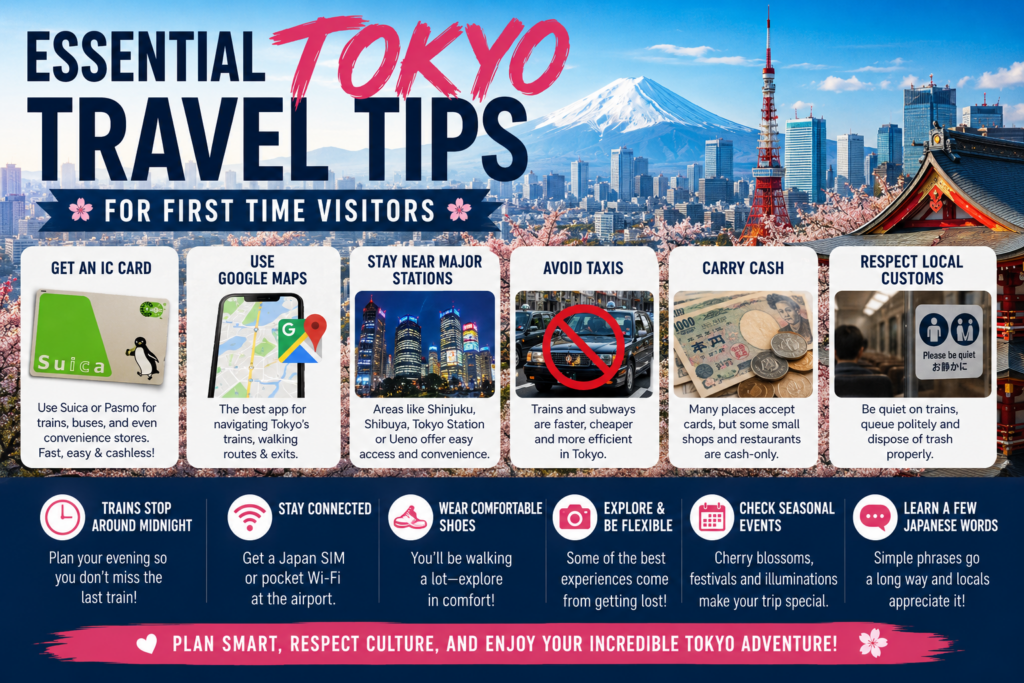
Purchase an IC card such as Suica, Pasmo, or ICOCA whenever possible. These rechargeable cards simplify travel across trains, buses, and even convenience stores.
Download Google Maps before arrival. Tokyo’s transportation network may appear intimidating, but Google Maps provides highly accurate directions and transfer information.
Stay near major transport hubs such as Shinjuku, Shibuya, Ueno, or Tokyo Station for maximum convenience.
Avoid taking taxis unless necessary. Tokyo’s train system is faster, cheaper, and generally more efficient.
Carry cash alongside your credit cards. Although Japan is becoming increasingly cashless, some smaller establishments still prefer cash payments.
Respect local customs by speaking quietly on public transportation, disposing of rubbish properly, and following queue etiquette.
Finally, leave room for spontaneity.
Tokyo rewards exploration. Some of the city’s most memorable experiences happen when you wander into an unexpected alleyway, discover a hidden restaurant, or stumble upon a neighborhood festival.
Five days is enough time to fall in love with Tokyo, but it is rarely enough time to see everything. Most visitors leave already planning their return.
That is perhaps the greatest testament to Tokyo itself. It is a city that never stops evolving, never stops surprising, and never fails to leave a lasting impression on those fortunate enough to explore it.
Disclaimer
The information provided in this article is for general informational and educational purposes only. While every effort has been made to ensure the accuracy of the information at the time of writing, travel conditions, entry requirements, opening hours, ticket prices, local regulations, and accessibility may change without notice.
Readers are encouraged to verify all travel information with official tourism boards, government agencies, airlines, accommodation providers, and local authorities before making travel plans or bookings.
The destinations featured in this article are based on their historical, cultural, natural, and tourism significance. The opinions expressed are for informational purposes only and should not be considered professional travel, legal, health, safety, or financial advice.
FoxiManna.com and its authors are not responsible for any losses, injuries, inconveniences, travel disruptions, or damages that may result from the use of information contained in this article. Travelers are responsible for conducting their own research and making informed decisions based on their individual circumstances.
By using this website and reading this article, you agree that any reliance on the information provided is at your own risk.