

Vienna is one of Europe’s most elegant and fascinating cities. A destination where imperial palaces, world-class museums, charming cafés, beautiful parks, and centuries of history blend effortlessly with a modern and vibrant lifestyle. As the capital of Austria, Vienna attracts millions of visitors every year, yet it somehow manages to maintain a relaxed atmosphere that encourages visitors to slow down and truly enjoy the experience.
Whether you are planning a weekend getaway or a longer European adventure, Vienna offers something for everyone. History lovers can explore grand palaces and royal residences. Art enthusiasts can admire masterpieces by some of Europe’s greatest artists. Food lovers can indulge in traditional Viennese cuisine and legendary coffee house culture. Nature lovers can enjoy expansive gardens, vineyards, and green spaces scattered throughout the city.
The best part is that Vienna is remarkably easy to explore. Despite being a large city, its historic center is compact and walkable, making it ideal for first-time visitors.
This guide will help you discover the very best of Vienna, including must-see attractions, hidden gems, local food, transportation tips, and practical advice that will help you make the most of your visit.
Understanding Vienna And Planning The Perfect Visit
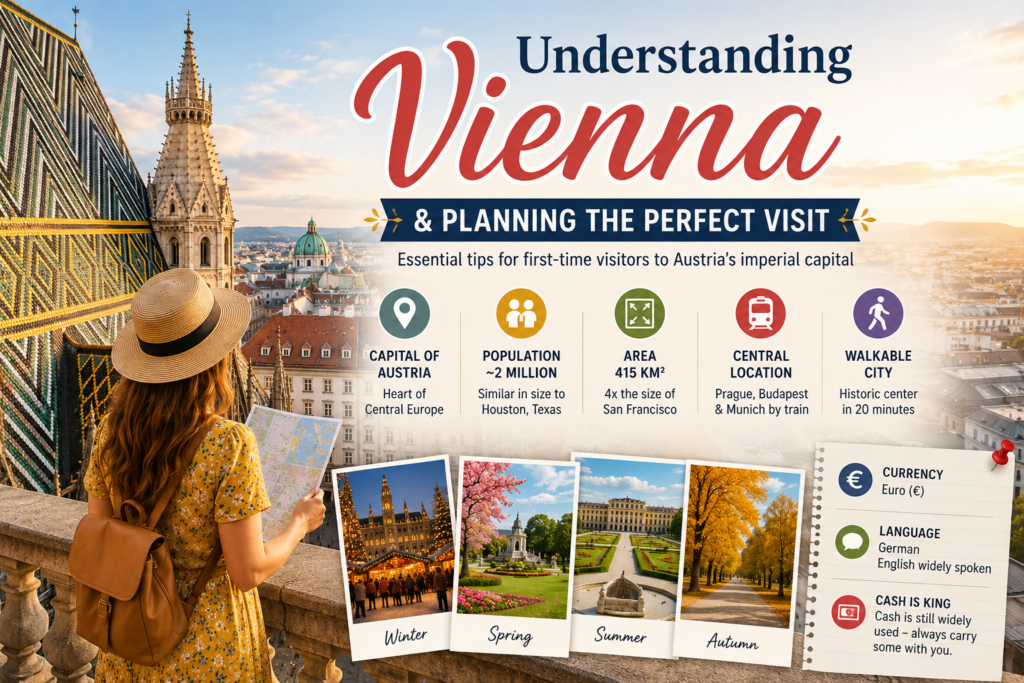
Vienna sits in the heart of Central Europe and serves as an excellent gateway to other famous European cities. Destinations such as Prague, Budapest, and Munich are all within easy reach by train, making Vienna an ideal stop on a larger European itinerary.
The city covers approximately 415 square kilometers and is home to around two million residents. Although large in size, the historic center feels surprisingly compact. Most of the major attractions can be reached on foot or via the city’s excellent public transport system.
Choosing the right time to visit can significantly enhance your experience.
Spring is one of the most beautiful seasons in Vienna. Parks and gardens burst into bloom, outdoor cafés reopen, and temperatures become pleasant for sightseeing.
Summer offers long daylight hours and vibrant outdoor events. Palace gardens are at their most beautiful, and visitors can enjoy riverside bars and outdoor concerts. However, temperatures can regularly exceed 30°C.
Autumn brings cooler temperatures, fewer tourists, and stunning colors throughout the city’s parks and vineyards.
Winter transforms Vienna into a magical wonderland. The city hosts some of Europe’s most famous Christmas markets, and the festive atmosphere creates a truly unforgettable experience.
Vienna uses the Euro as its currency. One important thing visitors should know is that cash remains surprisingly common throughout Austria. While major hotels, restaurants, and attractions accept cards, many smaller cafés, shops, and traditional establishments still prefer cash.
English is widely spoken in tourist areas, hotels, museums, and restaurants. However, learning a few basic German phrases such as “Guten Tag” and “Danke” will always be appreciated by locals.
Exploring Vienna’s Historic Landmarks And Imperial Heritage
Vienna’s history is impossible to ignore. Every street, square, and building seems to tell a story from centuries past.
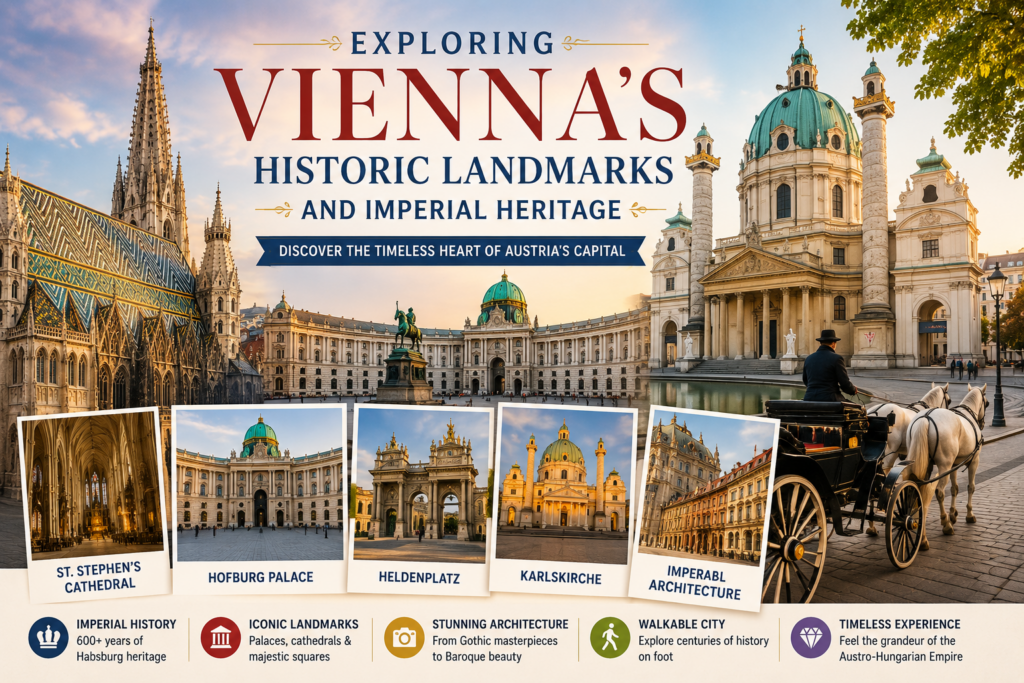
The city’s most iconic landmark is undoubtedly the magnificent St. Stephen’s Cathedral. Rising dramatically above the city skyline, this Gothic masterpiece has stood at the heart of Vienna for centuries.
The cathedral’s colourful tiled roof has become one of Vienna’s most recognizable symbols. Visitors can explore the interior free of charge, while those seeking panoramic views should head to the North Tower, which offers an easier and more comfortable ascent than the narrow staircase of the South Tower.
Another remarkable religious landmark is Karlskirche. Its massive green dome and impressive columns make it one of Vienna’s most beautiful churches. During sunset, the reflections in the pond outside create one of the city’s most photogenic scenes.
History lovers should also explore Hofburg Palace. For more than 600 years, this vast complex served as the center of power for the Habsburg dynasty.
Walking through the palace grounds feels like stepping into another era. Massive courtyards, grand architecture, and centuries of imperial history combine to create an unforgettable experience.
Nearby, visitors can explore Heldenplatz, one of Vienna’s most impressive public squares, surrounded by magnificent imperial buildings and monuments.
One of Vienna’s greatest pleasures is simply wandering through the historic city center. The elegant streets, grand facades, and beautifully preserved architecture create an atmosphere unlike anywhere else in Europe.
You quickly realize that Vienna itself feels like a living museum.
Discovering The Palaces Museums And Artistic Treasures
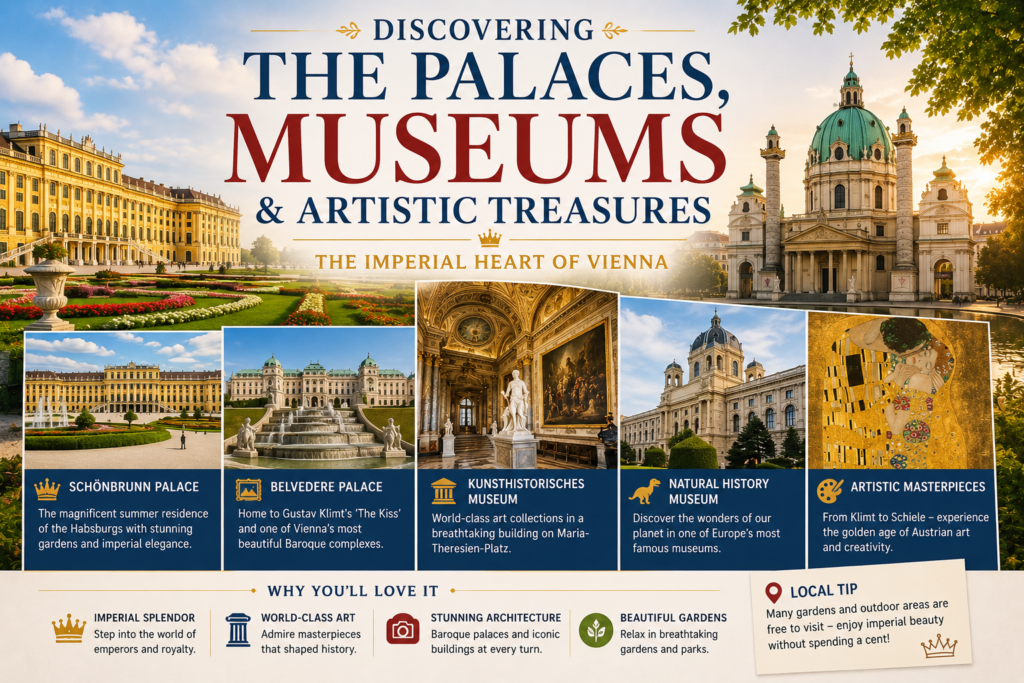
No trip to Vienna would be complete without visiting the spectacular Schönbrunn Palace.
Often compared to Versailles, this enormous palace served as the summer residence of the Habsburg rulers. With 1,441 rooms, it is one of Europe’s most impressive royal residences.
The palace interiors are stunning, but visitors on a budget can still enjoy much of the experience for free. The vast gardens surrounding the palace are open to the public and offer endless opportunities for walking, photography, and relaxation.
Be sure to climb to the Gloriette, which provides one of the finest views across Vienna.
Art lovers should make time for the magnificent Belvedere Palace.
This stunning Baroque complex houses some of Austria’s most important artistic treasures, including the famous painting The Kiss by Gustav Klimt.
Standing in front of this masterpiece is a highlight for many visitors. The gold leaf details create a remarkable glow that photographs simply cannot capture.
For those interested in world-class collections, the Kunsthistorisches Museum is an absolute must-visit.
The building itself is a work of art. Grand staircases, ornate ceilings, and magnificent architecture rival many of the exhibits inside.
The museum houses collections accumulated by the Habsburg dynasty over centuries, including priceless paintings, sculptures, armour, and decorative arts.
Nearby stands the equally impressive Natural History Museum Vienna, creating one of the most beautiful museum squares in Europe.
Even visitors who are not passionate about museums often find themselves captivated by the sheer grandeur of these institutions.
Walking Through Vienna’s Parks Neighborhoods And Hidden Gems
While Vienna’s major attractions deserve their fame, some of the city’s greatest treasures lie beyond the traditional tourist route.
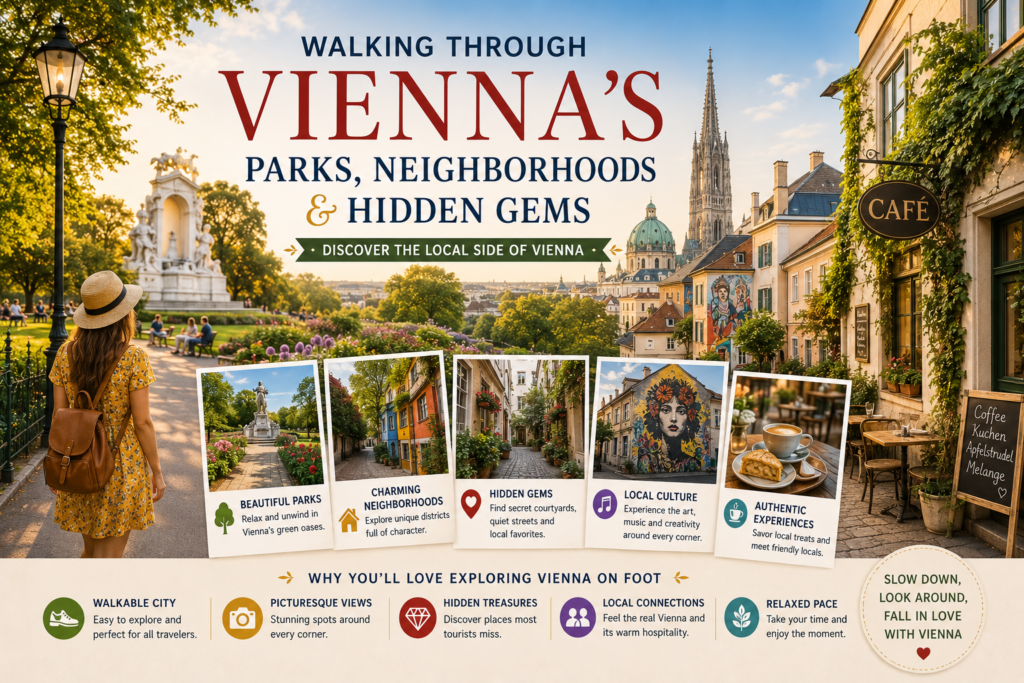
One of the most beautiful green spaces is the Volksgarten.
Located near Hofburg Palace, this elegant park contains hundreds of varieties of roses during the summer months. Visitors can relax among colourful flower displays while enjoying views of classical monuments and historic buildings.
For a quieter and more intimate experience, explore the charming district of Spittelberg.
This former working-class area has transformed into one of Vienna’s most picturesque neighbourhoods. Narrow cobbled streets, colourful buildings, independent boutiques, and cosy cafés create a distinctly local atmosphere.
It is the perfect place to escape the crowds and experience everyday Viennese life.
Another favourite local destination is the Danube Canal.
During warmer months, the canal becomes one of Vienna’s social hubs. Street art covers the walls, beach bars line the waterfront, and locals gather to enjoy food, drinks, and sunshine.
Families and thrill seekers should visit the famous Prater amusement park.
The park’s iconic Giant Ferris Wheel has become one of Vienna’s most recognizable landmarks. Entry to the park is free, and visitors simply pay for individual rides.
For panoramic city views, the Danube Tower offers spectacular 360-degree vistas across the Austrian capital.
Nature lovers seeking something different should head to the vast forests and green spaces of the Vienna Woods, where hiking trails, wildlife, and peaceful scenery provide a refreshing contrast to the city’s urban grandeur.
Experiencing Vienna’s Incredible Food Coffee And Wine Culture
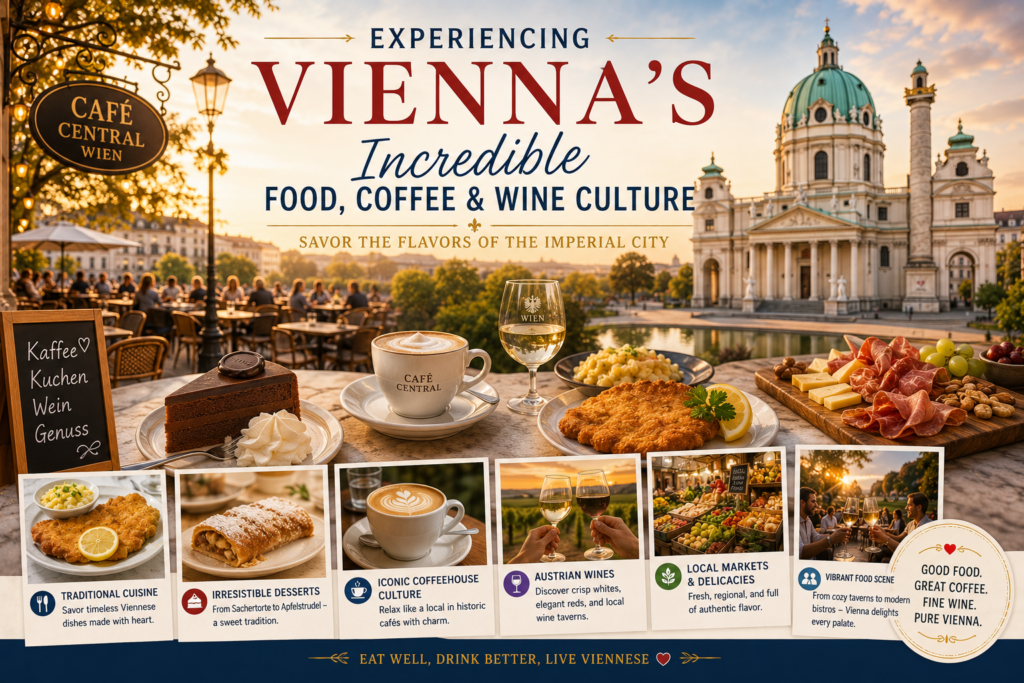
Vienna is a paradise for food lovers.
The city’s culinary traditions reflect centuries of imperial influence and cultural exchange.
The most famous local dish is undoubtedly Wiener Schnitzel.
This iconic meal consists of thinly pounded veal coated in breadcrumbs and fried until perfectly golden and crisp. Served with potato salad or parsley potatoes, it remains one of Austria’s most beloved dishes.
Another classic experience is Tafelspitz, once a favourite meal of Emperor Franz Joseph.
This traditional dish features tender boiled beef served with rich broth, horseradish, applesauce, and various accompaniments. The preparation and presentation turn a simple meal into a memorable culinary event.
For quick and affordable meals, visitors should seek out Vienna’s famous sausage stands.
The Käsekrainer sausage is particularly popular. Filled with melted cheese, it delivers an explosion of flavour with every bite.
Food markets offer another fantastic way to explore local culture.
The famous Naschmarkt features stalls selling fresh produce, spices, international foods, and local delicacies.
Vienna is equally famous for its desserts.
The legendary Sachertorte remains the city’s most famous cake. This rich chocolate creation has become a symbol of Austrian culinary heritage.
However, many locals prefer Kaiserschmarrn, a delicious shredded pancake caramelized with butter and sugar and served with fruit compote.
No discussion of Vienna would be complete without mentioning its café culture.
Viennese coffee houses are not merely places to drink coffee. They function as social institutions.
Visitors can order a Melange, Vienna’s version of a cappuccino, and spend hours reading, writing, or simply watching the world go by.
Unlike many modern cafés, there is no pressure to leave quickly.
Finally, wine enthusiasts should explore Vienna’s unique wine culture.
Remarkably, Vienna is the only major capital city in the world with significant vineyards located within its city limits.
Traditional wine taverns known as Heurigen offer the perfect opportunity to sample local wines while enjoying authentic Austrian hospitality.
Essential Transportation Tips Money Saving Advice And Common Mistakes To Avoid
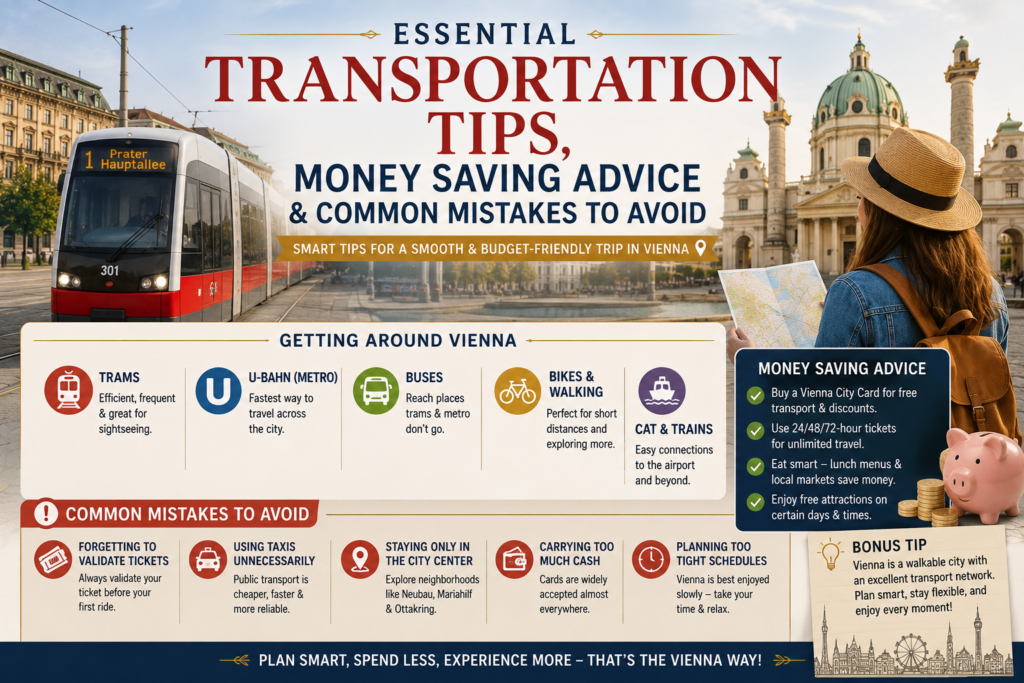
Getting from Vienna International Airport to the city center is simple.
Many visitors are tempted by the fast City Airport Train. While convenient, it is significantly more expensive than the standard public transport options.
The S7 train and Railjet services provide excellent value and reach the city center for a fraction of the cost.
Once inside Vienna, public transport becomes your best friend.
Vienna consistently ranks among the world’s best public transportation systems. The metro, trams, and buses are efficient, clean, and remarkably punctual.
One important thing visitors must understand is Vienna’s trust-based ticket system.
There are no barriers or turnstiles at many stations. However, tickets are still required.
Undercover inspectors frequently conduct checks, and fines for travelling without a valid ticket can be expensive.
Always validate physical tickets before boarding.
Comfortable footwear is another essential travel item.
Vienna’s historic streets are beautiful, but the cobblestones can quickly become uncomfortable if you are wearing unsuitable shoes.
When it comes to concerts and cultural events, avoid purchasing tickets from unofficial street sellers dressed in historical costumes. Instead, buy directly from official venues such as the opera house.
Visitors can also save significant money by carrying a reusable water bottle.
Vienna’s tap water comes directly from Alpine mountain springs and is among the highest quality drinking water in Europe. Public drinking fountains are widely available throughout the city.
Sunday shopping restrictions often surprise tourists. Most shops and supermarkets close on Sundays, so plan ahead if you need groceries, snacks, or supplies.
Tipping is appreciated but generally modest. Rounding up the bill or adding around ten percent for excellent service is usually sufficient.
Perhaps the most important advice of all is this:
Do not try to see everything.
Vienna rewards slow travel. The city is best enjoyed by taking time to wander through elegant streets, lingering in cafés, exploring gardens, and embracing the relaxed rhythm of local life.
Why Vienna Is One Of Europe’s Most Rewarding Destinations
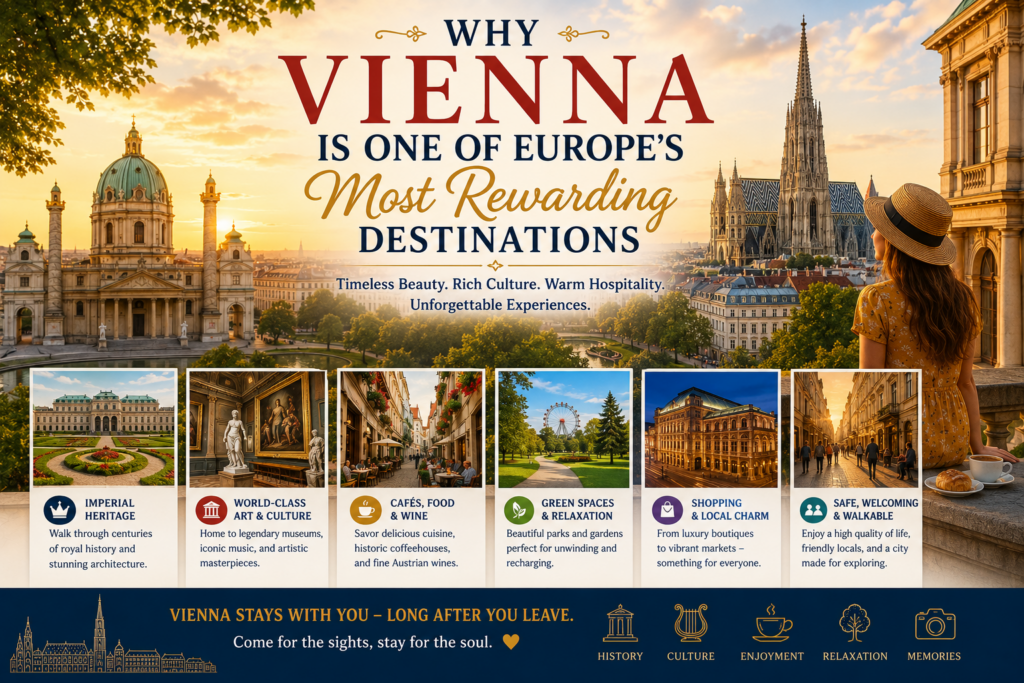
Vienna is a city that effortlessly combines grandeur and comfort. Few places in the world allow visitors to explore imperial palaces in the morning, admire world-class art in the afternoon, relax in a historic coffee house in the evening, and finish the day sipping local wine in a vineyard overlooking the city.
The Austrian capital offers extraordinary history, stunning architecture, exceptional food, efficient transportation, and a quality of life that consistently ranks among the best in the world.
Whether you are visiting for two days or two weeks, Vienna leaves a lasting impression. Its elegant streets, cultural treasures, welcoming atmosphere, and timeless beauty create memories that stay with travellers long after they return home.
Instead of rushing through a checklist of attractions, allow yourself to slow down and experience Vienna the way locals do. Wander without a plan, spend extra time in a café, sit in a garden surrounded by roses, and enjoy the city’s unique blend of sophistication and charm.
That is when Vienna truly reveals its magic.
Disclaimer
The information provided in this article is for general informational and educational purposes only. While every effort has been made to ensure the accuracy of the information at the time of writing, travel conditions, entry requirements, opening hours, ticket prices, local regulations, and accessibility may change without notice.
Readers are encouraged to verify all travel information with official tourism boards, government agencies, airlines, accommodation providers, and local authorities before making travel plans or bookings.
The destinations featured in this article are based on their historical, cultural, natural, and tourism significance. The opinions expressed are for informational purposes only and should not be considered professional travel, legal, health, safety, or financial advice.
FoxiManna.com and its authors are not responsible for any losses, injuries, inconveniences, travel disruptions, or damages that may result from the use of information contained in this article. Travelers are responsible for conducting their own research and making informed decisions based on their individual circumstances.
By using this website and reading this article, you agree that any reliance on the information provided is at your own risk.