

Cape Town is one of the most spectacular cities on Earth. Nestled between dramatic mountains and the deep blue waters of the Atlantic Ocean, this South African gem offers a perfect combination of natural beauty, rich history, vibrant culture, incredible wildlife, and world-class food.
Many travellers arrive expecting a beautiful city. They leave wondering why they did not stay longer.
Cape Town has something for everyone. Adventure lovers can hike famous mountain trails, thrill seekers can fly over the coastline in helicopters, wildlife enthusiasts can watch African penguins and seals, while food lovers can enjoy some of the best dining experiences in Africa.
After spending several days exploring Cape Town and the surrounding Cape Peninsula, it becomes clear why so many visitors consider it one of the greatest travel destinations in the world.
This guide explores the very best things to do in Cape Town and will help you plan an unforgettable trip to one of Africa’s most exciting cities.
Discovering Table Mountain And Cape Town’s Iconic Peaks

No visit to Cape Town would be complete without experiencing Table Mountain.
Rising 1,086 metres above sea level, this enormous flat-topped mountain dominates the city’s skyline and serves as one of the most recognisable landmarks in the world.
From almost every corner of Cape Town, you can see Table Mountain standing proudly above the city. Its dramatic cliffs and unique shape create a breath taking backdrop unlike anywhere else on Earth.
There are two main ways to reach the summit.
The easiest option is the Table Mountain Aerial Cableway. The rotating cable car transports visitors to the summit in approximately ten minutes while offering incredible panoramic views during the ascent.
For those seeking adventure, hiking to the top is an unforgettable experience.
One of the most popular hiking routes is Platteklip Gorge. The trail takes between ninety minutes and two hours depending on fitness levels and involves a challenging climb up thousands of stone steps.
The effort is rewarded with spectacular scenery along the way.
As you ascend, the city gradually unfolds beneath you. The Atlantic Ocean stretches endlessly into the distance while the surrounding mountain ranges reveal themselves from new perspectives.
Once at the summit, visitors are treated to one of the finest viewpoints in the world.
Walking trails crisscross the mountaintop, allowing visitors to explore different viewpoints overlooking the city, coastline, and surrounding landscapes.
The summit is also home to souvenir shops, cafés, and information centres.
Weather conditions play a major role in the Table Mountain experience.
One of Cape Town’s most famous natural phenomena is the “tablecloth,” a thick layer of cloud that rolls over the mountain and spills down its sides like a waterfall. While beautiful from below, it can obscure views from the summit.
Checking weather forecasts before visiting is highly recommended.
Another must-visit peak is Lion’s Head.
Located between Table Mountain and Signal Hill, Lion’s Head offers some of the best panoramic views in Cape Town.
Unlike Table Mountain’s broad summit, Lion’s Head forms a dramatic peak that provides 360-degree views of the entire region.
The hike to the summit is approximately 5.3 kilometres and gains around 400 metres in elevation.
The trail spirals around the mountain, meaning hikers enjoy constantly changing perspectives throughout the journey.
As you climb higher, views emerge over Camps Bay, Table Mountain, the city centre, and the Atlantic coastline.
The final section becomes more adventurous, requiring climbers to navigate ladders, chains, and rocky sections.
While challenging, the effort is worthwhile.
Standing on the summit as the sun rises or sets is an experience many visitors describe as magical.
Nearby Signal Hill provides another fantastic viewpoint without requiring a strenuous hike.
The hill overlooks the city and offers excellent views of Table Mountain, Robben Island, and Cape Town Stadium.
Signal Hill is also famous for the Noon Gun, a cannon that has been fired daily at midday for centuries.
Together, Table Mountain, Lion’s Head, and Signal Hill provide some of the most memorable experiences in Cape Town.
Exploring Bo-Kaap And The Vibrant Heart Of Cape Town
Cape Town’s natural beauty often receives the most attention, but its cultural attractions are equally fascinating.
One of the city’s most colourful and historically significant neighbourhoods is Bo-Kaap.
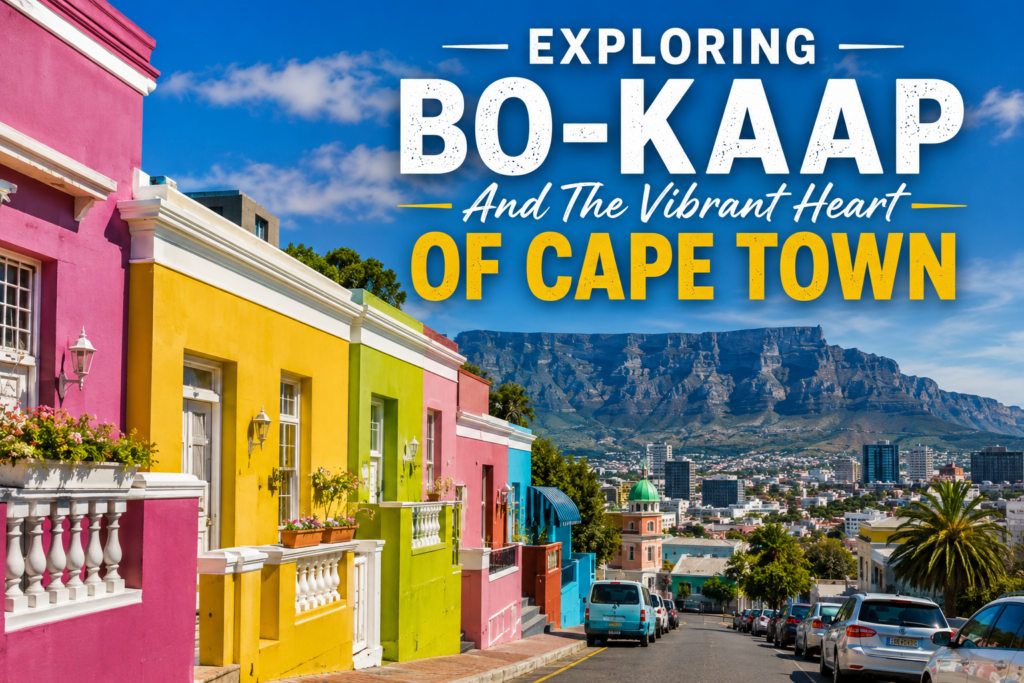
Located at the foot of Signal Hill, Bo-Kaap is instantly recognisable thanks to its brightly painted houses.
Every street seems filled with vibrant shades of pink, blue, yellow, green, and orange.
These colourful buildings have become one of Cape Town’s most photographed attractions.
The history behind the colours is deeply meaningful.
During slavery, many residents were prohibited from expressing themselves freely through clothing and personal expression.
Following emancipation, residents celebrated their newfound freedom by painting their homes in bright colours.
Today, the neighbourhood remains a symbol of freedom, identity, and cultural pride.
Bo-Kaap is home to descendants of Malay, Indonesian, African, and Indian communities whose traditions continue to shape the area.
Walking through the streets feels like stepping into a living museum.
Beautiful architecture, historic mosques, local art galleries, and cultural landmarks create a fascinating atmosphere.
The area also offers opportunities to learn about Cape Malay cuisine.
Traditional dishes blend influences from Africa, Asia, and Europe, resulting in unique flavours that have become an important part of Cape Town’s culinary identity.
Visitors can explore the Bo-Kaap Museum, which provides insight into the area’s history and cultural heritage.
Street photography enthusiasts will find endless opportunities here.
The colourful facades contrast beautifully against the backdrop of Table Mountain, creating iconic images that perfectly capture Cape Town’s vibrant character.
Beyond Bo-Kaap, Cape Town’s city centre offers bustling markets, historic buildings, lively cafés, and contemporary art spaces.
The blend of old and new gives the city a unique energy that appeals to travellers from around the world.
Spending time exploring these neighbourhoods helps visitors understand the rich cultural diversity that makes Cape Town such a fascinating destination.
The V&A Waterfront And The Best Experiences By The Ocean

The Victoria and Alfred Waterfront is one of Cape Town’s most popular attractions.
Situated beside the city’s working harbour, the waterfront combines shopping, dining, entertainment, and adventure into one vibrant destination.
The setting alone is spectacular.
Table Mountain rises dramatically behind the waterfront, creating one of the most photographed urban landscapes in the world.
Visitors can easily spend an entire day exploring the area.
The waterfront features numerous shops selling local crafts, fashion, jewellery, and souvenirs.
Restaurants range from casual cafés to fine dining establishments offering fresh seafood and international cuisine.
The harbour itself remains active, providing visitors with insight into Cape Town’s maritime heritage.
Boat tours depart regularly from the waterfront.
These excursions offer opportunities to view the city from the water while learning about Cape Town’s history and coastline.
One of the most entertaining attractions at the harbour is the colony of Cape fur seals.
These playful animals have become permanent residents and are often seen lounging on docks or swimming around fishing boats.
Watching their antics provides endless entertainment for visitors.
For elevated views, the Cape Wheel offers panoramic perspectives across the city, harbour, and mountains.
The giant observation wheel is particularly beautiful during sunset when golden light illuminates Table Mountain.
Those seeking an unforgettable adventure should consider a helicopter flight.
Cape Town’s dramatic geography becomes even more impressive from the air.
Flying above the coastline reveals hidden beaches, rugged mountains, and spectacular ocean scenery that cannot be fully appreciated from the ground.
Helicopter tours often follow the coastline past Camps Bay, Clifton, and the Twelve Apostles mountain range.
The experience provides a unique appreciation for the city’s natural beauty.
As evening approaches, the waterfront transforms into one of Cape Town’s most vibrant social hubs.
Street performers entertain visitors while restaurants fill with diners enjoying waterfront views.
The atmosphere is lively yet relaxed, making it an ideal place to unwind after a day of sightseeing.
Kirstenbosch Gardens, Camps Bay And Cape Town’s Most Beautiful Landscapes
Cape Town is famous for its incredible natural beauty, and few places showcase it better than Kirstenbosch National Botanical Garden.
Spread across more than 500 hectares on the slopes of Table Mountain, Kirstenbosch is considered one of the finest botanical gardens in the world.
Unlike many botanical gardens that focus on plants from around the globe, Kirstenbosch celebrates South Africa’s extraordinary native flora.
Walking through the gardens reveals a stunning variety of indigenous plants, flowers, and trees.
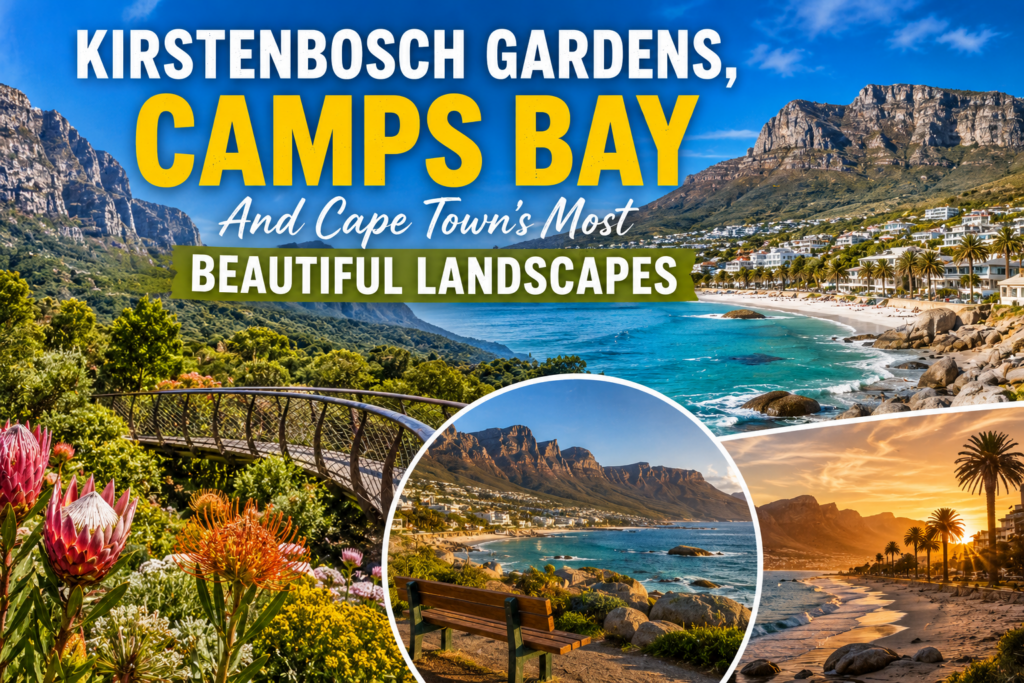
The famous protea, South Africa’s national flower, can be found throughout the gardens alongside colourful bird-of-paradise flowers and countless other species.
One of the highlights is the Tree Canopy Walkway.
This elevated structure winds through the treetops and offers unique perspectives of the surrounding landscape.
The walkway also provides incredible views of Table Mountain’s towering cliffs.
Visitors often spend hours wandering through peaceful pathways, relaxing on grassy lawns, and enjoying the tranquil atmosphere.
After exploring Kirstenbosch, many travellers head to Camps Bay.
Located just ten minutes from central Cape Town, Camps Bay is often regarded as one of the city’s most glamorous neighbourhoods.
The setting is spectacular.
White sandy beaches stretch along the coastline while the Twelve Apostles mountains rise dramatically behind them.
The combination creates scenery that rivals some of the world’s most famous coastal destinations.
Camps Bay is renowned for its vibrant restaurant and nightlife scene.
Beachfront cafés, rooftop bars, and stylish restaurants line the promenade.
As sunset approaches, visitors gather to watch the sky transform into shades of orange, pink, and purple.
Few places offer a more beautiful setting for an evening meal or drink.
The beaches themselves are perfect for relaxing, sunbathing, or simply enjoying the ocean views.
The atmosphere combines luxury, relaxation, and natural beauty in a way that feels uniquely Cape Town.
Another exceptional viewpoint can be found at Bloubergstrand.
Located about twenty-five minutes from the city centre, this area provides one of the most iconic views of Table Mountain.
Photographers frequently visit Bloubergstrand to capture the mountain rising across Table Bay.
The beach is also famous among kite surfers thanks to strong winds and ideal conditions.
Even those who do not participate in water sports will appreciate the dramatic scenery and expansive sandy beaches.
Wildlife Encounters At Boulders Beach And Cape Point

One of the most memorable day trips from Cape Town involves exploring the Cape Peninsula.
This scenic route combines wildlife encounters, breath taking landscapes, and some of South Africa’s most famous landmarks.
The first major stop is Boulders Beach near Simon’s Town.
This sheltered bay is home to a large colony of African penguins.
What began with just two penguins in the early 1980s has grown into a thriving population of more than three thousand birds.
Watching penguins in their natural habitat is a magical experience.
Visitors can observe them waddling across the sand, swimming in the ocean, caring for their young, and interacting with one another.
Boardwalks allow close observation without disturbing the animals.
The beach itself is stunning.
Massive granite boulders, estimated to be hundreds of millions of years old, create sheltered coves with calm waters.
The unique landscape makes Boulders Beach one of the most picturesque coastal destinations in South Africa.
Arriving early in the morning or later in the afternoon helps avoid crowds and provides better opportunities to observe penguin activity.
The area is also home to other wildlife, including baboons and rock hyraxes, commonly known as dassies.
Continuing south leads visitors to the Cape of Good Hope.
This legendary headland occupies a special place in maritime history.
For centuries, sailors regarded the Cape as one of the most significant navigational landmarks on Earth.
Today, it forms part of Table Mountain National Park and attracts visitors from around the globe.
The landscape is rugged and dramatic.
Towering cliffs plunge into the ocean while waves crash against rocky shorelines.
The scenery feels wild, untamed, and incredibly beautiful.
One of the most popular attractions is the famous Cape of Good Hope sign.
Visitors line up to take photographs at this iconic location marking the southwestern tip of the African continent.
Numerous walking trails explore the surrounding area.
Wooden staircases lead to elevated viewpoints overlooking the coastline.
The views from these cliffs are simply breathtaking.
Cape Point lies nearby and features one of South Africa’s most famous lighthouses.
Visitors can either hike up to the lighthouse or ride the Flying Dutchman Funicular.
From the summit, panoramic views stretch across the Atlantic Ocean and surrounding coastline.
The combination of wildlife, dramatic landscapes, and historical significance makes this one of the most rewarding excursions in Cape Town.
Food, Scenic Drives And Why Cape Town Should Be On Every Traveller’s Bucket List

Cape Town offers far more than natural beauty and wildlife.
The city’s food scene is one of the best in Africa.
One particularly memorable experience is an evening at Gold Restaurant.
This unique venue combines dining with cultural entertainment to create an immersive African experience.
Guests enjoy a multi-course tasting menu featuring dishes inspired by cuisines from across the African continent.
The meal is accompanied by live music, storytelling, drumming performances, and traditional dance.
Visitors are encouraged to participate, making the evening both interactive and entertaining.
The experience provides insight into Africa’s rich cultural diversity while introducing guests to a wide range of flavours.
Another culinary highlight can be found in Hout Bay.
This fishing community offers some of the freshest seafood in Cape Town.
Traditional fish and chips remain a favourite among both locals and visitors.
Hout Bay also serves as the gateway to several exciting marine experiences.
Boat tours visit Seal Island where large colonies of seals gather along the rocky coastline.
Some operators even offer opportunities to snorkel with seals.
Perhaps the most spectacular drive in South Africa begins just beyond Hout Bay.
Chapman’s Peak Drive winds along dramatic cliffs overlooking the Atlantic Ocean.
Widely regarded as one of the most beautiful coastal roads in the world, the route stretches approximately nine kilometres between Hout Bay and Noordhoek.
Numerous viewpoints allow travellers to stop and admire the scenery.
Towering cliffs, turquoise waters, rugged coastlines, and endless ocean vistas create unforgettable landscapes around every corner.
Driving this road during sunset is particularly magical.
The golden light illuminates the cliffs while the ocean sparkles below.
It is one of those travel experiences that remains etched in memory long after returning home.
Cape Town succeeds because it offers extraordinary variety.
In a single trip, visitors can hike mountains, watch penguins, explore botanical gardens, relax on stunning beaches, enjoy world-class cuisine, encounter wildlife, and experience rich cultural traditions.
Few destinations combine so many attractions within such a compact area.
Whether you are an adventure traveller, nature lover, photographer, foodie, or cultural explorer, Cape Town delivers unforgettable experiences.
It is a city where every day brings something new.
From the summit of Table Mountain to the shores of Boulders Beach, from the colourful streets of Bo-Kaap to the dramatic cliffs of Cape Point, Cape Town consistently exceeds expectations.
For many travellers, it becomes more than just a destination.
It becomes one of the most memorable places they have ever visited.
If South Africa is on your travel list, make sure Cape Town sits at the very top.
You may arrive planning to stay for a few days.
Like countless visitors before you, you might find yourself wishing you had stayed much longer.
Disclaimer
The information provided in this article is for general informational and educational purposes only. While every effort has been made to ensure the accuracy of the information at the time of writing, travel conditions, entry requirements, opening hours, ticket prices, local regulations, and accessibility may change without notice.
Readers are encouraged to verify all travel information with official tourism boards, government agencies, airlines, accommodation providers, and local authorities before making travel plans or bookings.
The destinations featured in this article are based on their historical, cultural, natural, and tourism significance. The opinions expressed are for informational purposes only and should not be considered professional travel, legal, health, safety, or financial advice.
FoxiManna.com and its authors are not responsible for any losses, injuries, inconveniences, travel disruptions, or damages that may result from the use of information contained in this article. Travelers are responsible for conducting their own research and making informed decisions based on their individual circumstances.
By using this website and reading this article, you agree that any reliance on the information provided is at your own risk.