
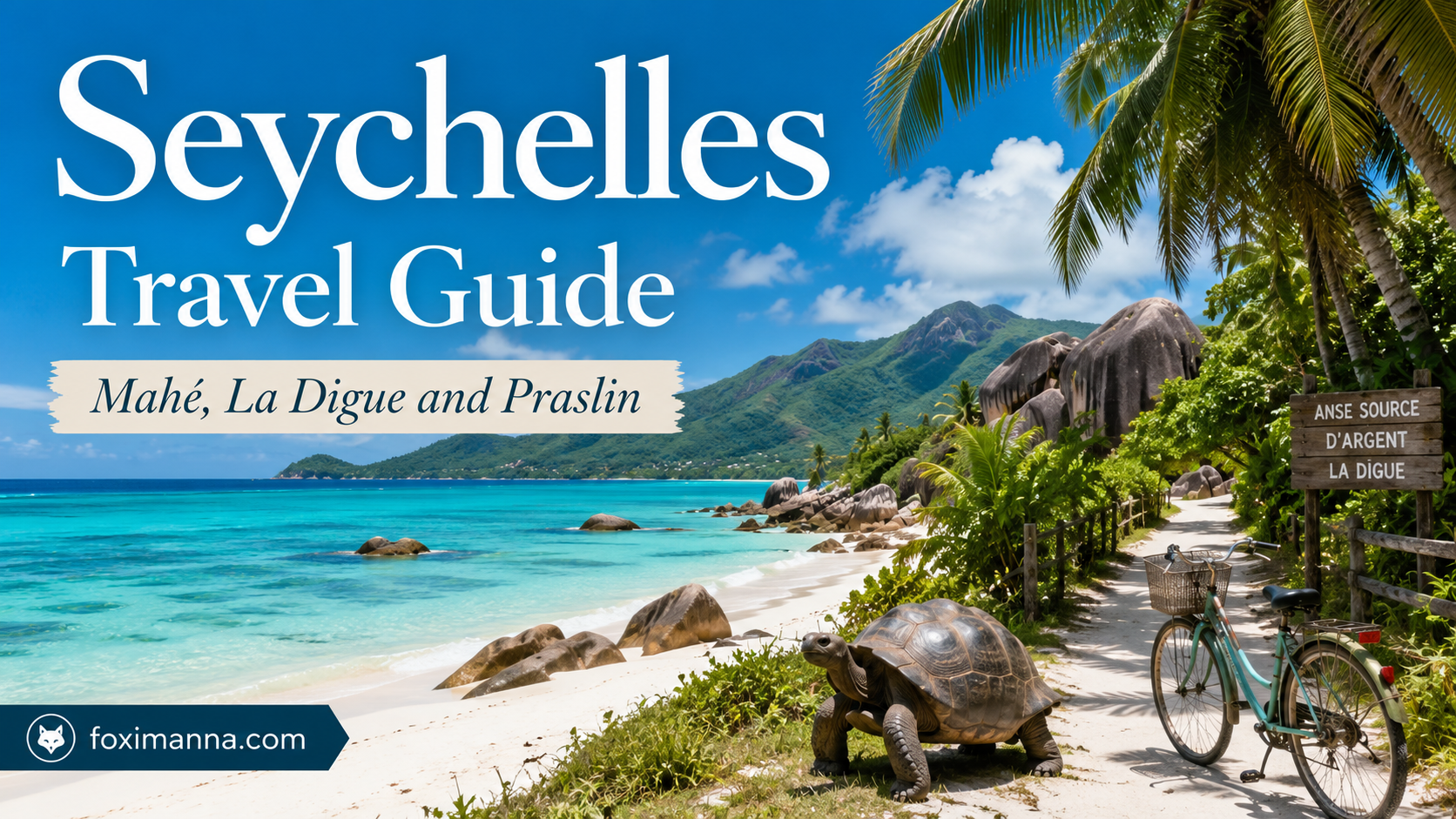
The Seychelles is often presented as a destination reserved for honeymooners, celebrities and travellers willing to spend thousands of pounds on a private villa. Search for photographs of the country and you will probably see infinity pools, expensive resorts, empty beaches and carefully arranged breakfasts floating across private swimming pools.
That version of the Seychelles certainly exists. However, it is only one small part of what makes this Indian Ocean nation so fascinating.
Beyond the luxury hotels, the Seychelles offers colourful Creole culture, family-run guesthouses, lively food trucks, roadside fruit sellers, public beaches, historic plantations, tropical forests and communities whose lives remain closely connected to the sea. It is a place where you can eat freshly grilled fish beside a lagoon, cycle beneath coconut palms, meet giant tortoises, explore one of the smallest capital cities in the world and swim between enormous granite boulders.
The country’s appearance can feel almost unreal. Clear turquoise water surrounds beaches of fine white sand, while rounded granite rocks rise from the shoreline like sculptures. Behind them are forest-covered hills, coconut palms and small roads that twist through the tropical landscape.
A first Seychelles trip commonly focuses on three of the most accessible inner islands. Mahé is the main island and the location of the international airport, the capital Victoria and much of the country’s population. La Digue is smaller, slower and best explored by bicycle. Praslin combines famous beaches with the ancient palm forest of the Vallée de Mai and easy access to wildlife-rich Curieuse Island.
Travelling between these islands reveals that the Seychelles is not one uniform resort destination. Each island has its own atmosphere, pace and personality. Mahé feels active and varied. La Digue encourages visitors to slow down. Praslin lies somewhere between the two, offering enough facilities for a comfortable stay while retaining a relaxed island character.
This Seychelles travel guide explores the best things to do in Mahé, La Digue and Praslin, including Anse Source d’Argent, Petite Anse, Anse Lazio, Côte d’Or, the Vallée de Mai and Curieuse Island. It also explains how to manage accommodation, transport, ferries, food and everyday costs without assuming that every traveller has an unlimited budget.
The Seychelles may never be a genuinely cheap destination, but it can be more accessible, varied and culturally rewarding than its luxury-only reputation suggests.
Seychelles At A Glance
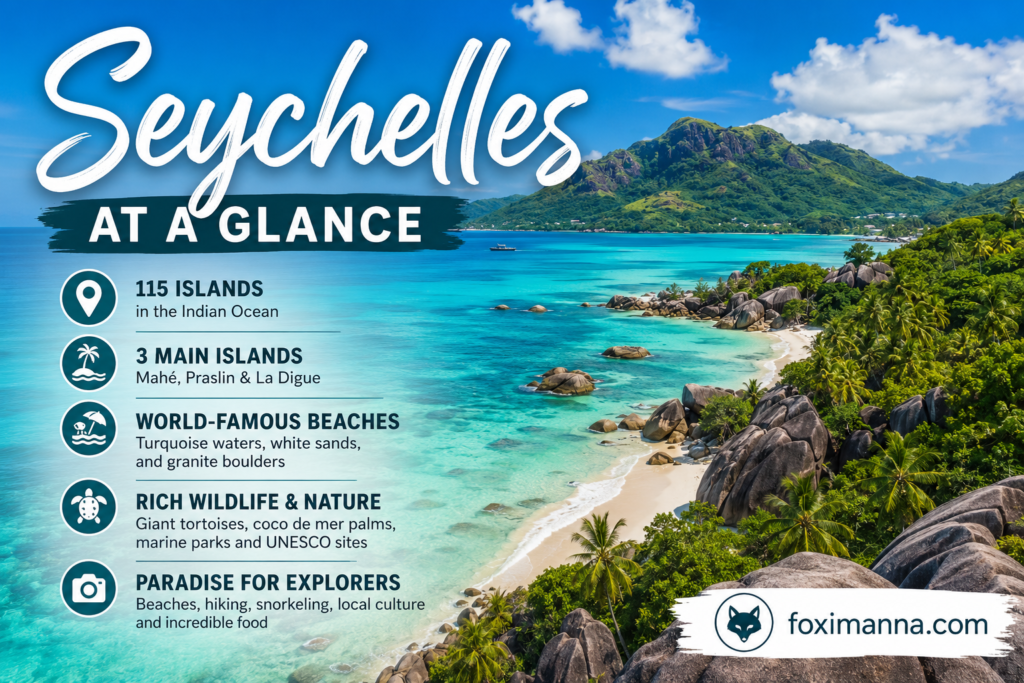
The Republic of Seychelles is an island nation in the western Indian Ocean, northeast of Madagascar and east of mainland Africa. Although it is geographically small, the country consists of numerous islands and islets spread across an enormous area of ocean.
The most frequently visited islands are part of the inner group. These include Mahé, Praslin and La Digue, which can be combined relatively easily during a single holiday. Mahé is the largest and most populated island and is home to Victoria, the national capital.
The country’s landscape is one of the first things that distinguishes it from many other tropical destinations. Instead of endless flat coral islands, much of the Seychelles has steep green hills, forested interiors and dramatic granite formations. Some beaches are enclosed by vegetation and huge rocks, creating natural bays that look almost too carefully designed to be real.
The water can appear bright blue, turquoise or green depending on the sunlight, depth and weather. Tropical clouds may gather quickly, release a short burst of rain and then disappear, leaving behind clear skies and brilliant colours.
Travellers should not assume that overcast weather will ruin their trip. Even beneath grey skies, the beaches remain beautiful, and tropical conditions can change within minutes. A light rain jacket, waterproof bag and flexible daily plan can be more useful than trying to predict every shower.
Seychelles culture has been shaped by African, European and Asian influences. The country’s Creole identity can be experienced through its languages, music, food, architecture and relaxed social atmosphere. Seychellois Creole is widely spoken, while English and French are also commonly used.
Food is one of the easiest ways to experience the local culture. Fresh fish, tuna steaks, curries, grilled prawns, fruit, coconut, rice, salads and spicy sauces appear throughout the islands. Some of the most memorable meals may come from an informal roadside barbecue or food truck rather than a luxury restaurant.
Fresh tropical fruit is another highlight. Depending on the season, visitors may encounter bananas, star fruit, coconuts, breadfruit, papaya and soursop, which is sometimes known as custard apple. Buying fruit from a roadside seller provides both an affordable snack and an opportunity to support a small local business.
The atmosphere of the country varies considerably between islands. Mahé has busy roads, residential areas, shopping facilities and a greater sense of everyday national life. La Digue is quieter, with bicycles forming an important part of local transport. Praslin has small communities, resorts, guesthouses, beaches and winding roads through green hills.
A well-balanced Seychelles itinerary should include more than beach time. Swimming and sunbathing are obvious attractions, but the country also rewards travellers who explore local markets, nature reserves, coastal roads, restaurants, plantations and smaller communities.
The Seychelles is particularly suitable for couples, honeymooners and beach lovers, but it can also appeal to independent travellers, wildlife enthusiasts, photographers and families. The main challenge is the cost. Flights, ferries, accommodation, imported products and organised excursions can all be expensive.
Planning carefully therefore makes a major difference. Combining self-catering accommodation with occasional hotel stays, eating at food trucks, renting a small car only when necessary and choosing a limited number of paid attractions can reduce the total cost without removing the experiences that make the destination special.
International travellers are generally expected to complete the required travel authorisation process before departure. Visitors may need to provide passport details, transport bookings and confirmation for each place they plan to stay.
Entry requirements and fees can change, so applications should always be completed through the official Seychelles system rather than an unofficial third-party website.
Mahé Combines Island Scenery Culture And Everyday Life
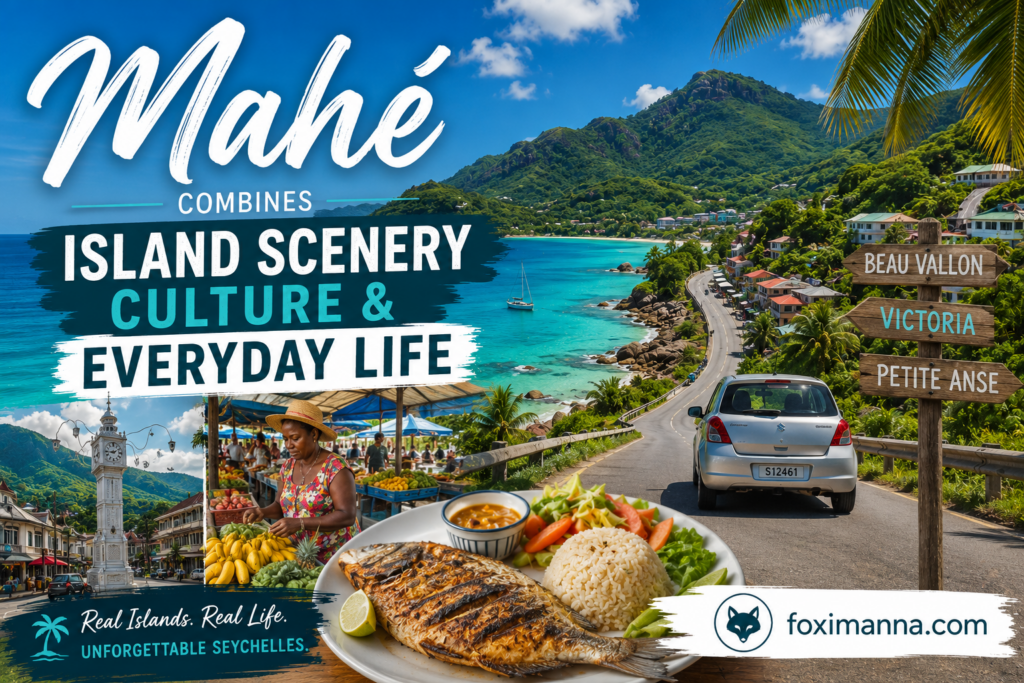
Most international visitors begin their Seychelles holiday on Mahé. The approach by air offers an unforgettable introduction as the aircraft descends towards a narrow strip of land surrounded by intensely coloured water.
Mahé is sometimes treated merely as a transport hub, with travellers moving immediately to Praslin or La Digue. That would be a mistake. The island deserves several days because it offers the greatest variety of experiences in the country.
The international airport is located on the eastern side of Mahé. Hiring a car can be the most practical way to explore, particularly when staying outside the main tourist areas. Public buses are available, but a rental vehicle gives visitors greater freedom to reach beaches, viewpoints and restaurants.
Driving in the Seychelles follows the left-hand side of the road, which will feel familiar to visitors from the United Kingdom. However, the roads can be narrow, steep and winding. Drivers should remain cautious around blind corners, roadside drainage channels, pedestrians and buses.
The roads themselves form part of the experience. A journey may pass ocean viewpoints, granite cliffs, forested hills, colourful houses and small stalls selling fruit or traditional cakes. Stopping at a local roadside business can create a more meaningful introduction to the country than going directly from the airport to a resort.
Coconut-based Creole cakes are a popular local treat and provide an easy first taste of Seychellois food. They reflect the importance of coconut in the islands’ cooking, agriculture and cultural history.
Accommodation on Mahé ranges from private villas and small guesthouses to some of the most luxurious resorts in the Indian Ocean. Staying in an apartment or guesthouse can provide more space and access to cooking facilities, which is valuable in a destination where eating at restaurants every day can become expensive.
Northern Mahé is popular with visitors because of its beaches, restaurants and access to Victoria. Beau Vallon is among the most developed tourist areas, but travellers seeking quieter surroundings can stay in smaller coastal communities.
The south and west of Mahé feel less urban. Roads curve between beaches and green hills, while the landscape becomes increasingly dramatic. This part of the island is ideal for a scenic driving day with stops at viewpoints and bays.
Mahé’s beaches vary enormously. Some are broad and easily accessible, while others require a walk through a resort or down a hillside. Beaches in the Seychelles are generally accessible to the public, although the route to a particular beach may pass through private property and visitors may need to register with security.
Petite Anse is one of the best examples. The beach is associated with the Four Seasons Resort Seychelles, but visitors who are not staying at the hotel may still be permitted to walk down to the shore. Access arrangements can change, so it is sensible to contact the property in advance.
The route requires some effort, particularly during hot or humid weather. Yet the final view makes the walk worthwhile. Dense tropical vegetation opens to reveal pale sand, exceptionally clear water and massive granite rocks.
The beach feels sheltered and cinematic. Hillside villas appear among the trees above, but the shoreline itself can feel surprisingly peaceful. Visitors willing to walk towards the quieter end may find considerably more space.
Swimming conditions should always be assessed on arrival. A bay that looks calm in a photograph may experience waves, currents or changing tides at another time of year. Local warnings, lifeguards and hotel staff should be taken seriously.
Another advantage of spending time on Mahé is the opportunity to observe ordinary island life. Fishing boats, school traffic, local shops and roadside food stalls provide a useful contrast with the highly polished resort environment.
The Seychelles should not be reduced to a collection of beaches. Mahé demonstrates that this is a living country with neighbourhoods, workplaces, national institutions and communities alongside its tourism industry.
Ending a day beside the water with freshly cooked fish or Creole curry is one of the simplest pleasures on the island. The best tables are not always the most expensive. A modest restaurant overlooking the ocean can provide exactly the atmosphere travellers imagine when planning a tropical holiday.
Fresh fish curry is particularly suited to the surroundings. Served with rice, vegetables or salad, it delivers the flavours of the islands without needing an elaborate presentation.
Watching the sky turn pink, purple or soft orange while the waves roll towards the shore is one of the most memorable ways to spend a first evening in the Seychelles.
Mahé offers the strongest introduction to the country because it brings together almost everything the islands are known for. There are luxury resorts, mountain roads, busy local communities, quiet beaches, traditional food and dense tropical scenery.
Visitors who rush through Mahé may see the airport and a ferry terminal but miss the island that provides the clearest picture of everyday life in the Seychelles.
Victoria Takamaka And The Beaches Of Southern Mahé
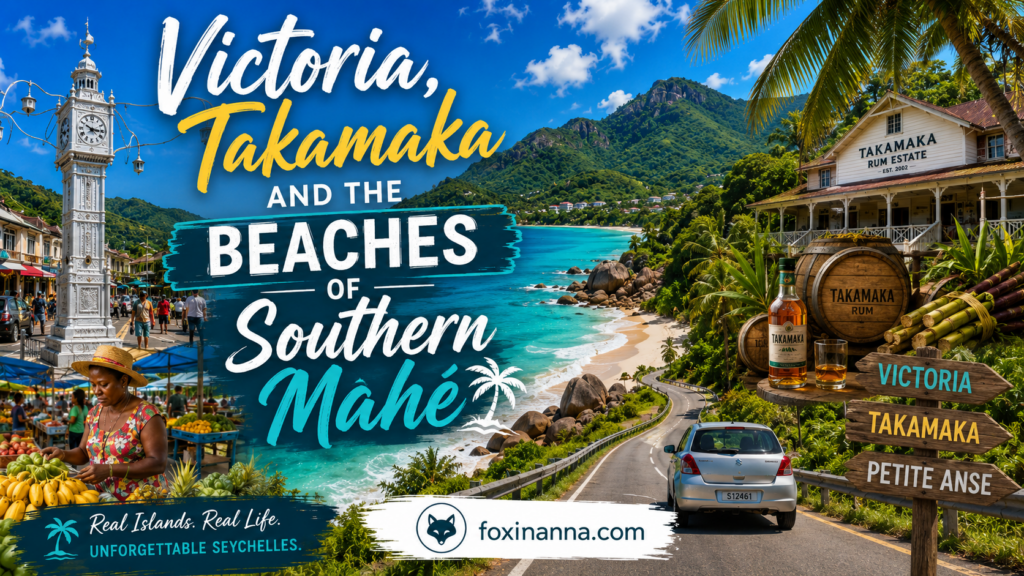
Victoria is the capital of the Seychelles and the country’s main administrative and commercial centre. It is small enough to explore without dedicating an entire day, making it an easy stop during a wider tour of Mahé.
The city offers a different perspective from the beaches. Streets are lined with shops, offices, religious buildings, markets and colourful displays of the Seychelles flag. The national flag contains blue, yellow, red, white and green, producing one of the most recognisable designs in Africa.
Victoria’s central market is a useful place to see fish, spices, vegetables and fruit being sold. Travellers should visit respectfully, remembering that it is a functioning local market rather than simply a tourist attraction.
Walking around the capital also provides an opportunity to observe architecture influenced by different periods of the country’s history. The experience is compact rather than overwhelming. A few hours is normally enough for the main central area, after which travellers can continue towards the coast or into the interior of Mahé.
One of the island’s best-known visitor attractions is the Takamaka estate at La Plaine St André. The site is associated with Seychelles rum production and occupies a historic plantation property surrounded by tropical vegetation.
Tours may explain fermentation, distillation, storage and the use of barrels. Visitors can learn how one of the country’s best-known local products is made and how different varieties develop their flavours.
Even visitors who do not drink alcohol may appreciate the estate’s history, gardens, architecture and insight into a locally recognised brand. Tour arrangements, tasting charges and opening times should be checked before travelling because they may change.
Those who choose to participate in a tasting can sample several varieties, while the estate may also offer cocktails, food and places to sit beneath the tropical vegetation.
The wider southern area of Mahé is ideal for travellers who prefer exploration to remaining inside a single resort. Beaches are scattered along the coast, and driving between them reveals how quickly the island’s landscape can change.
Some bays are lined with palms and calm shallow water. Others feel wilder, with waves, exposed rocks and fewer nearby facilities. Carrying drinking water, sun protection and a small amount of food is sensible when visiting less developed beaches.
Petite Anse is among the most visually striking, but it should not be treated as the island’s only worthwhile beach. Part of the enjoyment comes from stopping when an unexpected stretch of coastline catches your attention.
A beach that receives less international publicity may offer a quieter and more personal experience. Travellers often focus so heavily on collecting famous locations that they forget to spend time in the places they have already reached.
Allowing at least one flexible day on Mahé creates room for spontaneous stops. Weather may affect a planned swimming session, but the same conditions might be ideal for exploring Victoria, visiting an estate or enjoying a long lunch.
Mahé is also the best island for travellers who want a wider selection of restaurants, supermarkets and accommodation. Self-catering visitors can buy breakfast ingredients, snacks and drinks rather than paying hotel prices for every meal.
Local takeaways and food trucks may offer grilled fish, chicken, rice, curries and salads at lower prices than beachfront restaurants. Trying these businesses can make a Seychelles holiday feel more connected to the destination.
At the same time, one special restaurant meal beside the sea may be worth including in the budget. Fresh tuna, fish curry and grilled seafood are particularly appropriate choices. The setting matters as much as the menu. Hearing the waves while eating a meal prepared from local ingredients is an essential part of the island experience.
Mahé works best when travellers accept its contrasts. It can be busy and peaceful, local and luxurious, developed and wild within a relatively short distance.
For a first visit, three nights on Mahé provides a reasonable introduction, while four or five nights allows a more relaxed exploration. Travellers with only a week in the Seychelles may spend fewer nights here, but they should avoid reducing the island to a single airport transfer.
It is also worth remembering that tropical weather does not always follow a predictable schedule. A rainy morning can turn into a bright afternoon, while clear skies can disappear behind passing clouds.
Instead of abandoning an entire day because of a short shower, keep several alternative activities available. Markets, restaurants, museums, scenic drives and plantation visits can all be enjoyed when conditions are not ideal for the beach.
The changing weather contributes to the green landscape. Without tropical rain, Mahé would not have the dense vegetation, forested hills and fertile gardens that make the island so beautiful.
La Digue Reveals The Slow Soul Of The Seychelles
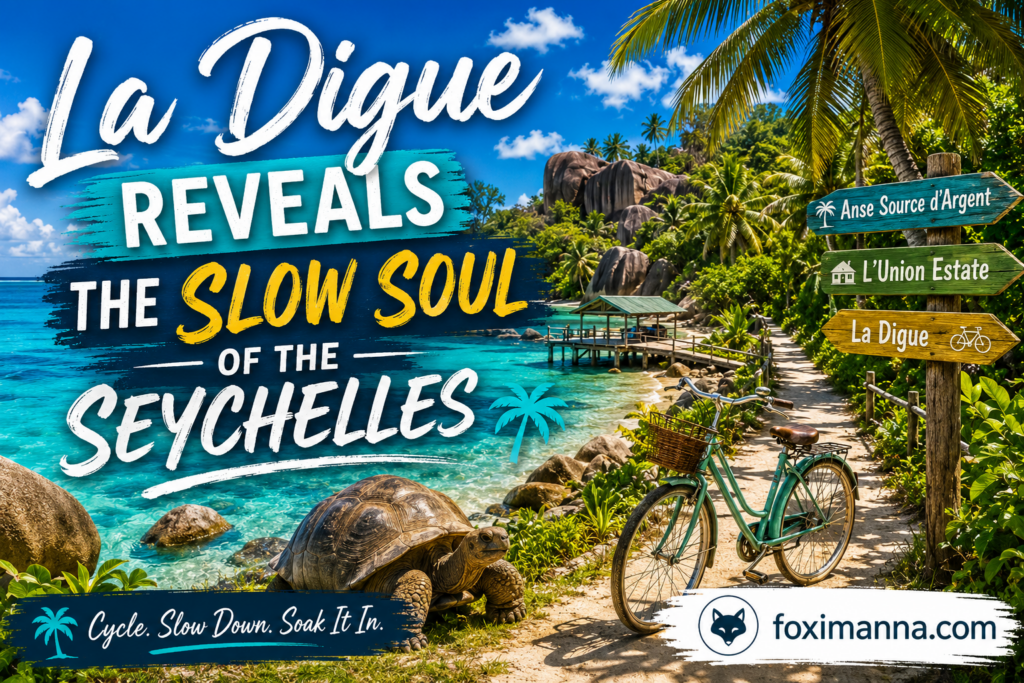
Arriving on La Digue feels like entering a different version of the country. Mahé’s roads and traffic are replaced by bicycles, palm-lined lanes and a noticeably slower pace.
The journey generally involves travelling from Mahé by ferry, often with a stop at Praslin. Sea conditions can be rough, and travellers who experience motion sickness should prepare before departure.
The crossing from Mahé can take around an hour and a half depending on the route, vessel and sea conditions. Some travellers find the journey comfortable, while others may struggle when the water becomes choppy.
Sitting where fresh air is available and following the crew’s advice may make the crossing more manageable. Motion-sickness medication may also help some passengers, although travellers should seek appropriate medical advice before using it.
Once on La Digue, hiring a bicycle is one of the easiest ways to explore. The island is small, many important locations are reasonably close together and cycling allows visitors to stop whenever they discover a beach, shop or viewpoint.
Bicycles vary in quality, so brakes, tyres, gears and seat height should be checked before leaving the rental shop. A basket is useful for carrying water, a small bag and beach equipment.
Although La Digue is often described as flat and effortless to cycle, some roads have slopes and the tropical heat can make even short journeys tiring. Travellers should carry water and avoid rushing during the hottest part of the day.
The island’s lanes pass coconut trees, guesthouses, gardens and local businesses. Cycling itself becomes one of the main attractions. There is no need to fill every hour with formal activities.
With relatively few cars and short distances between many locations, the bicycle becomes part of the La Digue experience rather than merely a form of transport.
A central stop is L’Union Estate, a former coconut and vanilla plantation that preserves elements of La Digue’s agricultural and colonial history. Visitors can see traditional buildings, plantation features, a historic cemetery and giant tortoises.
The estate also provides access to Anse Source d’Argent, the island’s most famous beach. An entrance charge applies, and current prices should be confirmed before travelling.
Anse Source d’Argent is instantly recognisable. Enormous granite formations divide the shoreline into a series of smaller coves, while shallow clear water extends across the lagoon.
The landscape appears different from every angle. One group of boulders may frame the water like a natural window, while another creates a quiet area of sand protected by trees.
The beach can become busy, particularly around popular photography locations. Walking beyond the first section may reveal quieter areas. Arriving earlier in the day can also create a more peaceful experience.
Local vendors sell coconuts, fruit drinks and snacks beneath the palms. Photographers may offer to take visitors to raised rock viewpoints where the famous aerial-style images are created without a drone.
The unusual combination of granite, shallow water and tropical greenery has made Anse Source d’Argent one of the most photographed beaches in the world.
However, the beach is more enjoyable when visitors do more than take a photograph and leave. Find a shaded area, swim when conditions allow and take time to observe how the colours change as the sun moves.
Transparent kayaking is another popular activity. Clear kayaks allow passengers to look into the shallow water, although visibility and safety depend on the tide, wind and sea conditions.
The tide is particularly important at Anse Source d’Argent. At certain times, the water may be extremely shallow. At others, higher water can affect access around the rocks or make particular activities unsuitable.
Visitors should ask local operators about conditions rather than assuming that an excursion will operate at any time. Responsible operators may change routes, delay departures or cancel activities when the water is unsafe.
La Digue also offers beaches beyond Anse Source d’Argent. Some are reached by bicycle and short walking routes, while others require more demanding paths.
Grand Anse is known for its broad shore and powerful natural setting, while nearby beaches can be reached through walking routes. However, exposed beaches may have strong currents and large waves.
Conditions on these beaches can be powerful, so swimming should never be based only on how attractive the water looks.
Accommodation includes guesthouses, apartments, boutique hotels and beachfront properties. Prices remain relatively high compared with many other destinations, but staying close to the sea can feel worthwhile on an island where the natural environment is the main attraction.
Waking up, stepping outside and hearing the Indian Ocean creates a sense of place that a cheaper inland room may not provide. Travellers should decide which elements matter most to them and direct their budget accordingly.
A beachfront guesthouse or small hotel may offer a better balance than an ultra-luxury resort. Visitors can enjoy direct access to the water while still having enough money available for meals, transport and activities.
Food on La Digue includes local takeaways, small restaurants, cafés and more refined hotel dining. Fresh fish is a reliable choice, while pizza and international dishes are also widely available.
Some of the most memorable evenings are simple. Watching the sun set, listening to the waves and eating outdoors can feel more special than a formal luxury experience.
La Digue deserves at least two nights. A day trip provides enough time for the main attractions, but it does not allow visitors to experience the quiet mornings and evenings after day visitors have left.
Three nights gives travellers time to cycle slowly, return to a favourite beach and enjoy the island without constantly checking the ferry timetable.
The point of La Digue is not merely to see Anse Source d’Argent. It is to experience a way of travelling that feels slower, lighter and more connected to the surroundings.
Praslin Brings Together Tropical Forests Local Food And Beautiful Bays
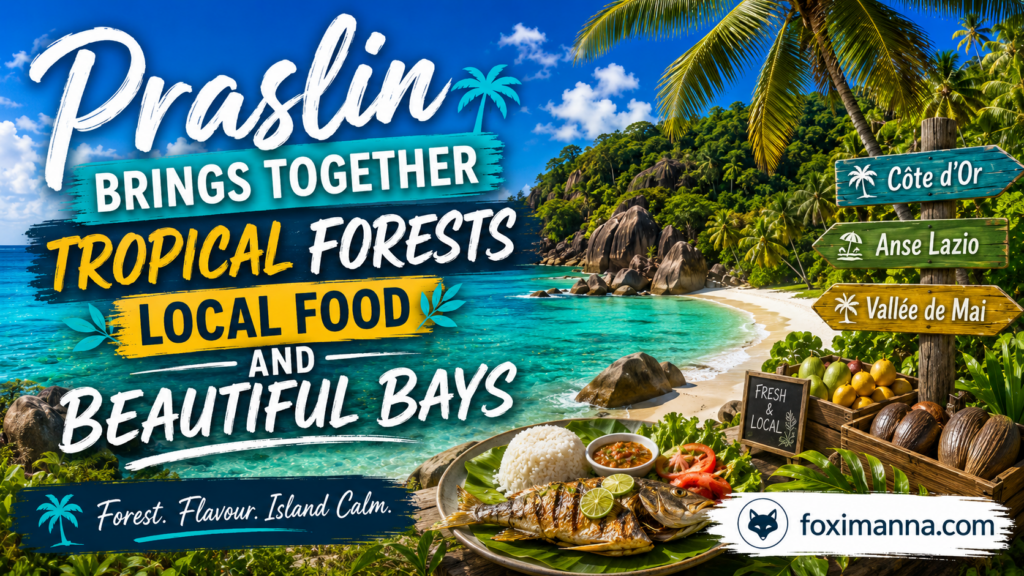
Praslin is larger and busier than La Digue but considerably quieter than Mahé. It combines famous beaches, tropical forest, attractive coastal villages and convenient access to smaller neighbouring islands.
The ferry journey from La Digue takes only a short time, making the two islands easy to combine. Travellers arriving from Mahé may take a direct ferry to Praslin or fly on a short domestic service.
Hiring a car can be useful because Praslin’s attractions are spread around the island. Rental arrangements may feel informal, but travellers should still inspect the vehicle, photograph any existing damage and confirm insurance conditions.
The roads can be steep and narrow, with sharp bends through the forested interior. Buses may approach quickly, leaving limited room to pass. Drivers should reduce speed before corners and avoid becoming distracted by the scenery.
Praslin is small enough to explore by car without long journeys. This gives travellers the freedom to compare different beaches and accommodation areas before deciding where they want to spend most of their time.
Côte d’Or, also known as Anse Volbert, is one of the most convenient bases. The long beach is backed by hotels, restaurants, guesthouses and small businesses, while colourful boats sit offshore.
The area feels developed enough to be comfortable without losing its island atmosphere. Visitors can walk to dinner, buy fruit from local sellers and arrange boat excursions without travelling far.
The beach itself is broad and visually impressive, with calm-looking turquoise water and green hills framing the bay. Conditions naturally vary, so swimmers should check local advice.
One of Côte d’Or’s greatest strengths is its connection to local life. Fishing boats return to shore, vendors sell produce and small businesses operate close to the sand. This provides a more grounded experience than remaining inside an isolated resort.
Accommodation ranges from modest guesthouses to boutique hotels and high-end properties. Booking ahead normally provides greater certainty, although occasional last-minute offers may be available during quieter periods.
Travellers should not rely on finding a cheaper room after arrival, particularly during busy seasons. Accommodation details may also be required as part of the country’s travel authorisation process.
A room overlooking Côte d’Or can offer excellent value relative to the most exclusive resorts. A private balcony, comfortable interior and direct beach access may provide enough luxury without the cost of a private-island property.
Praslin has several internationally recognised resorts, but independent travellers should not assume they need to stay in one to enjoy the island.
Beaches, boat excursions, restaurants and natural attractions can be experienced from a smaller hotel or self-catering apartment.
The island offers a useful middle ground for travellers who want comfort without feeling separated from the local community. Boutique properties can still feel special while remaining more relaxed than a large five-star resort.
Food trucks and informal barbecues are important parts of the local food scene. Grilled prawns served with salad and garlic bread can be both satisfying and reasonably priced compared with resort dining.
Fresh fruit stands are also worth visiting. Sellers may explain unfamiliar fruits and offer advice on how to eat them. These interactions create memorable travel experiences while supporting local livelihoods.
Soursop is one fruit visitors may encounter. Its soft white flesh can be extremely creamy and sweet, although the black seeds should not be eaten.
Fresh coconut water is another excellent option in the tropical heat. It can be served directly from the coconut, often with the fruit cut open afterwards so the soft flesh can be eaten.
For an evening meal, Côte d’Or has restaurants directly beside the sand. Tuna steak and fish curry are natural choices, and live music may add atmosphere without turning the experience into an overly formal event.
Praslin’s other famous beach is Anse Lazio. The bay is known for its long stretch of pale sand, clear water, rounded granite boulders and green surroundings.
Even when the sky is overcast, Anse Lazio remains striking. The muted light can emphasise the colours of the water and forest, while fewer visitors may create a calmer atmosphere.
Fresh coconuts are sometimes prepared by local vendors near the beach. Drinking coconut water while sitting beside the sea is a simple experience, but it captures the character of a tropical island more effectively than many expensive activities.
The beach includes large boulders, areas of shade and a peaceful bay where boats may anchor offshore. A small stream entering the sea adds another element to the landscape.
Swimming at Anse Lazio can be wonderful, but the sea should always be treated with respect. Visitors must assess the conditions on the day rather than relying on photographs or past reviews.
Praslin should receive at least two or three nights in a multi-island itinerary. Three or four nights allows enough time for Anse Lazio, Côte d’Or, the Vallée de Mai, local food and a Curieuse Island excursion.
Its appeal lies in balance. Praslin has infrastructure without feeling urban, luxury without requiring complete isolation and remarkable beaches alongside globally important natural heritage.
Giant Tortoises Coco De Mer And The Wild Side Of The Islands
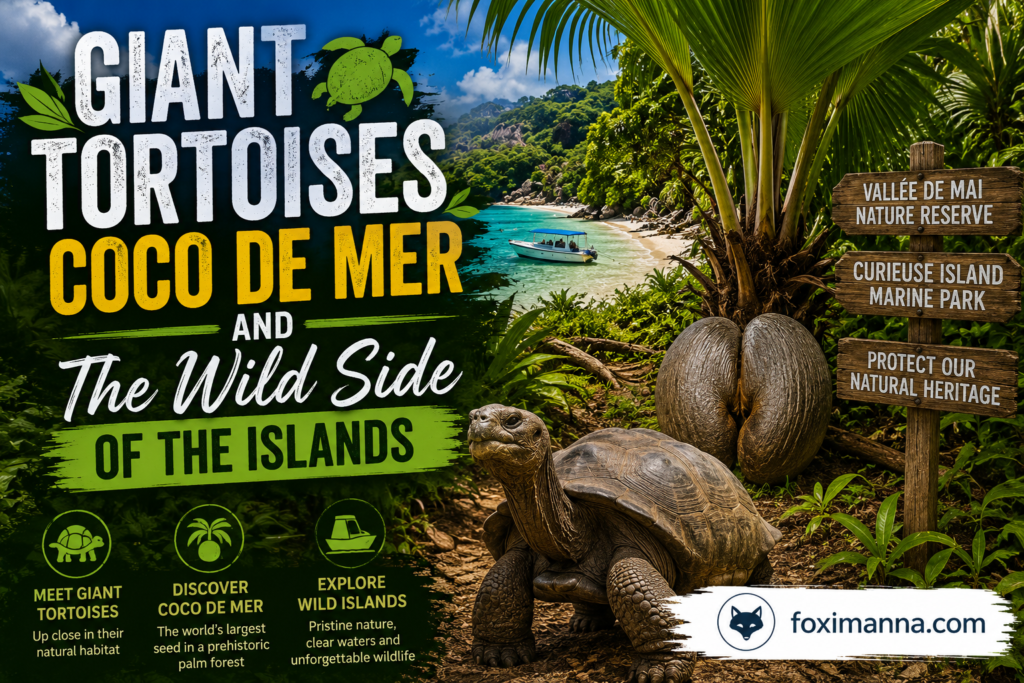
The Seychelles is famous for beaches, but its plants and animals are equally important. Two of the country’s most recognisable natural symbols are the coco de mer and the giant tortoise.
The Vallée de Mai Nature Reserve lies in the interior of Praslin. This UNESCO World Heritage Site protects an ancient palm forest that has remained close to its natural state.
The reserve contains the world’s largest population of the endemic coco de mer palm. The coco de mer produces the largest seed in the plant kingdom, while the forest supports other endemic palms and wildlife.
Walking through the reserve offers a complete contrast with the beaches. Enormous palm leaves overlap high above the trails, creating a shaded landscape of green, brown and filtered sunlight.
The forest can feel prehistoric. Sounds echo beneath the canopy, and the dense vegetation creates the sense of entering an environment that has developed in isolation for millions of years.
The coco de mer is famous for the unusual shape and size of its seed. Visitors may see examples in displays, shops or areas outside the reserve, but entering the protected forest provides greater context.
Admission contributes to the management and conservation of the site. Travellers attempting to experience every attraction for free should consider the value of supporting the places they have travelled to see.
Those with a limited budget can choose the experiences that matter most to them rather than automatically paying for every available excursion.
Seeing an accessible coco de mer outside the reserve may satisfy casual curiosity, while nature enthusiasts will probably find the full forest visit worthwhile.
The reserve is not simply a place to see one unusual plant. It protects a complete ecosystem with endemic species, shaded walking trails and an atmosphere unlike anywhere else on the islands.
Visitors should remain on marked paths, avoid touching protected plants and follow instructions provided by reserve staff.
Curieuse Island provides another major wildlife experience. Located a short boat ride from Praslin, it forms part of Curieuse Marine National Park and is home to a large population of Aldabra giant tortoises.
Boat trips can be arranged through hotels, tour companies and local operators. Full-day excursions may combine Curieuse with snorkelling, walking trails, nearby islets and lunch.
A shorter private transfer may suit travellers who mainly want to see the tortoises. However, all boat arrangements should involve a reputable operator with suitable safety equipment.
Weather and sea conditions can change quickly. Life jackets should be available and worn when instructed. Travellers should avoid choosing a boat solely because it offers the lowest price.
Meeting the tortoises is an unforgettable experience. Their size, slow movement and apparent calmness make them seem like survivors from another age.
Some of the tortoises are more than a century old. Standing beside one provides a powerful reminder that the natural history of the Seychelles extends far beyond the modern tourism industry.
Visitors may be allowed to offer approved leaves under local guidance. Tortoises should never be given unsuitable food, climbed upon, chased or disturbed for photographs.
Curieuse contains more than tortoises. The island has mangroves, nature trails, endemic plants, nesting areas and historical remains.
Travellers who book a longer excursion can follow marked paths and learn more about the island’s conservation work. A short visit offers an exciting encounter, but a longer one provides a fuller understanding of the ecosystem.
The sea surrounding the Seychelles also supports rich marine life. Snorkelling opportunities vary by location, season, weather and visibility.
Reef-safe sun protection and responsible behaviour help reduce the impact of tourism. Visitors should not stand on coral, touch marine animals or leave litter on beaches.
Natural objects, including coco de mer nuts, shells and coral, may be protected or subject to export controls. Travellers should never remove items without confirming that it is legal and environmentally responsible.
The beauty of the Seychelles creates a temptation to treat it as an unlimited playground. In reality, island ecosystems are vulnerable. Water, waste management, coastal development and wildlife protection are serious concerns.
Choosing responsible tour operators, reducing single-use plastics, respecting marked trails and supporting conservation fees are practical ways to make a visit less damaging.
The most meaningful Seychelles memories often come from moments when nature is allowed to remain the main attraction.
Floating quietly in a bay, walking beneath ancient palms or standing beside a century-old tortoise creates a sense of wonder that no luxury room can reproduce.
How To Plan A Seychelles Holiday Without Overspending
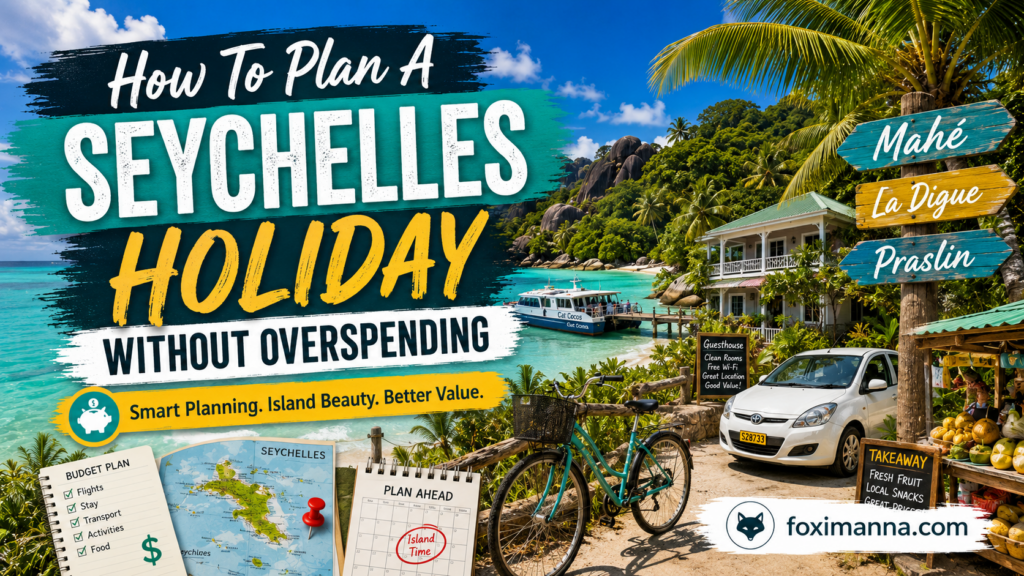
The Seychelles is not generally considered a budget destination. Flights, accommodation and inter-island transport can quickly increase the total cost, particularly for families or travellers visiting during popular periods.
However, there is an important difference between an expensive destination and a destination that can only be experienced through extreme luxury.
The Seychelles is expensive, but careful planning can make it achievable without booking a private villa or spending every day inside a resort.
The first decision is how many islands to visit. Adding more islands increases ferry costs, transfers and the possibility of losing time to check-in procedures.
For a seven-night trip, combining all three main islands can feel rushed. A possible plan is three nights on Mahé, two nights on La Digue and two nights on Praslin, although this involves frequent movement.
A nine or ten-night journey is more comfortable. Travellers could spend three nights on Mahé, three nights on La Digue and three or four nights on Praslin.
Those who dislike changing accommodation may prefer Mahé and Praslin, with La Digue visited separately. However, staying overnight on La Digue offers a much quieter experience than arriving with the daytime crowds.
Accommodation will usually consume the largest part of the budget after flights. Guesthouses, apartments and small boutique hotels can provide better value than large resorts.
A self-catering kitchen helps reduce food costs. Breakfast can be prepared at the accommodation, while fruit, snacks and drinks can be bought from supermarkets or local shops.
Travellers do not need to cook every meal. A balanced approach works well. Prepare breakfast, eat lunch at a takeaway or food truck and choose a beachfront restaurant for dinner on selected evenings.
Local fish, curries, rice and grilled food often provide better value than imported international meals. Imported products can cost more because of the country’s location and limited domestic production.
Booking accommodation with a sea view may still be a worthwhile indulgence. The goal is not to remove every enjoyable expense. It is to spend deliberately on experiences that add the greatest value.
A simple beachfront guesthouse may provide more personal enjoyment than an expensive resort located away from the sea.
Transport should be planned island by island. A rental car is useful on Mahé and Praslin but usually unnecessary on La Digue, where bicycles are more appropriate.
Before renting a vehicle, confirm the licence requirements, insurance, deposit, fuel policy and permitted drivers. Take photographs of the car and make sure existing damage is recorded.
Ferry tickets should be booked with enough time, especially when travelling on fixed international flight dates. Sea conditions can be uncomfortable, so leave a sensible margin between ferry arrival and flight departure.
Travellers who suffer from motion sickness should seek appropriate advice before the journey and choose seating carefully. The upper or outdoor areas may provide fresh air, but access depends on the vessel and ticket type.
Paid excursions should be selected rather than collected. It is easy to spend heavily by booking a boat trip, kayak experience, plantation visit, nature reserve, guided tour and premium restaurant on consecutive days.
Choose the attractions that cannot be recreated independently. Curieuse Island requires a boat, while La Digue can largely be explored by bicycle. Victoria and many beaches can be visited without a guide.
Entrance charges, transport fares and rental prices quoted in travel videos should be treated as examples rather than guaranteed current rates. Prices may change with the season, operator, exchange rate and government policy.
Beach safety is another important consideration. Beautiful water is not automatically safe water. Tides, currents and waves vary between beaches and seasons.
Follow warning signs, ask local people about conditions and avoid swimming alone in remote locations. Carry sufficient water, especially when cycling or walking in humid weather.
Sun protection is essential even when the sky looks cloudy. A hat, lightweight clothing, sunglasses and suitable sun cream can prevent a painful interruption to the holiday.
Mosquito repellent may be helpful, particularly around vegetation and during the evening. A reusable water bottle, dry bag and compact umbrella are also useful.
Visitors should complete the official travel authorisation process within the permitted period and ensure that every accommodation booking is properly documented.
Passport, health, vaccination and entry requirements can change. Travellers should check official government advice shortly before departure rather than relying on an old blog article or social media post.
The Seychelles rewards travellers who leave some space in their itinerary. An unexpected fruit seller may help arrange a boat. A roadside barbecue may become the best lunch of the trip. A beach gathering with no other tourists may create a stronger memory than a scheduled attraction.
Spontaneity is valuable, but it should be combined with sensible preparation. Confirm the essentials, including flights, accommodation, entry approval and key transfers, then leave some free time for discovery.
The greatest misconception about the Seychelles is that luxury is its only attraction. Luxury is available in abundance, but the real appeal goes much deeper.
It can be found in cycling along a palm-lined road on La Digue, eating fresh prawns beside Côte d’Or, watching fishing boats return to Praslin and walking through the ancient forest of the Vallée de Mai.
It can be found in the stillness of a granite-framed beach, the slow movement of a giant tortoise and the changing colours of the sky at sunset.
The Seychelles is expensive, but its most unforgettable moments are not always the ones with the highest price. The warmth of its people, the strength of its Creole identity and the extraordinary beauty of its natural environment make it far more than a collection of luxury resorts.
For travellers willing to explore beyond the private villas, Mahé, La Digue and Praslin reveal a destination that feels welcoming, varied and alive.
The beaches may be the reason you first dream about visiting, but the culture, food, wildlife and unexpected encounters are likely to be the reasons you remember it.
Travel information, entry rules, prices, ferry schedules and attraction opening times can change. Always verify important details with official providers before making reservations or travelling.
Disclaimer
The information provided in this article is for general informational and educational purposes only. While every effort has been made to ensure the accuracy of the information at the time of writing, travel conditions, entry requirements, opening hours, ticket prices, local regulations, and accessibility may change without notice.
Readers are encouraged to verify all travel information with official tourism boards, government agencies, airlines, accommodation providers, and local authorities before making travel plans or bookings.
The destinations featured in this article are based on their historical, cultural, natural, and tourism significance. The opinions expressed are for informational purposes only and should not be considered professional travel, legal, health, safety, or financial advice.
FoxiManna.com and its authors are not responsible for any losses, injuries, inconveniences, travel disruptions, or damages that may result from the use of information contained in this article. Travelers are responsible for conducting their own research and making informed decisions based on their individual circumstances.
By using this website and reading this article, you agree that any reliance on the information provided is at your own risk.