
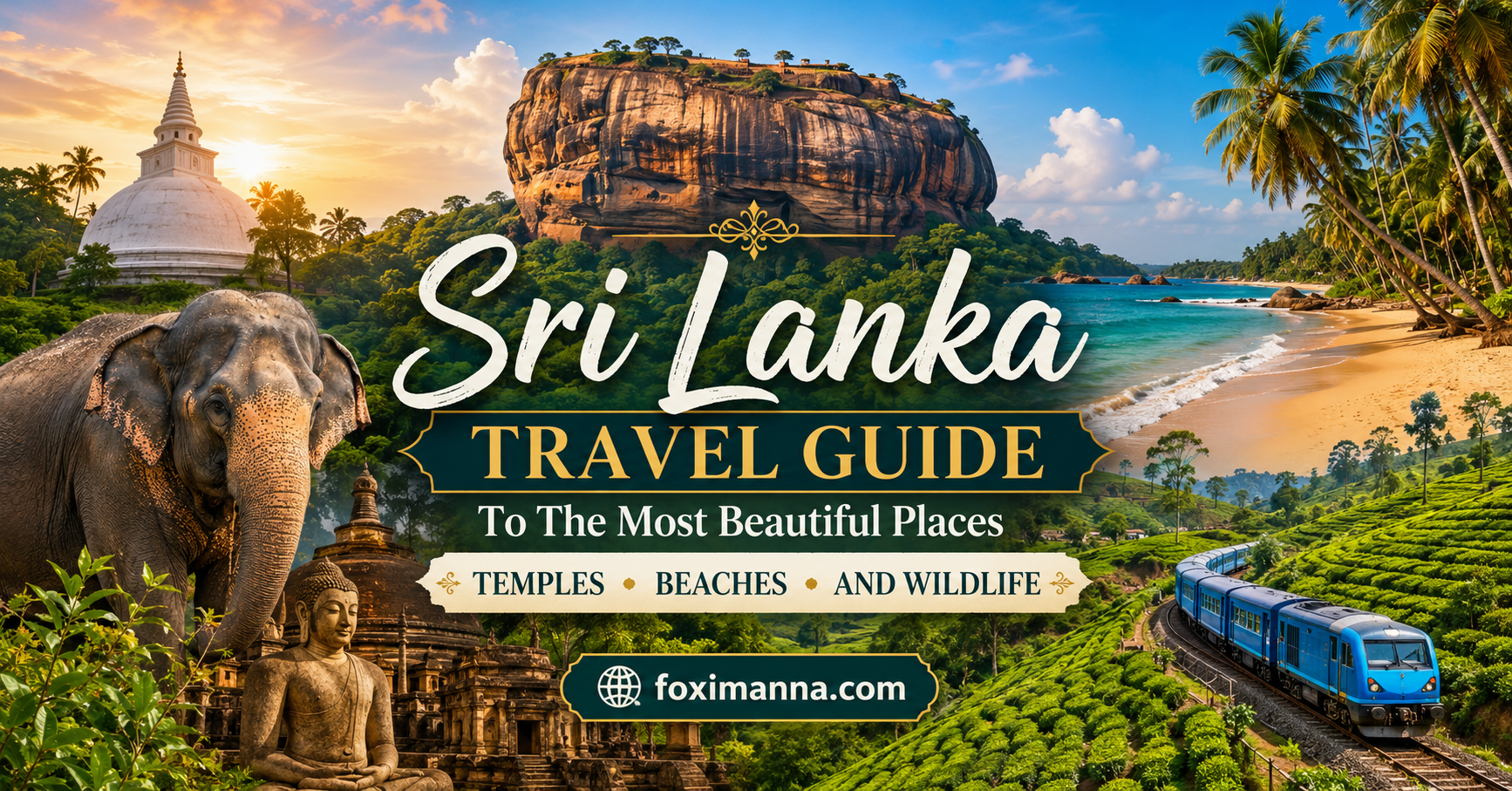
Sri Lanka is one of those rare destinations that feels much larger than it looks on the map. At first glance, it appears as a small teardrop-shaped island resting in the Indian Ocean, just southeast of India. But once you begin to understand its landscapes, history, wildlife, beaches, food, cities, and sacred places, Sri Lanka starts to feel like an entire world in itself.
This is a country where ancient ruins rise from misty jungle plains, elephants walk through grasslands, leopards move silently through national parks, tea plantations cover the mountains in deep green waves, and golden beaches stretch along the coast. It is a place of Buddhist temples, Hindu shrines, colonial forts, surf bays, rainforest trails, cool hill towns, cinnamon gardens, coconut palms, and railway journeys that feel almost dreamlike.
Sri Lanka was once known as Ceylon, a name that still echoes around the world through its famous tea. The island has been shaped by kingdoms, traders, monks, colonists, fishermen, farmers, and pilgrims. Its identity is layered and colourful. Sinhalese Buddhists, Tamil Hindus, Muslims, Christians, and many other communities have all added to the island’s rich cultural landscape.
For travellers, Sri Lanka is especially exciting because it offers so much variety in a relatively compact space. In one trip, you can climb an ancient rock fortress, watch elephants at sunset, ride one of the most scenic trains in the world, explore a UNESCO-listed fort, visit sacred temples, walk through tea fields, relax on tropical beaches, and taste spicy curries served with coconut sambol and hoppers.
This Sri Lanka travel guide explores the most beautiful places to visit, from famous highlights such as Sigiriya, Kandy, Ella, Galle, Mirissa, and Yala National Park to quieter gems such as Pidurangala, Kalpitiya, Tangalle, Hiriketiya Bay, and Sinharaja Forest Reserve. Whether you are planning your first visit or simply dreaming of a future island adventure, Sri Lanka offers a journey filled with nature, history, spirituality, and unforgettable scenery.
Sri Lanka At A Glance
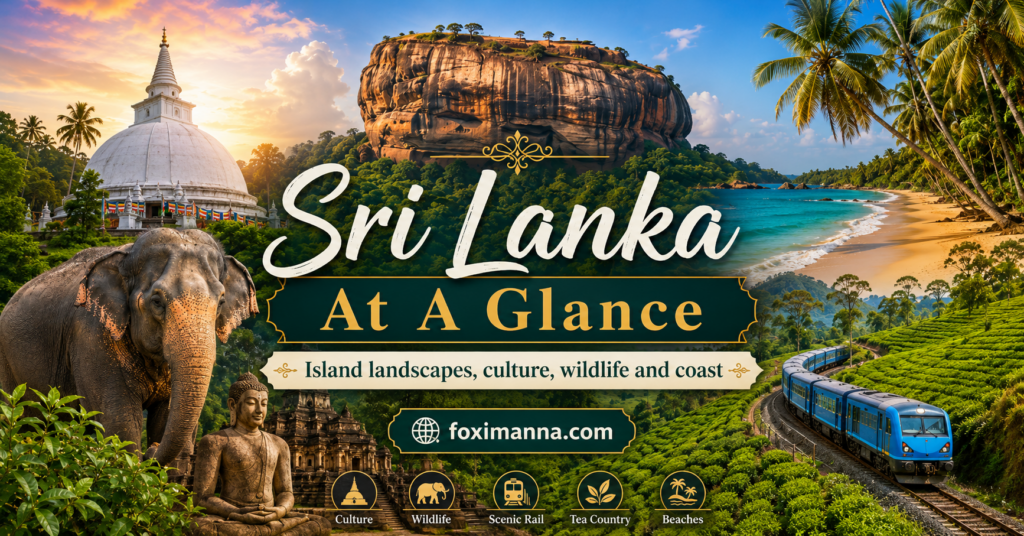
Sri Lanka sits in the Indian Ocean, separated from southern India by the Palk Strait. Although the island is not huge compared with many other countries, it contains an astonishing range of landscapes. The coastline is lined with beaches, fishing towns, lagoons, coral areas, surf bays, and old colonial ports. Inland, the terrain rises into hills and mountains covered with tea estates, waterfalls, forests, and cool-weather towns. Across the dry plains, ancient capitals and sacred ruins tell the story of powerful kingdoms that shaped the island for more than a thousand years.
One of the most fascinating things about Sri Lanka is how quickly the scenery changes. You can begin your morning beside the ocean, travel inland through towns and plantations, and end the day surrounded by cool mountain air. The island’s central highlands feel completely different from its coastal belt. Places such as Nuwara Eliya and Ella are known for mist, tea fields, waterfalls, and sweeping valley views, while beaches such as Mirissa, Unawatuna, Bentota, Hikkaduwa, Tangalle, and Arugam Bay bring warm sand, coconut palms, surf, and sunsets.
Sri Lanka also lives according to the rhythm of two monsoon seasons. This means the weather can vary depending on which part of the island you are visiting and at what time of year. The southwest monsoon affects the southwestern and central regions from around May to September, while the northeast monsoon influences the northern and eastern parts of the country from around December to March. For travellers, this is useful because even when one coast is wetter, another part of the island may still be a good option.
The island is also one of the world’s great biodiversity treasures. It is home to Asian elephants, Sri Lankan leopards, crocodiles, sea turtles, tropical birds, monkeys, butterflies, and countless plant species. National parks such as Yala and Udawalawe are popular for safaris, while Sinharaja Forest Reserve protects one of the last remaining areas of primary rainforest on the island. This mix of habitats makes Sri Lanka one of the best places in Asia for travellers who love wildlife and nature.
Food is another major part of the Sri Lankan experience. Rice and curry is a daily staple, usually served with different vegetable dishes, lentils, pickles, sambols, and sometimes fish, chicken, or meat. Coconut is used in many dishes, from creamy curries to spicy sambol. Hoppers, which are bowl-shaped pancakes made from fermented rice flour and coconut milk, are a favourite breakfast or dinner dish. The island is also famous for cinnamon, tea, tropical fruit, seafood, and bold spices.
Sri Lanka’s history is just as rich as its natural beauty. The country has eight UNESCO World Heritage Sites, including ancient cities, temples, fortresses, and natural reserves. Places such as Anuradhapura, Polonnaruwa, Sigiriya, Dambulla, Kandy, Galle, and Sinharaja reveal different sides of the island’s identity. Some sites are linked to ancient kings, others to Buddhism, colonial history, rainforest conservation, or sacred pilgrimage.
For first-time visitors, Sri Lanka works well as a two-week adventure, although even a shorter trip can still include a strong mix of culture, nature, and coast. A classic route often begins in Colombo or Negombo, continues into the Cultural Triangle around Sigiriya and Dambulla, moves toward Kandy, then follows the scenic railway into Ella and the hill country before heading south toward Yala, Mirissa, Galle, and the beaches. Travellers with more time can explore Jaffna in the north, Arugam Bay in the east, Kalpitiya on the northwest coast, or the quieter southern bays around Tangalle and Hiriketiya.
Sri Lanka is not just a destination for one type of traveller. It can suit backpackers, honeymooners, families, wildlife lovers, beach seekers, culture travellers, photographers, food lovers, and those who enjoy slow journeys. Its greatest strength is variety. Few islands offer ancient temples, rainforest, safari parks, mountain trains, surf beaches, colonial towns, sacred relics, whale watching, tea estates, and lively cities within one journey.
Ancient Cities Sacred Temples And Cultural Wonders
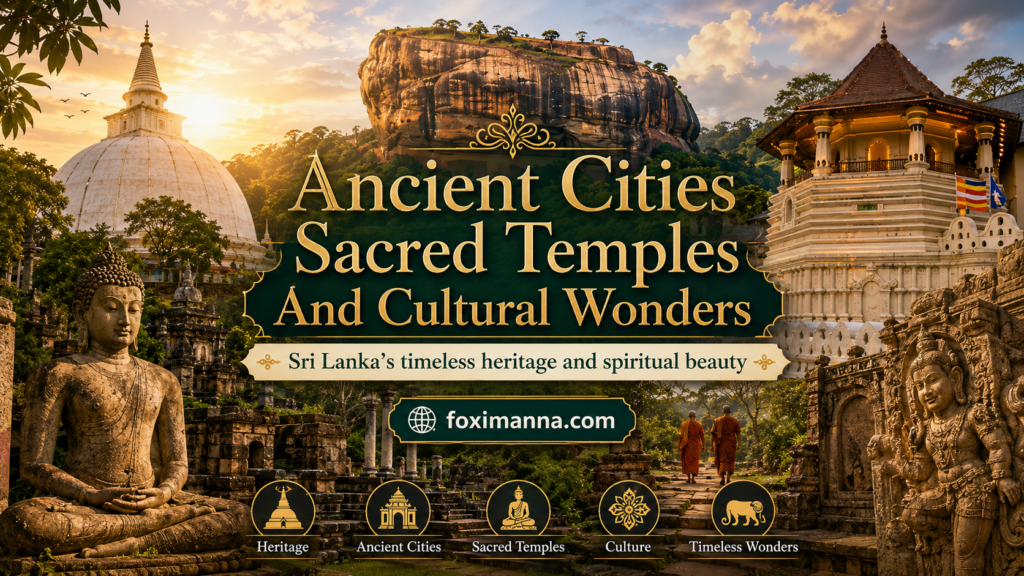
Sri Lanka’s ancient cities are among the greatest reasons to visit the island. Long before modern tourism, this land was home to powerful kingdoms, sacred Buddhist centres, impressive irrigation systems, monasteries, palaces, and stone monuments. The island’s cultural heart is often called the Cultural Triangle, an area that includes famous historic sites such as Anuradhapura, Polonnaruwa, Sigiriya, Dambulla, and Kandy.
Anuradhapura is one of the most important ancient capitals in Sri Lanka. It served as a royal and spiritual centre for more than a thousand years and remains a major pilgrimage destination today. Walking through Anuradhapura is not like visiting a single monument. It feels more like entering a vast sacred landscape. Huge stupas rise above the trees, monks in saffron robes walk along quiet paths, pilgrims gather with flowers and offerings, and ancient stonework appears among the greenery.
One of the most revered places in Anuradhapura is the Sri Maha Bodhi, believed to have grown from a branch of the tree under which the Buddha attained enlightenment. It is regarded as one of the oldest historically documented human-planted trees in the world. For many visitors, the atmosphere around this sacred tree is one of the most moving experiences in Sri Lanka. It is not just a tourist site. It is a living place of devotion.
The ancient engineering of Anuradhapura is also remarkable. The old kings built vast water reservoirs and irrigation systems that helped support agriculture in the dry zone. Some of these ancient systems still influence life today. They show how advanced the civilisation was and how closely power, religion, farming, and water management were connected.
Polonnaruwa became the second great capital after the decline of Anuradhapura. Today, it is one of the most atmospheric archaeological sites in the country. The ruins include palaces, temples, audience halls, statues, and reservoirs. One of the most famous highlights is Gal Vihara, where four Buddha figures were carved from a single block of granite. The reclining Buddha is especially impressive, with a calm expression that seems to hold centuries of silence.
Polonnaruwa also shows the blending of Buddhist and Hindu influences. This reflects Sri Lanka’s long history of cultural exchange, royal politics, migration, trade, and religious coexistence. The site is large, so many travellers explore it by bicycle, moving slowly between ruins while monkeys climb across old stones and birds call from the trees.
Dambulla is another essential cultural stop. The Dambulla Cave Temple is one of Sri Lanka’s most beautiful religious sites. Set into a rocky hill, the temple complex contains five main caves filled with Buddha statues, paintings, and devotional art. The caves have been used as sacred spaces for more than two thousand years. Inside, the light is dim and atmospheric, allowing the colours of the murals and the stillness of the statues to create a powerful sense of history.
At the foot of the Dambulla hill, the Golden Temple and large golden Buddha statue welcome visitors before the climb. From the top, there are wide views across the surrounding countryside, and on clear days you may even see Sigiriya in the distance. The combination of sacred art, ancient caves, and panoramic views makes Dambulla one of the most memorable temple experiences on the island.
Kandy is the spiritual heart of Sri Lanka and the last capital of the Sinhalese kings before British rule. The city is built around a lake, and at its edge stands the Temple of the Tooth, one of the most sacred Buddhist sites in the country. The temple is believed to house a tooth relic of the Buddha, protected within golden caskets. Daily rituals, drums, incense, flowers, and pilgrims create a deeply spiritual atmosphere.
Kandy is also surrounded by hills, gardens, monasteries, and viewpoints. The white Buddha statue on Bahirawakanda hill looks out over the city, while the nearby Peradeniya Botanical Gardens offer a peaceful escape filled with tropical plants, palms, orchids, and trees linked to the island’s colonial history. Kandy is busy and sometimes crowded, but it remains a place where Sri Lanka’s royal, religious, and cultural identity can be strongly felt.
Together, these ancient cities and sacred sites reveal a side of Sri Lanka that goes far beyond beaches. They show the island as a place of kings, monks, pilgrims, engineers, artists, and storytellers. To travel through this part of the country is to understand that Sri Lanka’s beauty is not only natural. It is also deeply historical and spiritual.
Sigiriya Kandy Dambulla Anuradhapura And Polonnaruwa
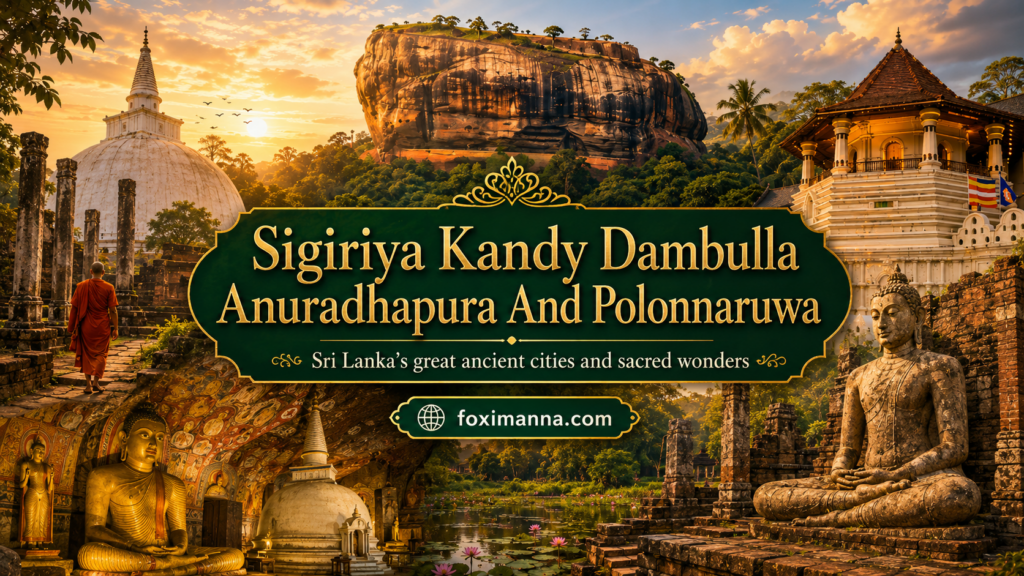
Sigiriya is one of Sri Lanka’s most iconic landmarks and one of the most dramatic archaeological sites in Asia. Rising suddenly from the surrounding plain, this huge rock fortress looks almost impossible from a distance. In the fifth century, King Kasyapa transformed the rock into a royal palace and stronghold. Today, travellers climb around 1,200 steps to reach the summit, passing ancient gardens, water features, frescoes, stone stairways, and the famous lion paws near the entrance to the upper section.
The story of Sigiriya is filled with power, fear, ambition, and legend. King Kasyapa is said to have chosen the rock as a defensive refuge after seizing power. Whether visitors come for the history, the engineering, the views, or the mystery, Sigiriya rarely disappoints. From the top, the jungle stretches in every direction, and the scale of the ancient project becomes even more impressive.
The frescoes of the Sigiriya maidens are among the most famous artworks in Sri Lanka. Painted onto the rock face, they have survived for centuries despite weather and exposure. The Mirror Wall, once polished so highly that the king could see his reflection, still carries ancient graffiti from visitors who came long before modern tourism existed. This makes Sigiriya not only a fortress, but also a record of human fascination through time.
Nearby Pidurangala offers one of the best views of Sigiriya itself. It is less developed and more adventurous than the main fortress climb. The path passes a reclining Buddha and old monastic remains before reaching a rocky summit. The final section requires some scrambling over boulders, but the reward is unforgettable. From the top, Sigiriya rises perfectly from the forested plain, especially beautiful at sunrise or sunset.
Dambulla is often visited together with Sigiriya because the two are close enough to combine in the same part of a journey. While Sigiriya impresses with height, royal ambition, and dramatic scenery, Dambulla offers quiet devotion and ancient religious art. The cave temples are filled with hundreds of statues and painted ceilings that tell Buddhist stories and honour Sri Lankan kings. The contrast between these two sites is part of what makes the Cultural Triangle so rewarding.
Anuradhapura and Polonnaruwa add even more depth to this region. If Sigiriya is dramatic and compact, Anuradhapura is vast and sacred. Its stupas, monasteries, reservoirs, and sacred trees make it feel like a living spiritual landscape. Polonnaruwa is more compact and often easier to explore in a day, with beautifully preserved ruins and sculpture. Together, they help visitors understand how advanced Sri Lanka’s ancient kingdoms were.
Kandy connects the Cultural Triangle with the hill country. Many travellers pass through Kandy after visiting Sigiriya and Dambulla, before taking the scenic train toward Ella. But Kandy deserves time of its own. The Temple of the Tooth is the main attraction, yet the city’s lake, markets, gardens, hill viewpoints, and cultural performances all add to its atmosphere.
The Temple of the Tooth is especially important because it is not simply a historical site. It remains active, sacred, and emotionally meaningful to many Buddhists. Visitors should dress respectfully, cover shoulders and knees, and behave quietly inside the temple complex. Watching devotees arrive with flowers and prayers helps travellers see the temple as a living centre of faith rather than just a landmark.
This part of Sri Lanka is ideal for travellers who want meaning, not just sightseeing. Each place offers a different chapter of the island’s story. Sigiriya speaks of royal power and architectural imagination. Pidurangala tells of monastic life and natural beauty. Dambulla preserves centuries of devotion in painted caves. Anuradhapura reveals the spiritual foundations of the island. Polonnaruwa displays the elegance of medieval kingship. Kandy connects the ancient world with living Buddhist tradition.
For photographers, this region is also outstanding. Sunrise at Pidurangala, golden light over Polonnaruwa, pilgrims in white at Anuradhapura, cave murals in Dambulla, and mist around Kandy all create powerful images. But the best way to experience the area is slowly. These are not places to rush through just to tick them off a list. They deserve time, patience, and respect.
Ella Nuwara Eliya And The Tea Covered Highlands

Sri Lanka’s hill country feels like another island within the island. After the heat of the coast and the dry plains, the central highlands bring cooler air, misty mornings, tea-covered slopes, waterfalls, mountain roads, and small towns surrounded by green valleys. This region is one of the most beautiful parts of Sri Lanka and home to one of the world’s most famous railway journeys.
Ella is perhaps the best-known hill country village for travellers. It has grown into a popular destination, but it still has a relaxed mountain feel. The scenery around Ella is spectacular. Tea plantations spread across the hills, waterfalls tumble through the landscape, and walking trails lead to viewpoints such as Little Adam’s Peak and Ella Rock. The mornings often begin with mist before the valley slowly reveals itself in layers of green.
One of Ella’s most famous sights is the Nine Arches Bridge. Built during the British colonial period, this elegant viaduct is made of brick and cement and is known for its nine tall arches. Trains still pass across it, creating one of the most photographed scenes in Sri Lanka. Visitors often walk along the tracks or wait near the bridge to watch a train appear between the trees. It is a simple moment, but it captures the romance of Sri Lanka’s hill country perfectly.
The train journey between Kandy and Ella is often described as one of the most scenic in the world. The route passes through mountains, tea estates, villages, tunnels, bridges, and valleys. Open windows, slow movement, and changing views make the journey feel timeless. It is not just a way to get from one place to another. It is one of the great experiences of travelling in Sri Lanka.
Nuwara Eliya offers a different side of the highlands. Sometimes called Little England, it sits at a higher elevation and has a cooler climate than most of the island. The town still carries traces of British colonial influence through its architecture, gardens, old hotels, and tea estates. The surrounding landscape is famous for vegetable farms, flower gardens, and rolling plantations.
Gregory Lake is one of the main leisure spots in Nuwara Eliya. Locals and visitors come here for walks, boating, picnics, and fresh air. The climate makes the area feel very different from coastal Sri Lanka. On some days, the mist, cool breeze, and colonial buildings can feel almost like a mountain town far away from the tropics.
Tea is central to the identity of the hill country. The British transformed large areas of the central highlands into tea plantations, and Ceylon tea became known across the world. Today, visitors can tour tea factories, learn how tea leaves are picked and processed, and enjoy fresh cups with views over the plantations. The sight of tea workers moving through the hills is one of the classic images of Sri Lanka.
The highlands are also a place for waterfalls. Around Ella and Nuwara Eliya, you will find waterfalls of different sizes, some easy to reach and others hidden along mountain roads or hiking routes. Ravana Falls near Ella is one of the most visited, partly because it is close to the main road and easy to include in a day of sightseeing.
For active travellers, the hill country offers some of the best walking and hiking in Sri Lanka. Little Adam’s Peak is relatively easy and provides beautiful views without requiring a long or difficult climb. Ella Rock is more challenging but rewarding for those who want a bigger walk. Horton Plains National Park, located near Nuwara Eliya, is another famous hiking area, known for its grasslands, cloud forest, and dramatic viewpoint called World’s End.
The atmosphere of the hill country is slower than Colombo and softer than the beach towns. It is a place to wake early, drink tea, watch mist move through valleys, walk through plantations, and enjoy cooler evenings. After days of temples, safaris, or coastal heat, Ella and Nuwara Eliya provide balance and calm.
The central highlands also remind travellers that Sri Lanka’s beauty is not limited to tropical beaches. The island’s heart is green, mountainous, and deeply shaped by tea. For many visitors, the train to Ella, the Nine Arches Bridge, and the rolling plantations become some of the most unforgettable memories of the entire trip.
Yala Udawalawe Sinharaja And The Wild Side Of Sri Lanka
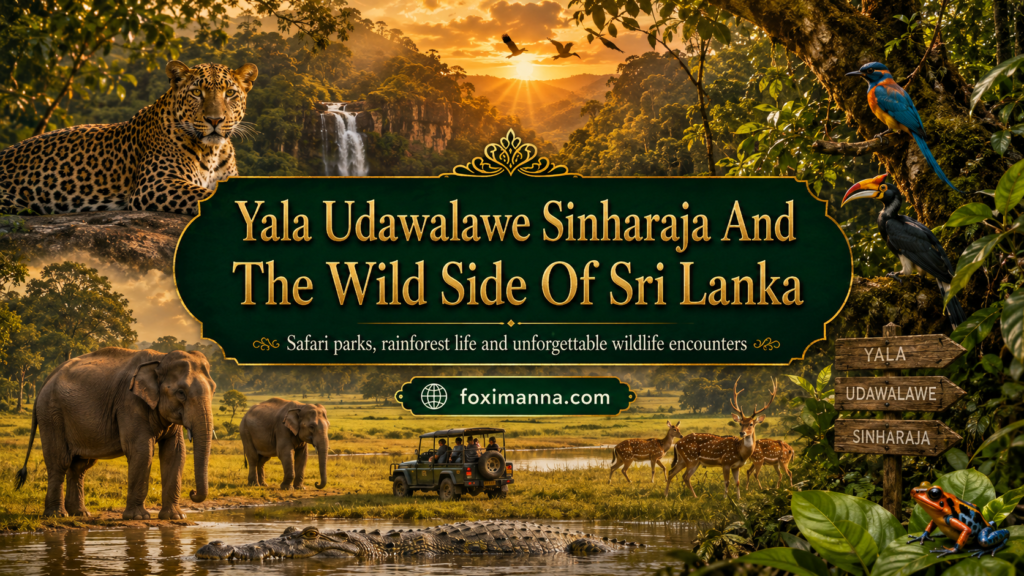
Sri Lanka is one of the best wildlife destinations in Asia. Despite its compact size, the island has an extraordinary variety of animals and ecosystems. National parks, rainforests, wetlands, lagoons, coastal habitats, and dry-zone forests all support different forms of life. For travellers, this means there are many opportunities to see wildlife without needing to travel huge distances.
Yala National Park is the most famous safari destination in Sri Lanka. Located in the southeast, it is known for its leopard population and offers one of the highest chances of leopard sightings in the world. The landscape is varied, with scrubland, open plains, rocky outcrops, lagoons, forests, and coastal areas. This mix of habitats supports elephants, crocodiles, deer, buffalo, monkeys, birds, and many other species.
Safari drives in Yala usually take place early in the morning or late in the afternoon, when wildlife is more active and the light is beautiful. Leopards are the star attraction, but the experience is not only about one animal. Watching elephants move through the bush, crocodiles resting near water, peacocks calling from branches, and birds flying across the landscape all adds to the sense of being inside a living ecosystem.
Yala’s popularity also means it can become busy, especially in peak travel periods. Responsible travel matters here. Visitors should choose ethical safari operators, avoid pressuring drivers to chase animals, keep a respectful distance, and remember that national parks are not zoos. The best wildlife experiences happen when animals are allowed to behave naturally.
Udawalawe National Park is another excellent safari destination and is especially famous for elephants. The park’s open landscapes and reservoir make it one of the most reliable places in Sri Lanka to see herds of elephants. Compared with Yala, Udawalawe can feel more spacious and less focused on leopard sightings. For families and first-time safari travellers, it is often a great choice.
At Udawalawe, elephants can often be seen walking toward water, feeding in grassland, or moving in groups across the park. Buffalo wallow in mud, birds gather around wetlands, and the sunset light gives the landscape a golden glow. The park plays an important role in conservation and is a reminder of how closely Sri Lanka’s natural heritage is tied to water, grassland, and protected space.
Sinharaja Forest Reserve offers a completely different wildlife experience. Rather than open safari landscapes, Sinharaja is rainforest. It protects one of the last significant areas of primary tropical rainforest in Sri Lanka and is recognised for its biodiversity. The forest is dense, humid, layered, and alive with sound. Streams flow through the undergrowth, birds move through the canopy, and plants compete for light in a complex vertical world.
Sinharaja is especially important for endemic species, including birds that are found only in Sri Lanka. Walking here with a knowledgeable guide can reveal details that casual visitors might miss, from insects and reptiles to medicinal plants, fungi, and bird calls. The experience is less about big animal sightings and more about entering a living natural system.
Sri Lanka’s wildlife is not limited to its inland parks. Sea turtles nest on beaches, dolphins gather off parts of the coast, and whales can be seen in certain seasons from areas such as Mirissa and Kalpitiya. The island’s waters are part of a larger Indian Ocean ecosystem that supports marine life as well as fishing communities.
Kalpitiya, on the northwest coast, is known for dolphins, whales, lagoons, mangroves, and kitesurfing. Its location between the Puttalam Lagoon and the ocean creates a distinctive environment where marine and coastal ecosystems meet. In the right season, dolphin watching can be a major highlight, while the windy conditions attract kitesurfers from around the world.
Kumana National Park, near Arugam Bay, is another wildlife-rich area, especially known for birdlife. Elephants also move through lagoons and woodland, creating a beautiful contrast between the beach culture of Arugam Bay and the wild landscapes nearby.
The relationship between humans and wildlife in Sri Lanka is complex. Elephants are beloved symbols of the island, but human-elephant conflict remains a serious issue in rural areas. Tourism can support conservation, but only when it is managed responsibly. Travellers should avoid attractions that exploit animals, especially those that allow unnatural interaction, riding, or poor treatment.
Sri Lanka’s wild side is one of its greatest treasures. Seeing an elephant in open grassland, hearing rainforest birds in Sinharaja, watching a crocodile wait in still water, or spotting a leopard in Yala can make a journey unforgettable. But the deeper lesson is that the island’s natural beauty needs protection. Its forests, coastlines, reefs, lagoons, and national parks are fragile gifts that must be respected by both locals and visitors.
Galle Mirissa Unawatuna Arugam Bay And The Beautiful Coast
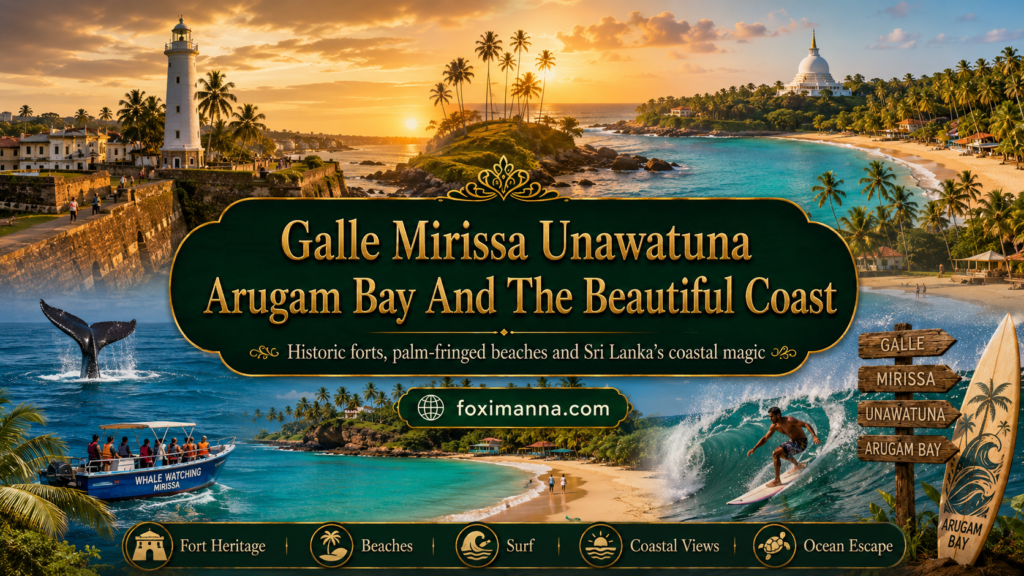
Sri Lanka’s coastline is incredibly varied. Some beaches are calm and family-friendly, others are famous for surfing, while some are linked to fishing, colonial history, coral reefs, whale watching, or quiet coastal escapes. The beach experience changes depending on which coast you visit and at what time of year, but the island offers something for almost every type of seaside traveller.
Galle is one of the most atmospheric coastal cities in Sri Lanka. Its famous fort was first established by the Portuguese and later expanded by the Dutch. Today, Galle Fort is a UNESCO World Heritage Site and one of the best-preserved colonial fort towns in Asia. Walking along its stone streets feels very different from other parts of the island. You will find old churches, boutique hotels, cafes, galleries, colonial buildings, sea walls, and a lighthouse standing against the Indian Ocean.
The walls of Galle Fort have survived wars, time, and even the force of the 2004 tsunami. They remain a powerful symbol of the city’s history. At sunset, locals and travellers walk along the ramparts while waves crash below. Galle is not just a museum piece. People still live and work inside the fort, which gives it a lived-in charm that many historic towns lose.
Unawatuna, located near Galle, is one of Sri Lanka’s most popular beach areas. It has a sheltered bay, beach restaurants, guesthouses, and a relaxed holiday atmosphere. On the hill above the beach stands a white peace pagoda, which offers wide views over the bay and coastline. Unawatuna was once known for coral, although the reef has suffered from pollution, erosion, and unsustainable development. This makes responsible tourism especially important.
Mirissa is one of the most beautiful beach destinations on the south coast. It is known for golden sand, coconut palms, whale watching, and a relaxed tropical feeling. Coconut Tree Hill has become one of the most photographed viewpoints in the area, with palms leaning over the ocean and waves breaking below. Parrot Rock is another small viewpoint that can sometimes be reached at low tide.
Mirissa is also a base for whale watching, especially for travellers hoping to see blue whales. As with all wildlife tourism, it is important to choose operators that follow responsible guidelines and respect the animals. The best experiences are those that avoid chasing or crowding marine life.
Tangalle offers a quieter southern coast experience. Its beaches are often wider, wilder, and less developed than those around the busiest tourist towns. The coastline includes bays, rocky headlands, lagoons, and long stretches of sand. For travellers who want a slower, more peaceful beach stay, Tangalle can be a wonderful choice.
Hiriketiya Bay has become increasingly popular in recent years. It is a small horseshoe-shaped bay surrounded by palms and known for surfing. Beginners can learn near the shore, while more experienced surfers head toward stronger waves. Around the bay, small cafes, guesthouses, and beach bars have created a laid-back traveller scene. However, its popularity also means there is a delicate balance between tourism growth and preserving the bay’s natural charm.
Arugam Bay, on the east coast, is Sri Lanka’s most famous surf destination. During the right season, surfers arrive from around the world to ride its waves. The town has a relaxed, international feel, with beach cafes, surf schools, guesthouses, and a slower rhythm than the larger cities. Nearby, Kumana National Park and local lagoons add wildlife and nature to the beach experience.
Hikkaduwa is another long-established beach destination, known for surfing, sea turtles, coral areas, nightlife, and an energetic coastal atmosphere. Like Unawatuna, it has faced environmental pressure, especially around reef health and tourism development. It remains popular, but travellers should be mindful of how they interact with marine life and avoid feeding or touching turtles.
Bentota is well known for resorts, water sports, and river scenery. The Bentota River meets the Indian Ocean here, creating a setting where beach and lagoon experiences can be combined. Travellers can enjoy water skiing, boat rides, mangrove areas, and long beaches. Bentota is often chosen by those looking for a more comfortable resort-style stay.
Negombo, north of Colombo, is a convenient coastal stop near the international airport. It is known for fishing, Catholic churches, Dutch canals, and a long beach lined with hotels and restaurants. Many travellers use Negombo as their first or last stop in Sri Lanka because it is easier to reach from the airport than central Colombo.
Sri Lanka’s beaches are beautiful, but they are not all the same. Some are better for swimming, others for surfing, photography, wildlife, nightlife, or peaceful retreats. Ocean conditions can change with the seasons, so travellers should always pay attention to local advice before swimming. The coastline is one of Sri Lanka’s greatest attractions, but it is also a living environment shaped by fishing communities, marine life, coral systems, tourism, and weather.
Colombo Jaffna Negombo Bentota And Practical Travel Tips
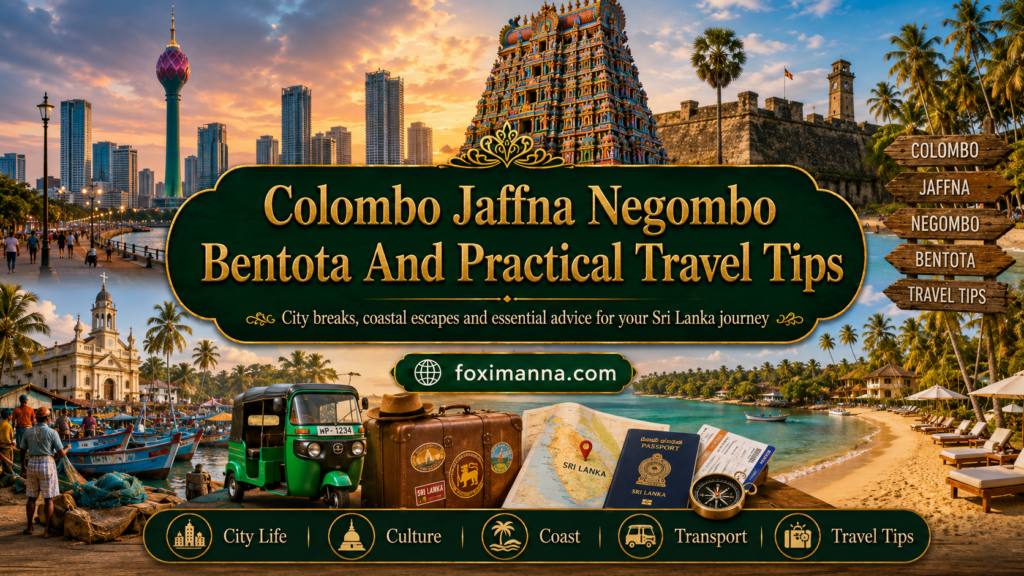
Colombo is Sri Lanka’s commercial capital and the country’s largest urban centre. For some travellers, it is only a quick arrival or departure point, but the city is worth exploring for at least a short stay. Colombo shows the modern face of Sri Lanka, where skyscrapers, colonial buildings, temples, markets, hotels, shopping districts, and seaside promenades all sit close together.
Galle Face Green is one of the city’s most popular public spaces. At sunset, families, couples, children, kite flyers, and food sellers gather beside the sea. It is a simple but memorable place to experience local life. Street food, ocean breeze, and city lights combine to show a different side of Sri Lanka from the temples, mountains, and beaches.
The Lotus Tower dominates Colombo’s skyline with its lotus-inspired design. It represents the city’s modern development and changing identity. The Independence Memorial Hall in Cinnamon Gardens offers another important stop, commemorating Sri Lanka’s independence from British rule in 1948. Colombo’s port also remains one of the most important in South Asia, showing the island’s continuing role in regional trade.
Jaffna, in northern Sri Lanka, offers a very different cultural experience. It is the historic main city of the north and a centre of Tamil culture. The landscape, food, language, temples, and atmosphere feel distinct from much of the south and centre. Palmyra trees, Hindu temples, lagoons, markets, and colonial remains all shape Jaffna’s identity.
Jaffna is also a place of resilience. Its history includes colonisation, conflict, loss, rebuilding, and cultural preservation. Sites such as Jaffna Fort and the rebuilt library help visitors understand the region’s layered past. The local food is another major reason to visit, with flavours and dishes that differ from those found elsewhere on the island.
Negombo is practical as well as interesting. Because it is close to the international airport, many travellers stay here at the beginning or end of a Sri Lanka trip. The city’s fish market is one of its most authentic sights, especially early in the morning when fishermen return with their catch. The Dutch canals and Catholic churches reflect the city’s colonial and religious history, while the beach offers an easy place to relax after a long flight.
Bentota is a good option for travellers who want a comfortable coastal stay with access to water sports, river trips, and resort facilities. It is especially popular with couples and families. The mix of beach, lagoon, mangroves, and hotels makes it one of the more developed holiday areas on the southwest coast.
When planning a Sri Lanka itinerary, it helps to think in regions rather than trying to see everything at once. A first-time route might include Colombo or Negombo, Sigiriya, Dambulla, Kandy, Ella, Yala, Mirissa, Galle, and one or two beach towns. With more time, you can add Jaffna, Trincomalee, Arugam Bay, Kalpitiya, Tangalle, Sinharaja, or additional national parks.
Transport is part of the Sri Lanka experience. Trains are scenic, especially in the hill country, but they can be slow and busy. Buses are cheap and widespread, though not always comfortable for long journeys. Private drivers are popular for travellers who want flexibility, especially when visiting the Cultural Triangle or combining several sites in limited time. Tuk-tuks are useful for short journeys, but always agree a price or use a metered option where available.
Packing for Sri Lanka should reflect the island’s variety. Lightweight clothing is useful for the coast and cities, while warmer layers are helpful in Nuwara Eliya and the highlands. Modest clothing is important for temples, where shoulders and knees should be covered. Comfortable shoes are useful for climbing Sigiriya, exploring ruins, walking in towns, and visiting cave temples. Sunscreen, insect repellent, a reusable water bottle, and rain protection are also sensible.
Food hygiene and water safety are worth considering. Bottled or filtered water is commonly used by travellers. Sri Lankan food can be spicy, so those who are sensitive to chilli may want to ask for milder options. However, trying local dishes is one of the joys of the journey. Rice and curry, hoppers, string hoppers, kottu roti, coconut sambol, dhal, seafood, tropical fruit, and Ceylon tea should all be part of the experience.
Responsible travel matters throughout Sri Lanka. Dress respectfully at religious sites, ask before photographing people, avoid touching sacred objects, support local businesses where possible, reduce plastic waste, and choose ethical wildlife experiences. Do not ride elephants or support attractions that exploit animals. On beaches, avoid disturbing turtles, coral, or marine life.
Sri Lanka is a country of great beauty, but travel information can change. Entry rules, visa requirements, transport schedules, opening times, weather conditions, ticket prices, and safety advice should always be checked before booking or travelling. This is especially important if you plan to visit remote areas, national parks, or seasonal coastal destinations.
What makes Sri Lanka unforgettable is not only the number of places to visit, but the way those places connect. The island feels ancient and alive at the same time. A single journey can take you from the sacred silence of Anuradhapura to the dramatic summit of Sigiriya, from the incense of Kandy to the mist of Ella, from elephants in Udawalawe to leopards in Yala, from the colonial walls of Galle to the palms of Mirissa, from Colombo’s skyline to Jaffna’s temples.
Sri Lanka rewards travellers who stay curious. It is easy to come for the beaches and leave remembering the temples. It is easy to come for the wildlife and fall in love with the trains. It is easy to plan a short holiday and realise the island deserves much more time. For a destination that looks small on the map, Sri Lanka holds an extraordinary amount of wonder.
Whether you are searching for culture, nature, food, surf, history, photography, spirituality, or simple tropical beauty, Sri Lanka offers a journey full of colour and contrast. It is a land of ancient cities and golden beaches, tea mountains and wild forests, sacred relics and ocean sunsets. More than anything, it is a place that stays with you long after you leave.
Disclaimer
The information provided in this article is for general informational and educational purposes only. While every effort has been made to ensure the accuracy of the information at the time of writing, travel conditions, entry requirements, opening hours, ticket prices, local regulations, and accessibility may change without notice.
Readers are encouraged to verify all travel information with official tourism boards, government agencies, airlines, accommodation providers, and local authorities before making travel plans or bookings.
The destinations featured in this article are based on their historical, cultural, natural, and tourism significance. The opinions expressed are for informational purposes only and should not be considered professional travel, legal, health, safety, or financial advice.
FoxiManna.com and its authors are not responsible for any losses, injuries, inconveniences, travel disruptions, or damages that may result from the use of information contained in this article. Travelers are responsible for conducting their own research and making informed decisions based on their individual circumstances.
By using this website and reading this article, you agree that any reliance on the information provided is at your own risk.