
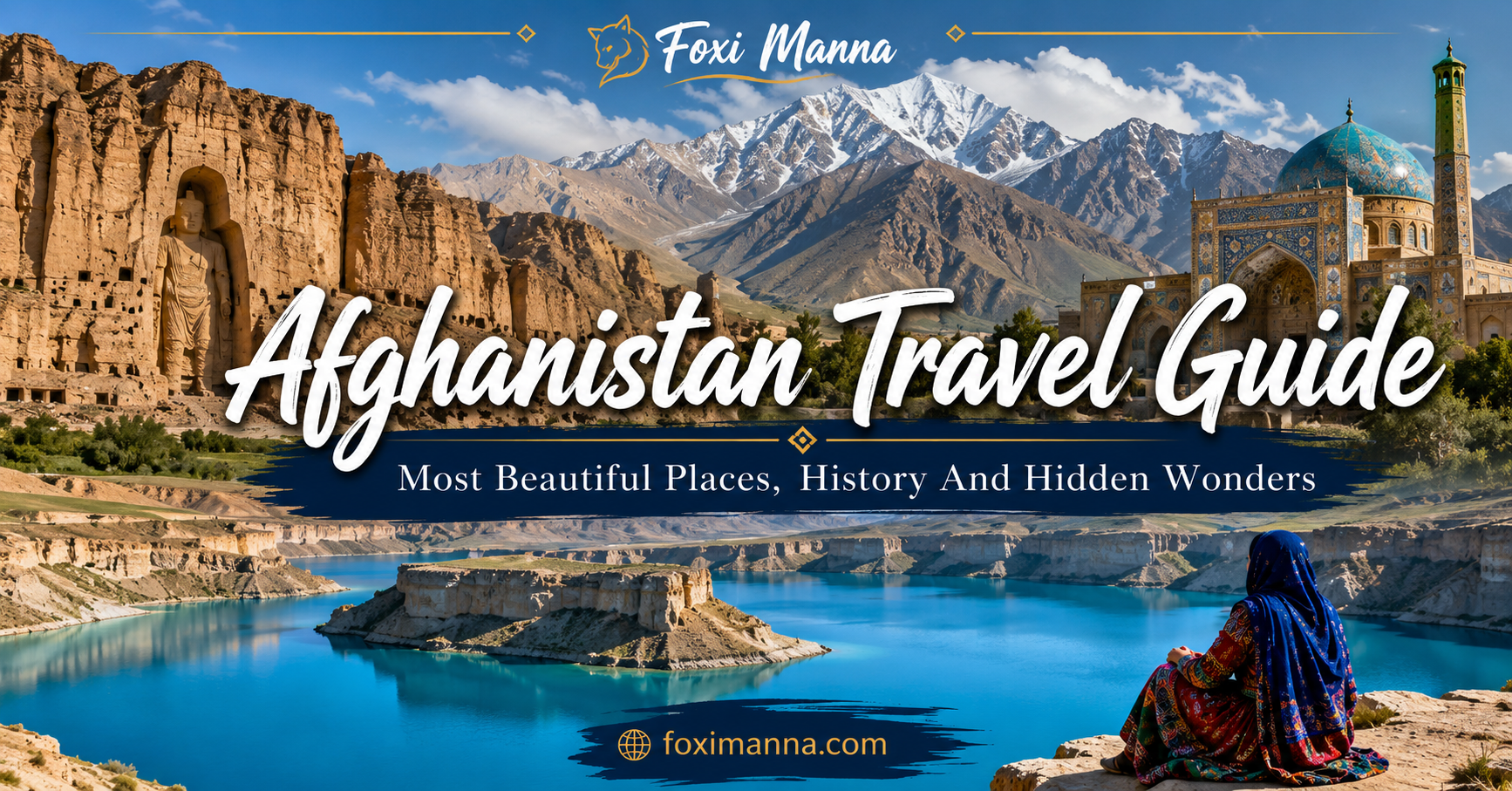
Afghanistan is often spoken about through the language of war, conflict and hardship. For many people around the world, the country is associated with headlines rather than horizons, danger rather than discovery, and politics rather than landscapes. Yet behind that narrow image is one of the most visually dramatic and historically layered countries in Asia.
This is a land where blue lakes glow among dry limestone cliffs, snow-covered mountains rise over ancient valleys, and old Silk Road cities still carry the memory of merchants, monks, poets, conquerors and craftsmen. Afghanistan sits at the meeting point of Central Asia, South Asia and West Asia, and that position shaped everything about it. Empires passed through it. Religions left their mark on it. Trade routes crossed it. Communities adapted to its deserts, highlands, forests and valleys.
A very important note must come before the beauty. Afghanistan is not currently a normal tourist destination. The UK Foreign, Commonwealth and Development Office advises against all travel to Afghanistan, warning that travel throughout the country is extremely dangerous and that the security situation is volatile. This article is therefore written mainly for travel inspiration, cultural understanding and future planning, not as a recommendation to visit now.
Still, Afghanistan deserves to be understood beyond fear alone. Its natural wonders, cultural heritage and human stories reveal a country far deeper than the world often sees. From Band-e Amir’s surreal lakes to the carved cliffs of Bamiyan, from the Wakhan Corridor’s remote mountain world to Herat’s tiled mosques and carpet markets, Afghanistan is a country of silence, endurance and astonishing beauty.
Travel Warning
Afghanistan is not currently recommended as a normal tourist destination. The UK Foreign, Commonwealth and Development Office advises against all travel to Afghanistan, stating that travel throughout the country is extremely dangerous and the security situation remains volatile. There are serious risks including terrorism, kidnapping, detention, armed conflict, border closures and limited consular support for British nationals.
This article is written for travel inspiration, cultural education and future planning only. It should not be taken as advice to visit Afghanistan at this time. Before making any travel plans, readers should always check the latest official government travel advice, local security updates, visa rules, entry requirements, insurance conditions and border information.
The Landscape Of Afghanistan: Where Mountains, Deserts And Ancient Routes Meet
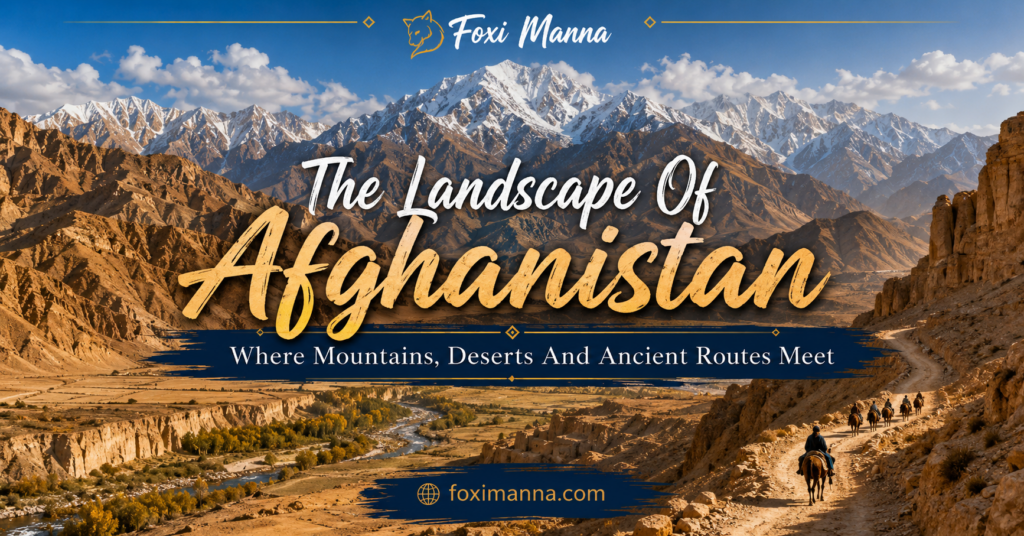
Afghanistan’s geography is one of the main reasons the country feels so powerful. The Hindu Kush mountains cut through the land like a stone backbone, dividing the country into valleys, basins, plateaus, passes and isolated communities. This broken terrain has shaped Afghan life for centuries. It has made travel difficult, protected local cultures, created natural barriers and preserved landscapes that feel almost untouched by the modern world.
The country is not one simple landscape. It is a place of sharp contrasts. In one region, dry highlands open into lakes so blue they seem unreal. In another, glaciers and rivers run through empty mountain corridors. Elsewhere, pine forests cling to steep slopes, desert plains stretch towards the horizon, and ancient roads squeeze through gorges carved into bare rock.
This variety is one of Afghanistan’s great surprises. Many people imagine only dust and conflict, but the country contains some of the most dramatic natural scenery in Asia. There are frozen mountain passes, green valleys, arid deserts, river gorges, orchards, grasslands, high pastures and historic cities surrounded by bare hills.
The climate is just as varied. Winters in the highlands can be bitterly cold, while summers in valleys and desert regions can be fiercely hot. Altitude changes everything. A journey across Afghanistan can move from snow and wind to dry heat and dust in a relatively short distance. That harshness has shaped the character of local communities. Survival often depends on timing, water, animals, crops, routes and deep knowledge of the land.
Historically, Afghanistan’s geography also made it a crossroads. Caravans moved between Persia, India, China and Central Asia. Armies crossed its passes. Buddhist monks, Islamic scholars, traders, poets and craftspeople all left traces behind. This is why Afghanistan’s cultural landscape is so rich. It is not only Afghan in one simple sense. It carries Persian, Greek, Buddhist, Islamic, tribal, Central Asian and South Asian influences.
That mixture can be seen in its old cities, fortresses, ruins, shrines, mosques, markets and mountain settlements. A valley may hold Buddhist caves, Islamic forts and local farming communities in the same landscape. A city may contain Persian-style tilework, Pashtun traditions, caravan history and modern struggle all at once.
To understand Afghanistan properly, you have to hold two truths together. It is a country of severe difficulty, and it is also a country of extraordinary beauty. Its mountains can isolate, but they also protect. Its deserts can threaten life, but they also reveal silence and scale. Its history includes destruction, but also creativity, faith, endurance and memory.
For travellers, writers and cultural explorers, Afghanistan is one of the great reminders that a destination should never be reduced to one story.
Band-e Amir And Bamiyan: Blue Lakes, Sacred Cliffs And Cultural Memory
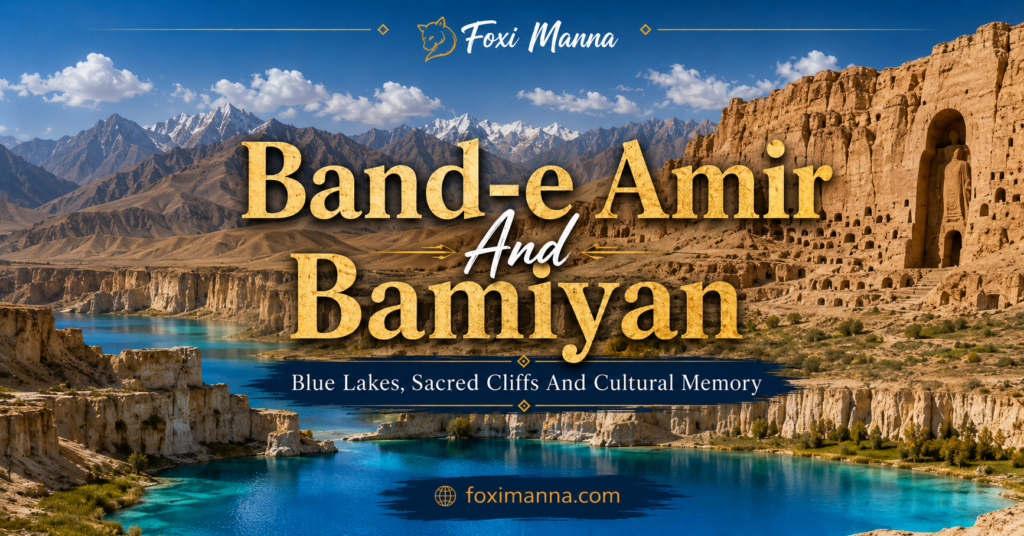
If there is one place that shows Afghanistan’s hidden natural beauty, it is Band-e Amir. Located in Bamiyan Province, Band-e Amir is a chain of intensely blue lakes formed by natural mineral dams in the mountainous desert of central Afghanistan. NASA describes Band-e Amir as a chain of six lakes formed from mineral-rich water in central Afghanistan’s mountainous desert.
The colour of the water is what makes Band-e Amir unforgettable. The lakes shift between deep sapphire, turquoise and soft blue depending on light, depth and weather. Around them, pale cliffs and dry highland scenery create a strong contrast. There is very little visual softness in the surrounding landscape, which makes the lakes appear even more magical.
The water is held back by natural travertine walls, creating a series of basins that look almost designed by hand. But the beauty is entirely natural. Over long periods, calcium-rich springs built barriers across the valley. Water gathered behind them, forming the lakes that are now among Afghanistan’s most famous natural wonders.
Band-e Amir is not only beautiful from the shore. It is especially powerful when viewed from above. Walking along the surrounding cliffs gives visitors a wider sense of the landscape. The lakes appear like pieces of blue glass set into dry stone. In the evening, when the light softens and the air cools, the area takes on a peaceful atmosphere that feels very different from the Afghanistan shown in news reports.
For local families, Band-e Amir is also a place of everyday life. Picnics, quiet gatherings and seasonal visits give the lakes a human warmth. Water is precious in this dry region, and the lakes support local life in practical and cultural ways. They are also connected to local belief and memory, including stories linked to Ali ibn Abi Talib, one of the most respected figures in Islamic history.
Not far from Band-e Amir is Bamiyan Valley, one of Afghanistan’s most important cultural landscapes. Bamiyan was once a major Buddhist centre on a branch of the Silk Road. Monasteries, chapels and caves were carved into sandstone cliffs, creating a spiritual landscape that connected Afghanistan with wider Asian religious and artistic traditions.
The most famous features of Bamiyan were the two colossal Buddha statues carved into the cliffs. They stood for centuries before being destroyed by the Taliban in March 2001. UNESCO describes Bamiyan Valley as a cultural landscape that represents artistic and religious developments from the 1st to the 13th centuries, showing influences from Indian, Hellenistic, Roman, Sasanian and Islamic traditions.
Today, the empty niches remain. Their absence is part of their power. The missing statues speak of loss, but also of memory. They remind the world that cultural heritage is fragile and that destruction can never fully erase meaning. The valley still contains caves, murals, monastic remains and Islamic-period structures that show how layered Afghanistan’s history is.
Bamiyan also has a quieter beauty. Its fields, ridges, villages and long mountain light create an atmosphere of calm. Barley fields and brown cliffs sit under a wide sky. The valley feels open, ancient and wounded at the same time.
Together, Band-e Amir and Bamiyan show two sides of Afghanistan’s appeal. One is natural wonder: blue lakes, cliffs, silence and highland air. The other is cultural memory: carved cliffs, vanished statues, Silk Road history and the endurance of heritage after loss.
Wakhan Corridor And Nuristan: Remote Valleys, Nomads And Mountain Life
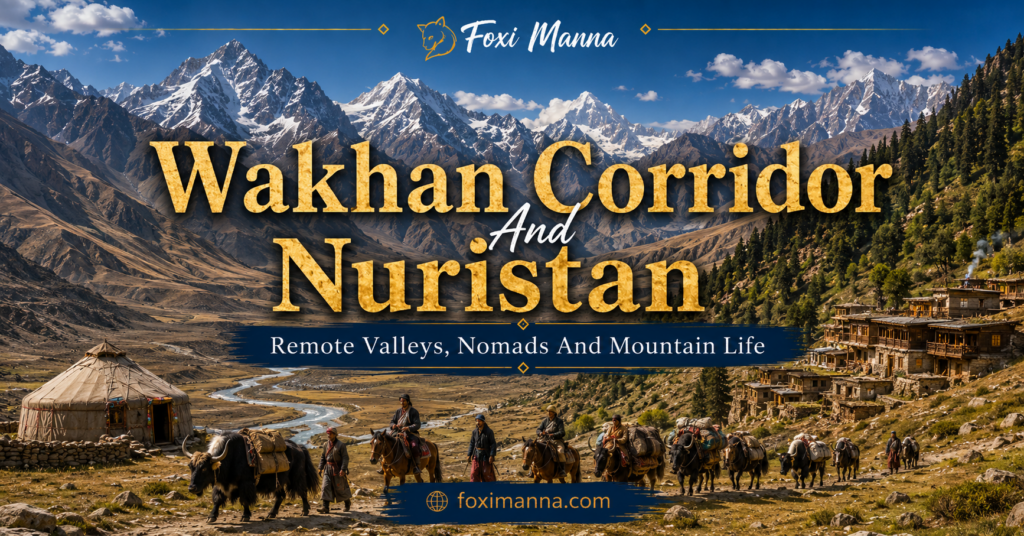
The Wakhan Corridor is one of the most remote and extraordinary regions of Afghanistan. It lies in the far northeast, between Tajikistan, Pakistan and China, where the Hindu Kush meets the Pamirs. This narrow strip of land was shaped partly by 19th-century border politics, but its deeper identity belongs to mountains, rivers, glaciers and distance.
The Wakhan feels like the edge of the world. Gravel plains stretch beneath white peaks. Glacial rivers cut through open valleys. The sky seems huge. Silence carries across the land. Every ridge appears to hide another valley beyond it.
This region is not about easy travel. It is about scale, endurance and isolation. To reach the deeper parts of the Wakhan, journeys may involve long treks, difficult routes and extreme remoteness. But that isolation is exactly what makes the region so fascinating. It is one of the few places where travellers can still imagine the old mountain routes used by caravans, pilgrims and traders moving between Central and South Asia.
Noshaq Peak, Afghanistan’s highest mountain, rises in the eastern Hindu Kush. Its snowfields and glaciers give the region a severe beauty. In the early morning, when light touches the upper slopes, the mountain appears almost separate from the human world.
The Wakhan is also home to Kirghiz nomads in the Little Pamir. Their lives are shaped by animals, weather and movement. Yaks, sheep, goats, horses and sometimes Bactrian camels are central to survival. Herds provide milk, meat, wool, transport and trade. Families move with the seasons, following grass and avoiding the worst conditions.
Nomadic culture in this region carries a special beauty. Felt yurts, embroidered textiles, patterned hangings, traditional music, tea, dairy foods and hospitality all form part of daily life. Kurut, a hard dried curd made from yak or goat milk, is especially suited to remote mountain living because it can last through long cold months.
Further south and east, Nuristan offers a different mountain world. Deep in the Hindu Kush, Nuristan is known for steep valleys, dark forests, wooden villages and strong local traditions. Pine, fir and cedar climb the mountainsides. Rivers flash through valley floors. Clouds move low over ridges before lifting towards stone passes.
Nuristan’s beauty is not found in one single viewpoint. It is in the overall feeling of mountain life: wood, water, shadow, cold rivers, steep fields and villages built into difficult terrain. The land is hard to farm, so families work small plots cut into slopes. Wheat, barley, maize, millet, peas, grapes and mulberries help support households. Goats are especially important, providing milk, meat, hides, hair and dung for fuel.
The villages of Nuristan often appear stacked into the mountains, with wooden structures rising in layers. This architecture reflects the land itself. People build according to slope, weather and available materials. Life is shaped by clan ties, mountain custom, local independence and Sunni Islam, while older cultural memories still linger beneath the surface.
Food here is simple and suited to the highlands. Fresh naan, goat yogurt, goat meat and hot tea provide warmth and strength. Hospitality remains important even in hard places. Listening to local stories about forests, winters, valleys and survival would be one of the richest ways to understand the region.
However, Nuristan is also highly sensitive from a security perspective. Like many parts of Afghanistan, it should not be treated as an ordinary adventure destination. Its landscapes may be beautiful, but practical travel is extremely risky under current conditions.
Wakhan and Nuristan reveal Afghanistan’s mountain soul. They show how people can build life in places that appear impossible. They also remind us that remoteness is not emptiness. It is full of culture, memory, skill and adaptation.
Kabul, Herat And Kandahar: Cities Of Faith, Trade And Endurance
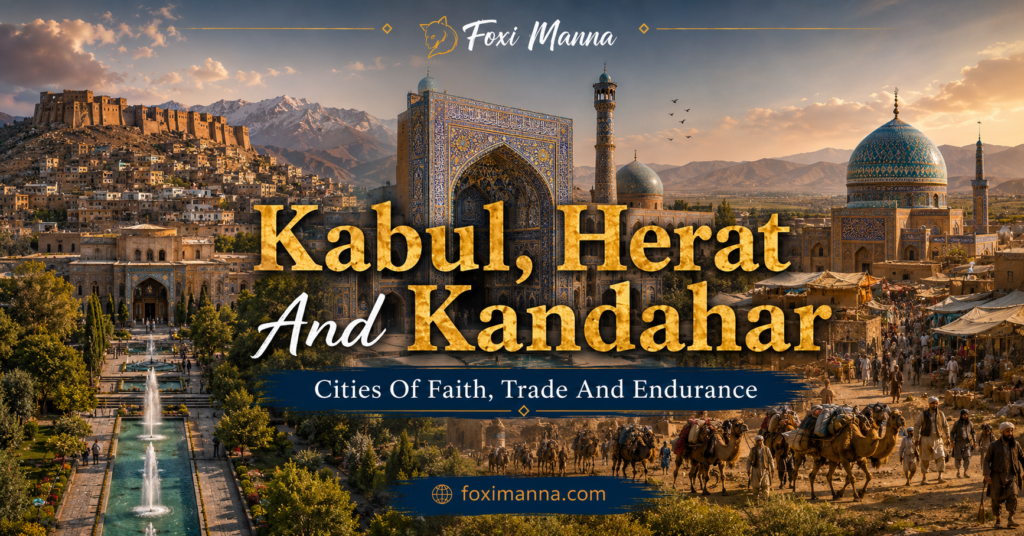
Afghanistan’s cities are often misunderstood. They are not just places of politics or conflict. They are centres of memory, culture, trade, faith, art and daily survival. Kabul, Herat and Kandahar each show a different side of Afghan urban life.
Kabul, the capital, sits in a wide valley beneath the Hindu Kush. It is a city of dust, hills, traffic, markets, mosques, memory and pressure. Morning light falls over rooftops and bare hills. The Kabul River cuts through crowded districts. Streets wake early with movement, trade and noise.
One of Kabul’s most peaceful places is the Babur Gardens. Set on a hillside, the gardens offer terraces, trees, water channels and a rare sense of calm above the city. First laid out in the 16th century, they connect Kabul with Mughal history and the memory of Babur, the founder of the Mughal Empire.
Darul Aman Palace tells a different story. It stands as a symbol of reform, ambition, damage and restoration. Its long halls and high windows carry the memory of Afghanistan’s early 20th-century modernising dreams. The building has suffered through conflict, but its restored presence still gives it symbolic power.
Bala Hissar, the old citadel, watches over Kabul from above. For centuries, it has been linked to rulers, armies and the defence of the city. From elevated points, visitors can see how Kabul spreads across its valley, surrounded by ridges and mountains.
Kabul’s culture survives in many forms. Poetry remains important in Afghan identity. Craftsmanship appears in carpets, embroidery and metalwork. Markets continue to bring people together. The Ka Faroshi bird market, with its cages and birdsong, offers a glimpse of older urban pleasures. In a city marked by hardship, even the sound of birds can feel like a symbol of peace.
Herat, near the Iranian border, has a calmer and more Persian-influenced atmosphere. It is one of the oldest urban centres in the region and has long been associated with scholarship, art, trade and architecture. The city sits on a broad plain where minarets rise above low buildings and dust moves softly through streets and courtyards.
The Great Mosque of Herat is one of Afghanistan’s architectural treasures. Its courtyards, iwans, domes, calligraphy and blue tilework reveal the city’s artistic depth. Geometric and floral patterns cover surfaces in turquoise and deep blue, creating one of the most beautiful sacred spaces in the country.
Herat Citadel adds another layer to the city’s story. Its foundations are often associated with the era of Alexander the Great, though the structure has been rebuilt and restored through later periods. Thick walls and towers give it a commanding presence over the surrounding land.
Herat is also famous for carpets. In its markets, handwoven pieces hang in dense rows of red, indigo, earth and gold. Each pattern carries skill passed through generations. Carpet weaving is not only a trade. It is a cultural language of memory, family and identity.
Kandahar, in southern Afghanistan, has a different character again. It is closely tied to Pashtun culture and to the founding of modern Afghanistan. Ahmad Shah Durrani, who is often regarded as the founder of modern Afghanistan, chose Kandahar as his first capital. The city remains one of the country’s most historically influential places.
The mausoleum of Ahmad Shah Durrani stands at the heart of Kandahar with an octagonal plan and a blue dome. It carries royal and national significance. Nearby is the Shrine of the Cloak, or Kherqa Sharif, one of the city’s most sacred places. The relic kept there is believed by many to be connected to the Prophet Muhammad, giving the shrine deep religious importance.
Kandahar is also known for its orchards and agricultural produce, especially pomegranates, grapes and melons from the surrounding region and the Arghandab Valley. Its markets and local life reveal a culture where hospitality, honour, tribal identity and pride remain deeply important.
These cities show that Afghanistan’s story is not only written in mountains and ruins. It is also written in gardens, mosques, markets, shrines, carpets, poetry and the daily effort of people continuing to live under difficult conditions.
The Minaret Of Jam, Takht-e Rostam And Mes Aynak: Afghanistan’s Ancient Heritage
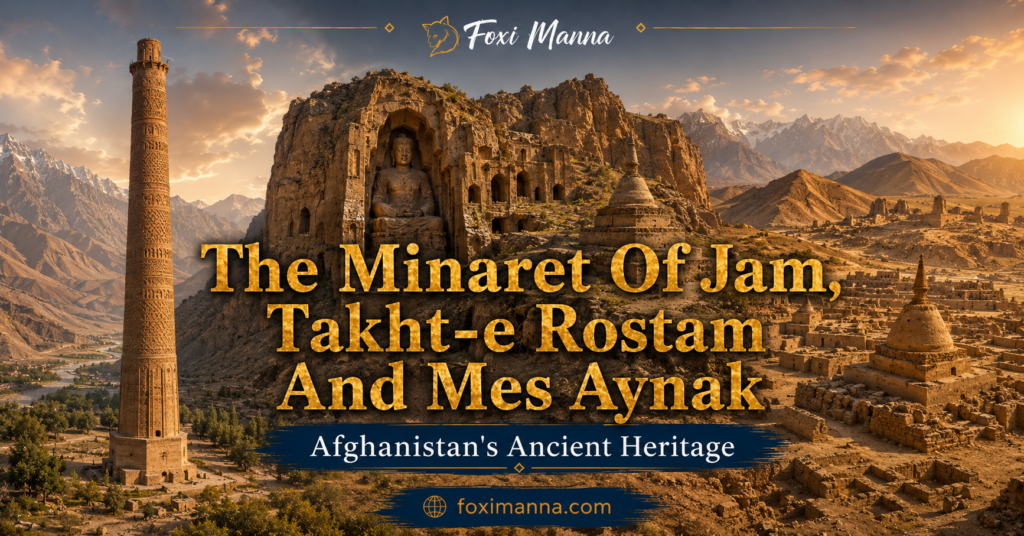
Afghanistan’s archaeological heritage is one of the richest in Asia. The country’s position at the centre of ancient routes made it a meeting place for religions, languages, empires and artistic styles. Some of its most remarkable sites are remote, fragile and under threat.
The Minaret of Jam is one of the greatest examples. Standing in Ghor Province at the meeting point of deep valleys and fast-flowing water, the minaret rises in a dramatic mountain setting. UNESCO describes the Minaret of Jam as a 65-metre-tall structure dating from the 12th century, notable for its elaborate brickwork and blue tile inscription.
The minaret’s beauty is intensified by its isolation. It stands far from major cities, surrounded by mountains, river valleys and harsh terrain. Its decoration includes calligraphy, geometric patterns and delicate brickwork. In such a remote place, the sophistication of the architecture feels astonishing.
The Minaret and Archaeological Remains of Jam were added to UNESCO’s World Heritage List and the List of World Heritage in Danger in 2002. UNESCO has noted that the site is exposed to both natural and human-induced hazards, including risks linked to its remote mountainous location.
Takht-e Rostam, near Aybak in Samangan Province, takes visitors into an even older religious world. This rock-cut Buddhist complex dates to a period when Buddhist communities flourished across northern Afghanistan. Unlike many monuments built upward from brick or stone, Takht-e Rostam was carved directly into living rock.
Its circular stupa, rock-cut court, chambers, caves and sanctuaries create a powerful atmosphere. One sanctuary includes a domed ceiling with lotus decoration, connecting the site to Buddhist artistic traditions. Standing there, it is possible to sense Afghanistan’s role as a bridge between Indian, Persian and Central Asian worlds.
Takht-e Rostam is not only an archaeological site. It is a reminder that Afghanistan was once home to a diverse religious landscape. Buddhism, Islam, local traditions and imperial cultures all shaped different regions at different times.
Mes Aynak, in Logar Province south of Kabul, is another extraordinary site. It sits on a rich copper deposit and contains remains of an ancient settlement, mining activity and Buddhist monastic complexes. Excavations have revealed stupas, chapels, statues, wall paintings, residential quarters, workshops, manuscripts, coins and other objects.
The site is especially important because it shows how economic and religious life could exist side by side. Copper drew people to the area, while Buddhist communities built monasteries around the working zone. Mining, trade, worship and learning all formed part of the same landscape.
Mes Aynak also raises difficult questions about preservation and development. Its archaeological value is immense, but the copper beneath the ground gives the site economic significance. This tension between cultural heritage and resource extraction is one of the major challenges facing Afghanistan’s ancient sites.
Together, Jam, Takht-e Rostam and Mes Aynak reveal an Afghanistan that many people never imagine. This was not only a land of warriors and tribes. It was a land of monks, artists, engineers, architects, miners, scholars and pilgrims. Its heritage belongs not only to Afghanistan, but to world history.
Dasht-e Margo, Mahi Par Gorge And The Roads Of Survival
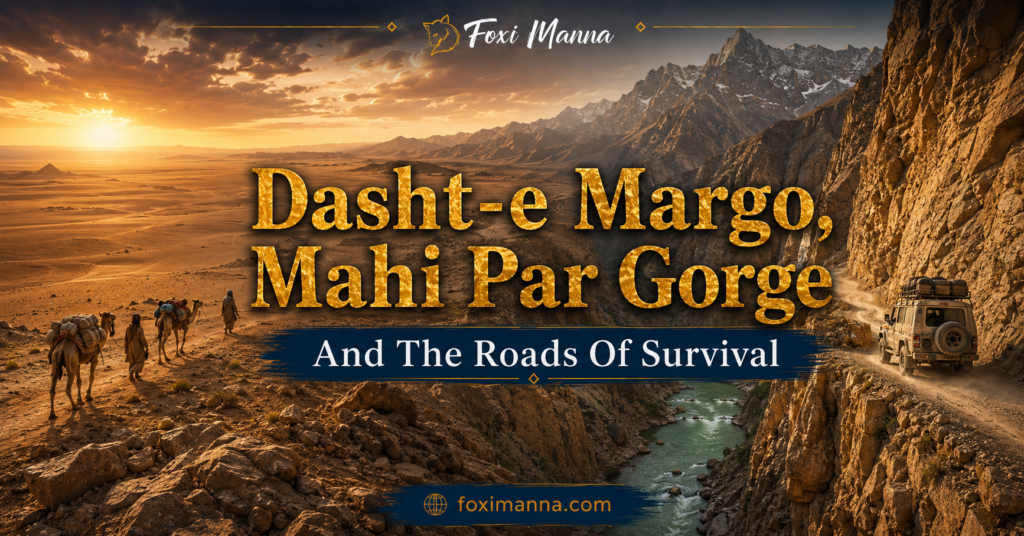
Afghanistan’s beauty is not always soft or easy. Some of its most memorable landscapes are severe, dangerous and almost overwhelming. Dasht-e Margo and Mahi Par Gorge show the country’s harsher side.
Dasht-e Margo, often translated as the Desert of Death, lies across southern Afghanistan, mainly in Helmand and Nimruz. The name alone gives a sense of its reputation. This is a vast desert region of sand ridges, clay plains, salt flats, dry rock beds, rare oases and long horizons.
The landscape changes with light. At times it burns copper and ochre. At other moments it fades into ash, ivory and pale gold. The silence can feel absolute. In a place like this, distance becomes physical. The horizon seems to stretch endlessly, and human life feels small against the scale of the land.
Yet the desert is not empty. Wildlife has adapted to its harsh conditions. Goitered gazelles move across open plains. Sand cats hunt at night, their pale coats helping them blend into the ground and their fur-covered paws helping them move across hot sand. The Asian houbara bustard, a bird of dry steppe and desert, adds another layer of fragile beauty.
Human life around Dasht-e Margo depends on knowledge, timing and endurance. Many families rely more on herding than farming. Sheep, goats and camels provide food, transport, milk, trade and survival. Water decides routes. Labour begins early. Desert living requires skill passed down through generations.
Food and drink reflect the environment. Kurut, the dried yogurt curd also found in mountain regions, is ideal for long journeys because it is light and durable. Tea provides warmth, comfort and social connection in camps where nights can become cold and windy.
Mahi Par Gorge offers a different kind of intensity. Located east of Kabul along the Kabul-Jalalabad Highway, it is one of Afghanistan’s most dramatic road landscapes. The route descends through steep mountain country beside the Kabul River, linking the capital with eastern Afghanistan.
The road is famous for its views and its danger. Ash-grey cliffs rise close to the road. Hairpin bends cling to the mountainside. Far below, the river flashes through narrow channels. Driving through the gorge can feel like passing through a giant crack in the earth.
On one side, sheer rock presses close. On the other, drops open suddenly. The route has long been vital for movement and commerce, but it also reminds travellers how difficult Afghan geography can be. Roads here are not simply lines on a map. They are lifelines cut through stone.
These landscapes reveal the discipline required to move through Afghanistan. Whether crossing desert, climbing mountain passes or navigating cliffside roads, travel has always demanded patience, local knowledge and respect for the land.
For modern readers, these places are best understood as part of Afghanistan’s geographical identity rather than as casual travel suggestions. They show why communities have developed such strong traditions of hospitality, endurance and self-reliance. In a land where the environment itself can be unforgiving, survival often depends on cooperation.
Why Afghanistan Remains A Forgotten Paradise Worth Understanding
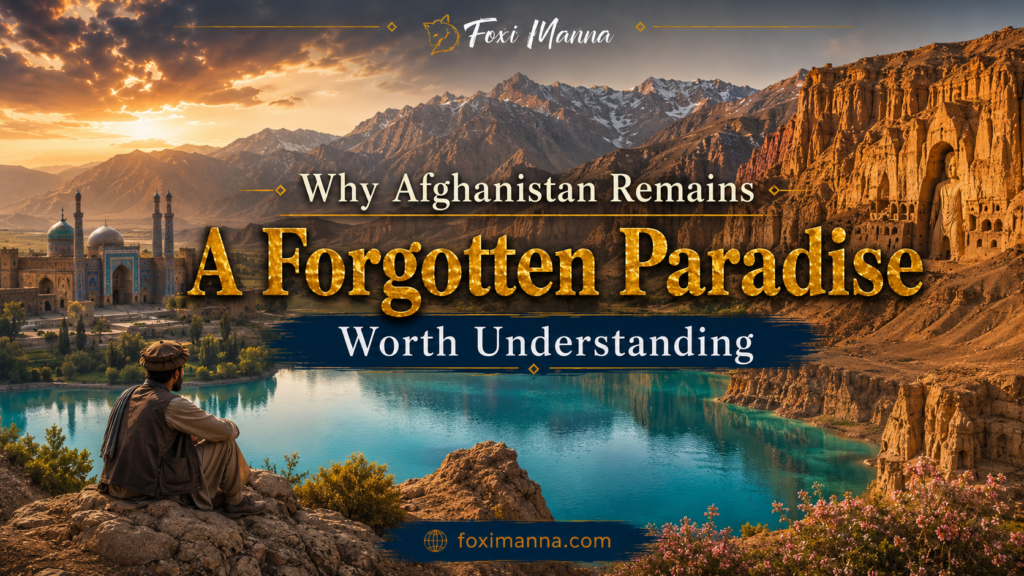
Afghanistan is not an easy country to describe. It is beautiful, but wounded. Historic, but fragile. Hospitable, but dangerous for outsiders under current conditions. It contains some of Asia’s most remarkable landscapes and cultural sites, yet it remains largely inaccessible to ordinary tourism.
That tension is what makes Afghanistan so powerful as a subject for travel writing. It forces us to look beyond the idea of travel as simple leisure. Some destinations are not places we can casually visit. Some must be approached through history, culture, documentaries, books, photography and respect from a distance until conditions change.
Afghanistan’s beauty is found in many forms. It is in the blue stillness of Band-e Amir. It is in the empty niches of Bamiyan, where absence has become a form of memory. It is in the cold winds of the Wakhan Corridor, where nomads move with their animals under enormous skies. It is in the forests of Nuristan, the gardens of Kabul, the tiles of Herat and the orchards of Kandahar.
It is also in places that feel almost forgotten by the wider world: the Minaret of Jam standing alone in a mountain valley, Takht-e Rostam carved into rock, Mes Aynak resting above copper and ancient Buddhist remains, and Dasht-e Margo stretching into lethal silence.
The Afghan people are central to this story. Across the country, hospitality remains a deeply respected value. Tea, bread, warmth and welcome are not small gestures. In difficult environments, they carry moral weight. They reflect dignity, generosity and the belief that a guest should be honoured.
This does not erase the country’s problems. Afghanistan faces serious security risks, political uncertainty, economic hardship and humanitarian challenges. For travellers, the safety warnings are not minor details. They are essential. Anyone researching Afghanistan must check current official advice, understand the risks and avoid treating the country like a normal holiday destination while advisories remain severe.
But caution should not mean indifference. The world can recognise Afghanistan’s risks while still respecting its heritage. It can acknowledge conflict while also remembering lakes, mountains, poetry, carpets, gardens, shrines, minarets, fortresses and ancient trade routes.
Afghanistan matters because it reminds us that countries are never only their headlines. A place can suffer deeply and still contain wonder. A people can endure hardship and still preserve hospitality. A landscape can be dangerous and still be beautiful. A ruined monument can still speak.
For future travellers, Afghanistan may one day become more accessible. If that day comes, responsible travel will need to be thoughtful, locally guided, culturally respectful and safety-conscious. It should support communities, protect heritage, avoid exploitation and recognise the complexity of the country.
Until then, Afghanistan remains a forgotten paradise best explored through learning. Its story belongs to mountains and deserts, lakes and valleys, cities and ruins, faith and memory. Beneath the noise of conflict, something older and quieter continues to exist.
That is the Afghanistan many people never see.
And that is why it deserves to be remembered.
Disclaimer
The information provided in this article is for general informational and educational purposes only. While every effort has been made to ensure the accuracy of the information at the time of writing, travel conditions, entry requirements, opening hours, ticket prices, local regulations, and accessibility may change without notice.
Readers are encouraged to verify all travel information with official tourism boards, government agencies, airlines, accommodation providers, and local authorities before making travel plans or bookings.
The destinations featured in this article are based on their historical, cultural, natural, and tourism significance. The opinions expressed are for informational purposes only and should not be considered professional travel, legal, health, safety, or financial advice.
FoxiManna.com and its authors are not responsible for any losses, injuries, inconveniences, travel disruptions, or damages that may result from the use of information contained in this article. Travelers are responsible for conducting their own research and making informed decisions based on their individual circumstances.
By using this website and reading this article, you agree that any reliance on the information provided is at your own risk.