
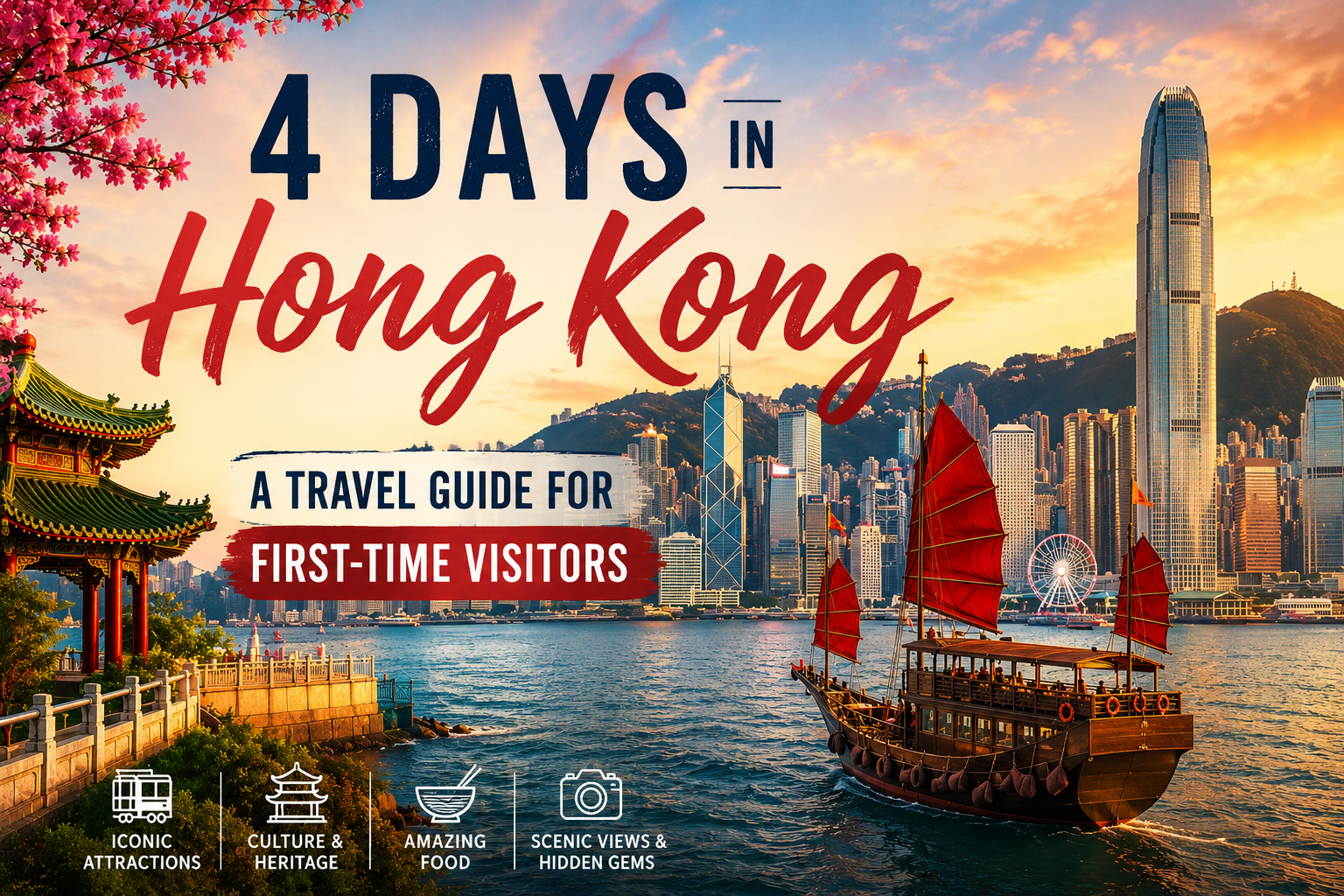
Hong Kong is one of the most fascinating destinations in Asia. It is a city where ancient traditions sit comfortably beside futuristic skyscrapers, where peaceful temples hide among busy shopping streets, and where fishing villages exist only a short distance from some of the world’s most impressive skylines.
For first-time visitors, Hong Kong offers an unforgettable mix of culture, history, food, nature, and modern city life. Whether you are riding a historic tram through bustling neighborhoods, standing high above the city at Victoria Peak, exploring colorful markets, or cruising across Victoria Harbour on a traditional junk boat, every day reveals something completely different.
This four-day Hong Kong itinerary is designed to help you experience the best of the city without feeling rushed. It combines famous landmarks with hidden gems and introduces you to both the modern and traditional sides of Hong Kong.
If you are planning your first trip to this incredible destination, this guide will help you make the most of every moment.
Day One Exploring Central Hong Kong And Victoria Peak
Arriving in Hong Kong is an experience in itself. The city immediately impresses visitors with its towering skyline, busy streets, and endless energy.
After checking into your hotel and settling in, the best way to begin your Hong Kong adventure is by diving straight into local culture.
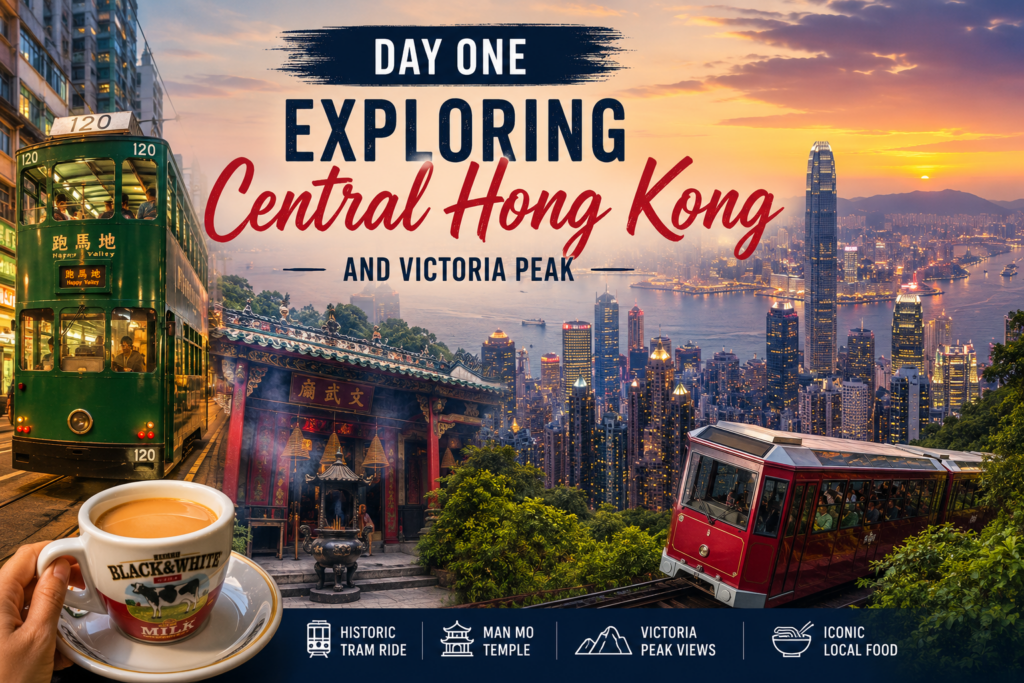
One of the most iconic drinks in Hong Kong is Hong Kong-style milk tea. Rich, smooth, and slightly stronger than traditional British tea, it has become a symbol of the city’s unique East-meets-West identity. Starting your journey with a cup of authentic milk tea offers a simple introduction to local life.
Once refreshed, head toward one of Hong Kong’s most beloved forms of transportation, the famous Ding Ding Tram.
These historic double-decker trams have been operating for over a century and remain one of the most charming ways to explore Hong Kong Island. Riding on the upper deck provides a fantastic view of the streets below. As the tram rattles through the city, you can observe office workers, market vendors, luxury boutiques, and traditional shops all existing side by side.
The tram journey toward Hollywood Road reveals one of the city’s most interesting districts.
Hollywood Road is famous for its mix of history, creativity, and culture. The area is filled with independent galleries, colorful murals, antique shops, and trendy cafés. Walking through the neighborhood feels like exploring an outdoor art gallery.
Street art appears around every corner. Bright murals transform ordinary walls into works of art, adding character and energy to the district.
The area is also home to numerous vintage stores and specialty shops. Many visitors enjoy browsing through collections of old cameras, vinyl records, and unique antiques that offer glimpses into Hong Kong’s past.
A short walk from Hollywood Road brings you to one of the city’s most important religious landmarks.
Man Mo Temple is dedicated to the gods of literature and war. Despite being located in the heart of a busy urban district, stepping inside feels like entering another world.
The scent of burning incense fills the air while giant incense coils hang from the ceiling. The peaceful atmosphere creates a striking contrast with the busy streets outside.
Visitors often spend time admiring the temple’s architecture and observing worshippers who come to pray for success, wisdom, and good fortune.
As afternoon turns into evening, make your way toward Hong Kong’s most famous viewpoint.
Victoria Peak offers spectacular panoramic views across Hong Kong Island, Victoria Harbour, and Kowloon.
The journey to the summit aboard the Peak Tram is an attraction in itself. The steep climb creates the illusion that nearby skyscrapers are leaning dramatically backward.
At the top, visitors are rewarded with one of the most breathtaking urban landscapes anywhere in the world.
If weather conditions are clear, the view stretches across mountains, harbor waters, islands, and an endless sea of skyscrapers.
Sunset is particularly magical.
As daylight fades, thousands of lights begin illuminating the city below. Watching Hong Kong transform from a bustling daytime metropolis into a glittering nighttime spectacle is an unforgettable experience.
After descending from the Peak, end your evening with one of Hong Kong’s culinary specialties.
Beef brisket noodles are considered comfort food by many locals. Tender slow-cooked beef served in rich broth alongside perfectly cooked noodles provides the perfect ending to an exciting first day.
Day Two Discovering Lantau Island Tian Tan Buddha And Tai O Fishing Village
Your second day focuses on a completely different side of Hong Kong.
While many visitors associate the city with skyscrapers and shopping districts, Hong Kong also offers incredible natural beauty and cultural experiences.
Begin by taking the train to Tung Chung on Lantau Island.
This area serves as the gateway to one of Hong Kong’s most iconic attractions.
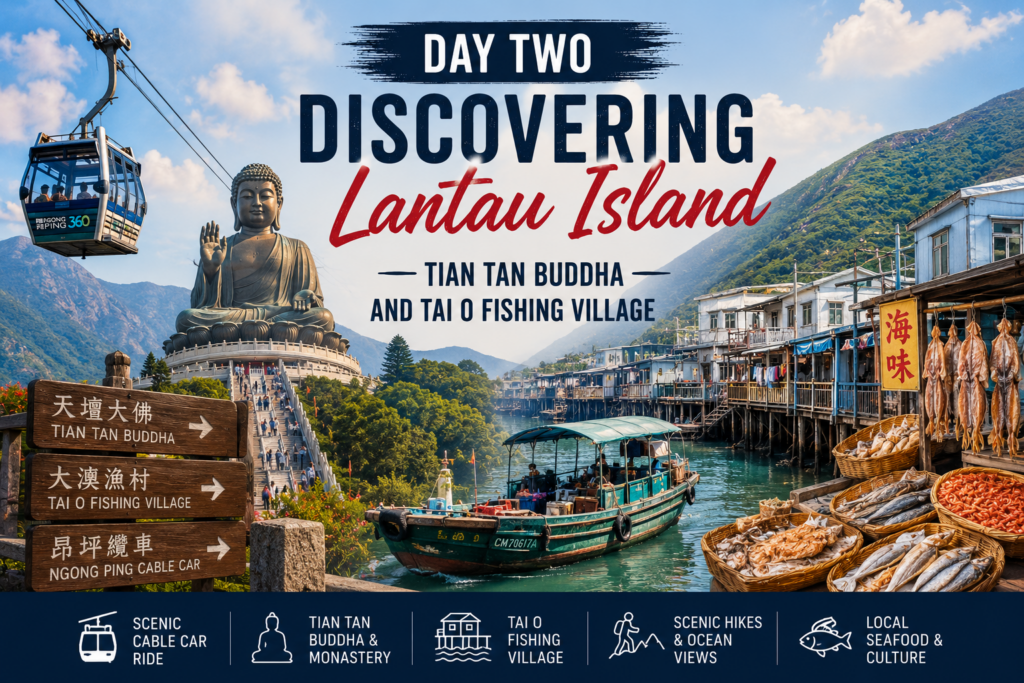
The Ngong Ping Cable Car provides a memorable journey over mountains, forests, and coastline. The ride offers stunning views that reveal the surprisingly green and mountainous landscape surrounding Hong Kong.
As the cable car glides silently above valleys and hills, it becomes clear why Hong Kong is often considered one of the world’s most unique urban destinations.
At the end of the journey stands the magnificent Tian Tan Buddha.
Commonly known as the Big Buddha, this enormous bronze statue rises more than 34 meters above the surrounding landscape.
The statue symbolizes harmony between humanity and nature.
Visitors can climb the 268 steps leading to the base of the Buddha for impressive views across Lantau Island.
The peaceful atmosphere encourages reflection and provides a welcome contrast to the fast pace of central Hong Kong.
Nearby, the Po Lin Monastery offers another fascinating cultural experience.
The monastery attracts both worshippers and tourists who come to admire its beautiful architecture, intricate decorations, and peaceful gardens.
After exploring the Buddha and monastery complex, continue your journey toward Tai O Fishing Village.
The bus ride itself is scenic, winding through mountainous roads before reaching the coast.
Tai O feels like stepping into another era.
Unlike the modern districts of central Hong Kong, this traditional fishing village preserves a way of life that has existed for generations.
Many homes are built on stilts above the water, creating a unique and picturesque setting.
Walking through Tai O reveals narrow pathways, seafood stalls, traditional markets, and small family-run businesses.
Dried seafood hangs outside shops while fishing boats gently rock in the harbor.
The village’s slower pace allows visitors to experience a more authentic side of Hong Kong culture.
Seafood lovers will find plenty of local delicacies available for sampling.
The waterfront also provides opportunities to take boat tours in search of the famous pink dolphins that occasionally appear in nearby waters.
For those who enjoy photography, Tai O offers endless opportunities.
The combination of colorful buildings, traditional boats, mountain backdrops, and waterfront scenery creates stunning images at every turn.
Before leaving, take time to hike to one of the surrounding viewpoints.
From above, the entire village can be seen stretching along the coastline, with the South China Sea extending toward the horizon.
Returning to the city in the evening brings another dramatic change of atmosphere.
Temple Street Night Market provides one of Hong Kong’s most vibrant nighttime experiences.
Bright neon signs illuminate rows of stalls selling clothing, electronics, souvenirs, and street food.
The market buzzes with energy as locals and visitors gather to eat, shop, and socialize.
Street performers, fortune tellers, and food vendors contribute to the lively atmosphere that makes Temple Street such a memorable destination.
Day Three Experiencing Kowloon Temples Gardens And Hong Kong Nightlife
The third day begins at a slower pace.
Hong Kong’s café culture continues to grow, and spending a relaxed morning in a neighborhood café provides an opportunity to observe daily life.
After breakfast and coffee, make your way toward the ferry terminal.
The Star Ferry is one of Hong Kong’s most iconic experiences.
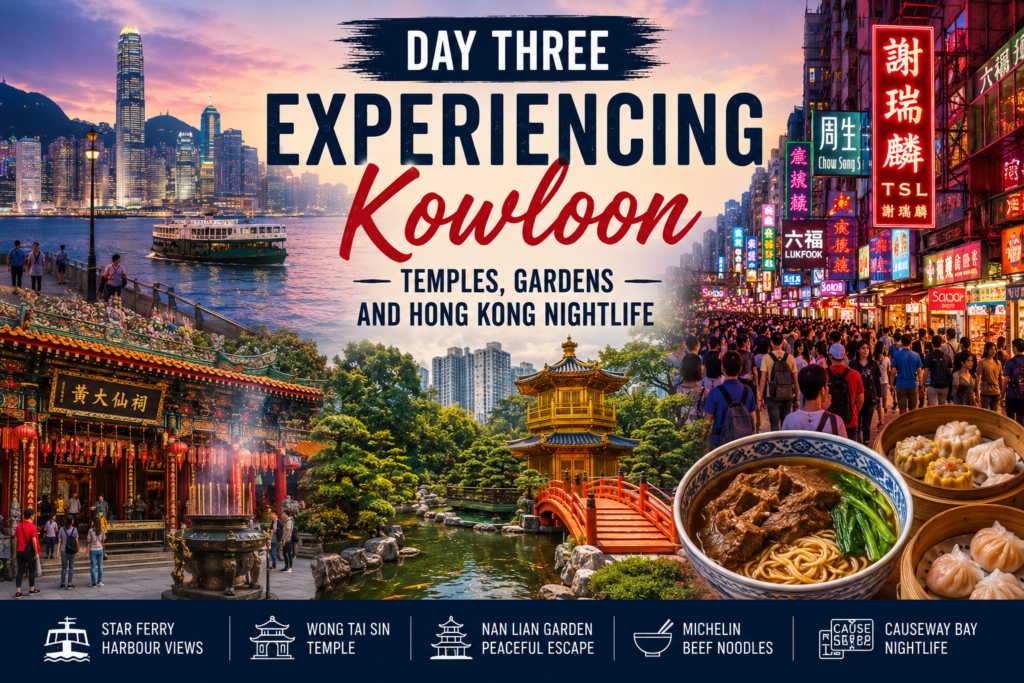
Operating since the nineteenth century, these ferries transport passengers across Victoria Harbour while offering spectacular views of both Hong Kong Island and Kowloon.
Despite the availability of modern transportation options, the Star Ferry remains one of the most enjoyable ways to cross the harbor.
The journey is short but unforgettable.
Upon arriving in Kowloon, take time to explore the waterfront promenade.
The views here are among the most famous in Hong Kong.
Across the water, Hong Kong Island’s skyline rises dramatically against the surrounding mountains.
Photographers often gather here to capture some of the city’s most recognizable images.
Continue toward Tsim Sha Tsui, one of Kowloon’s busiest districts.
The area is filled with shopping centers, restaurants, hotels, and entertainment venues.
Many visitors compare its energy to famous commercial districts found in other major Asian cities.
The streets are constantly alive with activity.
Luxury boutiques stand alongside local businesses, while crowds move through busy intersections surrounded by giant digital advertisements and neon signs.
After experiencing the excitement of Tsim Sha Tsui, shift your focus toward one of Hong Kong’s most respected religious sites.
Wong Tai Sin Temple attracts thousands of worshippers each year.
Dedicated to a deity believed to grant wishes, the temple is famous for its fortune-telling traditions and vibrant atmosphere.
Visitors often observe worshippers offering prayers and incense while seeking guidance for the future.
The temple’s colorful architecture and intricate decorations make it one of Hong Kong’s most visually impressive religious sites.
Only a short distance away lies one of the city’s most peaceful hidden treasures.
Nan Lian Garden is a beautifully designed classical Chinese garden that feels worlds away from the surrounding urban environment.
Every detail has been carefully planned.
Ponds filled with koi fish reflect elegant pavilions and bright red bridges. Carefully pruned trees and manicured landscapes create a sense of harmony and balance.
The garden demonstrates traditional Chinese landscaping principles and provides a peaceful escape from city life.
Many visitors consider it one of the most relaxing places in Hong Kong.
As evening approaches, enjoy another famous local culinary experience.
Hong Kong’s beef brisket noodles are legendary, and several highly rated restaurants specialize in this beloved dish.
The combination of tender beef, rich broth, and perfectly prepared noodles highlights the city’s reputation as one of Asia’s top food destinations.
After dinner, head toward Causeway Bay.
This district truly comes alive after dark.
Neon signs illuminate busy streets packed with shoppers, diners, and nightlife enthusiasts.
The atmosphere is electric.
Whether you prefer browsing shops, exploring local food stalls, or simply enjoying the city’s vibrant energy, Causeway Bay offers an exciting conclusion to your third day.
Day Four Heritage Culture Shopping And A Farewell Cruise
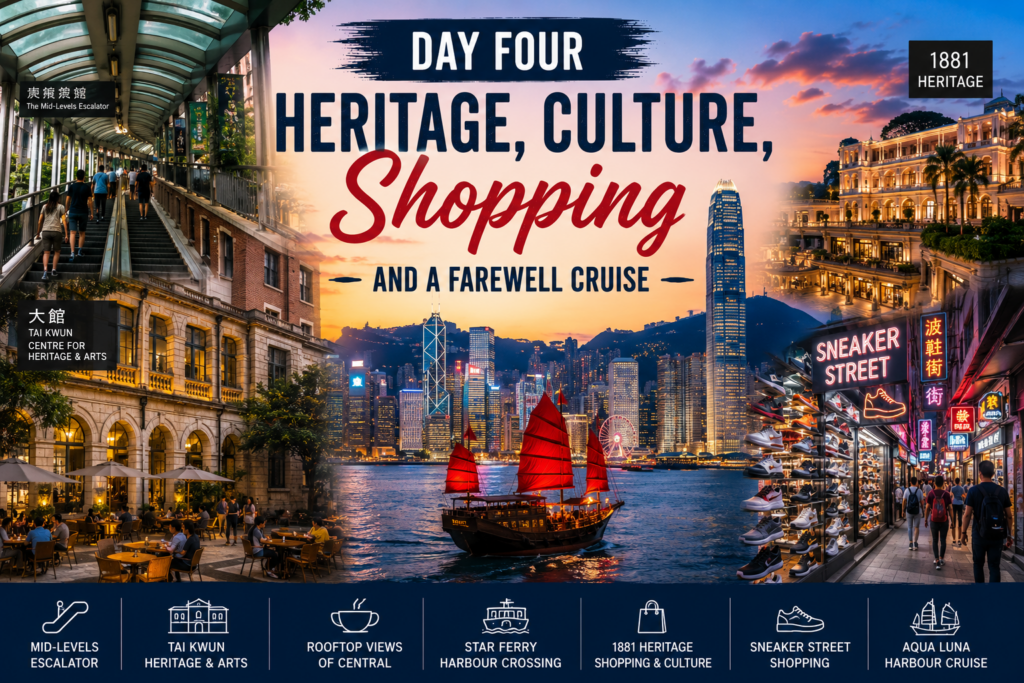
Your final day in Hong Kong combines culture, history, shopping, and one last opportunity to appreciate the city’s extraordinary beauty.
Start with another cup of traditional Hong Kong milk tea.
For many visitors, this simple ritual becomes one of the most memorable aspects of their trip.
Next, head toward the Mid-Levels Escalator.
This remarkable transportation system is the longest covered outdoor escalator network in the world.
Stretching through the city’s hillside neighborhoods, it provides a unique way to explore areas that would otherwise require significant uphill walking.
The escalator passes through residential districts, restaurants, cafés, and local businesses, offering fascinating glimpses into everyday life.
At the top, visit Tai Kwun Centre for Heritage and Arts.
This cultural complex occupies the former Central Police Station and prison buildings.
Beautifully restored colonial architecture now houses galleries, exhibition spaces, restaurants, and public courtyards.
Tai Kwun successfully blends Hong Kong’s history with contemporary creativity.
Visitors can spend hours exploring exhibitions that examine the city’s past, present, and future.
The open spaces and artistic atmosphere make it one of Hong Kong’s most rewarding cultural attractions.
After exploring Tai Kwun, relax with a coffee while enjoying rooftop views across Central.
Looking out over the dense collection of skyscrapers, apartment towers, and historic buildings offers a final reminder of Hong Kong’s unique urban character.
Later, cross Victoria Harbour once more and visit 1881 Heritage.
Originally constructed as the Marine Police Headquarters, this beautifully preserved complex now combines history, luxury shopping, and cultural attractions.
Its elegant architecture provides a fascinating glimpse into Hong Kong’s colonial past.
Nearby, Sneaker Street offers a completely different experience.
Officially known as Fa Yuen Street, this area is famous for its enormous concentration of athletic footwear stores.
Whether you are a serious sneaker collector or simply curious, the district provides a fascinating look into Hong Kong’s shopping culture.
The streets are lined with shop after shop displaying the latest footwear releases from major international brands.
As evening approaches, prepare for one final unforgettable experience.
Boarding the Aqua Luna traditional red-sail junk boat provides the perfect farewell to Hong Kong.
These beautiful vessels are inspired by traditional Chinese sailing boats and offer one of the most scenic ways to experience Victoria Harbour.
As darkness falls, the city skyline begins to glow.
Thousands of lights reflect across the water while skyscrapers create a dazzling backdrop against the night sky.
From the deck of the boat, Hong Kong appears even more spectacular than from land.
The gentle movement of the harbor, the illuminated skyline, and the cool evening breeze combine to create a truly magical atmosphere.
Few travel experiences capture the spirit of Hong Kong as perfectly as this final harbor cruise.
The Best Food Experiences To Try During Your Hong Kong Adventure
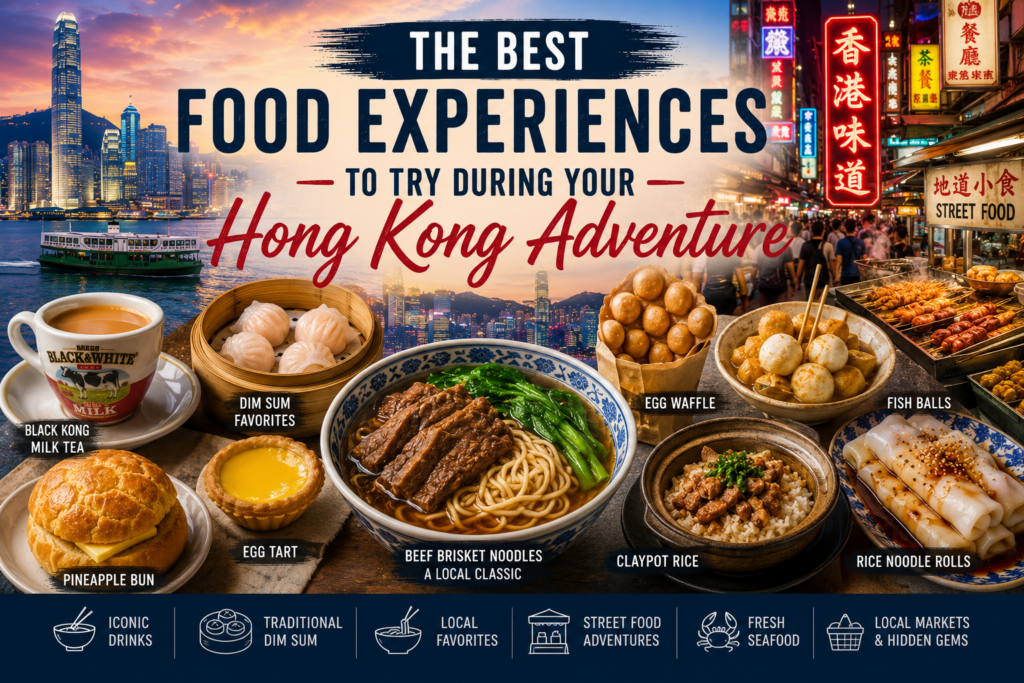
Hong Kong is often regarded as one of the world’s greatest food cities.
The city’s culinary scene reflects influences from Cantonese traditions, British colonial history, and international cultures from around the globe.
One of the first things visitors should try is authentic Hong Kong-style milk tea.
Made using a unique brewing technique, it delivers a rich and smooth flavor unlike any other tea experience.
Dim sum is another essential experience.
These small bite-sized dishes are traditionally enjoyed with tea and include favorites such as shrimp dumplings, pork buns, rice noodle rolls, and siu mai.
Beef brisket noodles deserve special attention.
Many restaurants spend hours preparing their broths and slow-cooking the beef until it becomes incredibly tender.
Street food is equally important.
Egg waffles, fish balls, pineapple buns, and egg tarts are all local favorites that can be found throughout the city.
Seafood lovers should also take advantage of Hong Kong’s coastal location.
Fresh fish, prawns, crab, and shellfish appear on menus across the city, particularly in fishing villages like Tai O.
For adventurous travelers, local markets provide opportunities to discover unique snacks and traditional specialties that are difficult to find elsewhere.
Food is more than simply nourishment in Hong Kong.
It is an essential part of the city’s identity and one of the best ways to connect with local culture.
Essential Travel Tips For First Time Visitors To Hong Kong
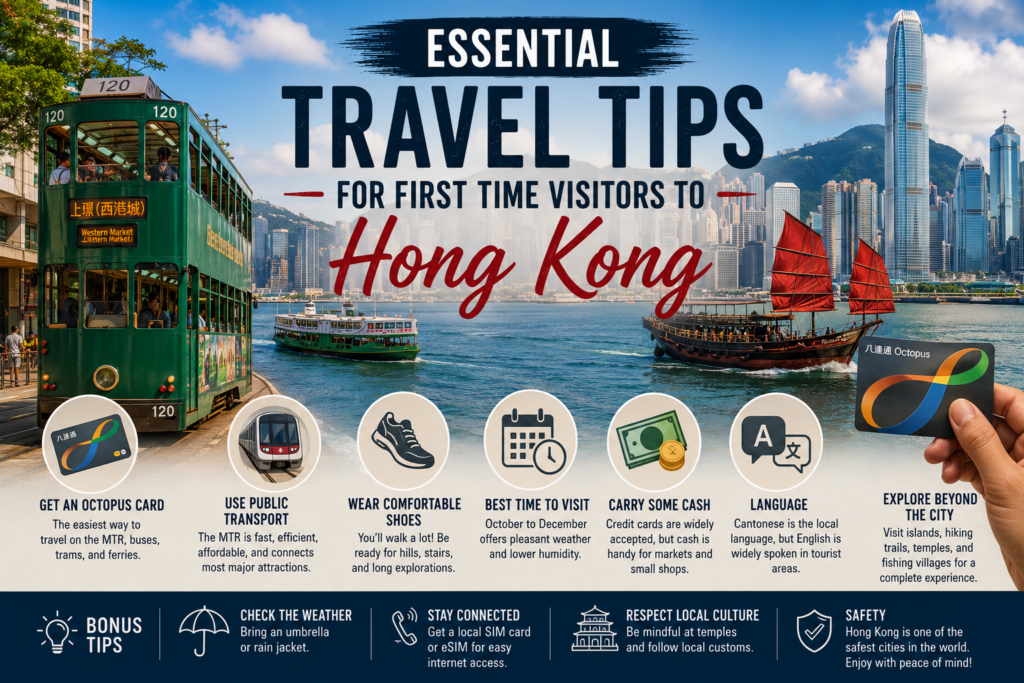
Planning ahead can significantly improve your Hong Kong experience.
The city’s transportation system is one of the best in the world. Purchasing an Octopus Card makes travel convenient and allows easy access to trains, buses, ferries, and trams.
The MTR railway network is fast, efficient, and affordable.
Most major attractions can be reached using public transportation, reducing the need for taxis.
Comfortable walking shoes are highly recommended.
Although Hong Kong has excellent public transport, exploring neighborhoods often involves considerable walking.
The best months to visit are generally October through December when temperatures are pleasant and humidity is lower.
English is widely spoken in tourist areas, making navigation relatively easy for international visitors.
Cashless payment options are increasingly common, although carrying some local currency remains useful for markets and smaller businesses.
Visitors should also plan time for both urban attractions and natural scenery.
Many first-time travelers focus entirely on the skyline and shopping districts, missing Hong Kong’s mountains, beaches, islands, and traditional villages.
The city’s greatest strength lies in its diversity.
Within a single day, you can ride historic trams, visit ancient temples, hike scenic mountains, explore traditional fishing villages, enjoy world-class shopping, and admire one of the world’s most spectacular skylines.
That unique combination is what makes Hong Kong one of Asia’s most rewarding destinations.
For first-time visitors, four days provide the perfect introduction to a city that manages to be modern and traditional, energetic and peaceful, familiar and completely unique all at the same time.
By following this itinerary, you will leave Hong Kong with unforgettable memories, incredible photographs, and a strong desire to return and discover even more of what this remarkable city has to offer.
Disclaimer
The information provided in this article is for general informational and educational purposes only. While every effort has been made to ensure the accuracy of the information at the time of writing, travel conditions, entry requirements, opening hours, ticket prices, local regulations, and accessibility may change without notice.
Readers are encouraged to verify all travel information with official tourism boards, government agencies, airlines, accommodation providers, and local authorities before making travel plans or bookings.
The destinations featured in this article are based on their historical, cultural, natural, and tourism significance. The opinions expressed are for informational purposes only and should not be considered professional travel, legal, health, safety, or financial advice.
FoxiManna.com and its authors are not responsible for any losses, injuries, inconveniences, travel disruptions, or damages that may result from the use of information contained in this article. Travelers are responsible for conducting their own research and making informed decisions based on their individual circumstances.
By using this website and reading this article, you agree that any reliance on the information provided is at your own risk.