
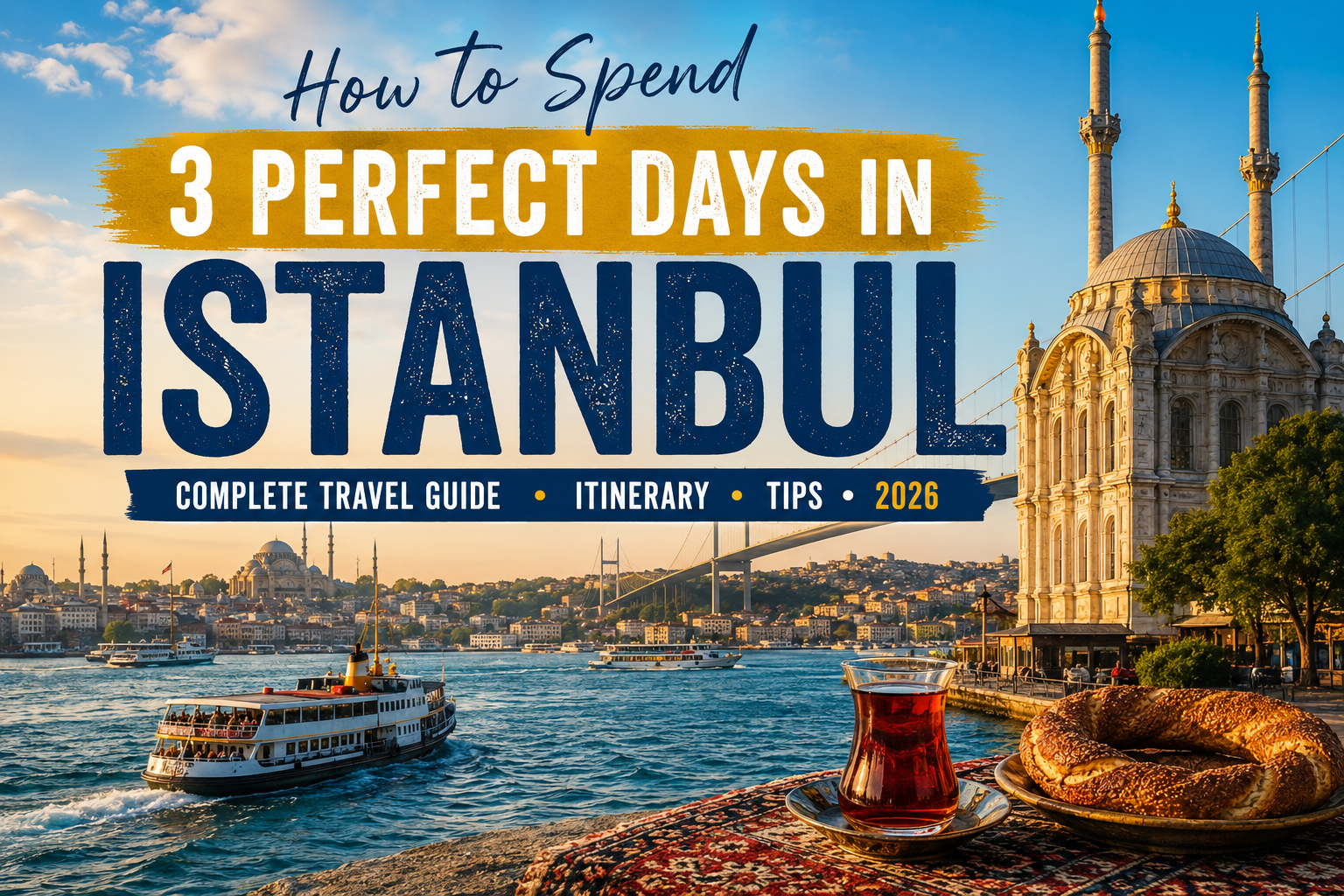
Istanbul is one of those rare cities that leaves a lasting impression long after your trip has ended. Straddling both Europe and Asia, this fascinating destination offers a unique blend of ancient history, vibrant culture, stunning architecture, incredible food, and breath taking waterfront scenery.
For more than 2,500 years, Istanbul has served as the capital of powerful empires including the Roman, Byzantine, and Ottoman Empires. Today, the city continues to captivate millions of visitors with its grand mosques, bustling bazaars, magnificent palaces, and lively neighbourhoods.
The beauty of Istanbul lies in its contrasts. Ancient monuments stand beside modern cafés. Traditional tea houses share streets with trendy rooftop bars. Ferries glide between continents while the call to prayer echoes across the skyline.
This three-day itinerary is designed to help first-time visitors experience the very best of Istanbul without feeling rushed. From iconic landmarks like Hagia Sophia and the Blue Mosque to hidden local neighbourhoods on the Asian side, this guide covers everything you need to create an unforgettable trip.
Planning Your Trip To Istanbul
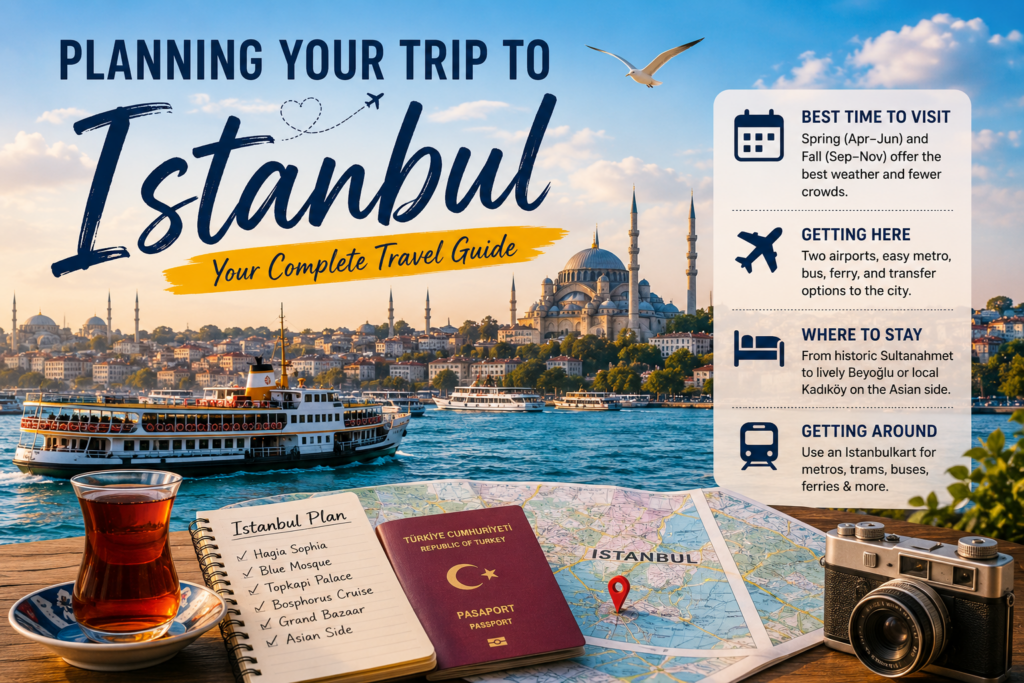
Before exploring the city, it helps to understand the best time to visit, where to stay, and how to get around.
Best Time To Visit Istanbul
Spring between April and June is widely considered the ideal time to visit Istanbul. Temperatures are comfortable, flowers bloom throughout the parks, and tourist crowds remain manageable.
Autumn from September through early November is equally enjoyable. The weather remains pleasant, skies are generally clear, and many of the summer crowds have disappeared.
Summer brings long sunny days and lively energy throughout the city, but temperatures can become very warm and major attractions often experience long queues.
Winter offers lower accommodation prices and fewer visitors. While rain is more frequent and daylight hours are shorter, Istanbul’s historic atmosphere remains magical.
Getting From The Airport
Istanbul is served by two major airports.
Istanbul Airport on the European side is connected to the city through modern metro services, airport buses, taxis, and private transfers.
Sabiha Gökçen Airport on the Asian side is connected via metro, shuttle buses, ferries, and taxis.
Visitors using public transportation can save significant money while still reaching the city efficiently.
Where To Stay
The neighborhood you choose greatly impacts your experience.
Sultanahmet is perfect for history lovers. Most of Istanbul’s famous monuments are within walking distance.
Beyoğlu and Taksim suit travelers seeking nightlife, restaurants, rooftop bars, and shopping.
Kadıköy on the Asian side offers a more local experience with excellent food, lower accommodation prices, and a relaxed atmosphere.
Transportation
The Istanbulkart is essential for visitors. This rechargeable card works across metros, trams, buses, ferries, funiculars, and other public transport services.
The city’s ferry system is particularly enjoyable because it serves as both transportation and sightseeing.
Many visitors quickly discover that ferry rides across the Bosphorus become one of the highlights of their trip.
Day One Discovering The Historic Heart Of Istanbul
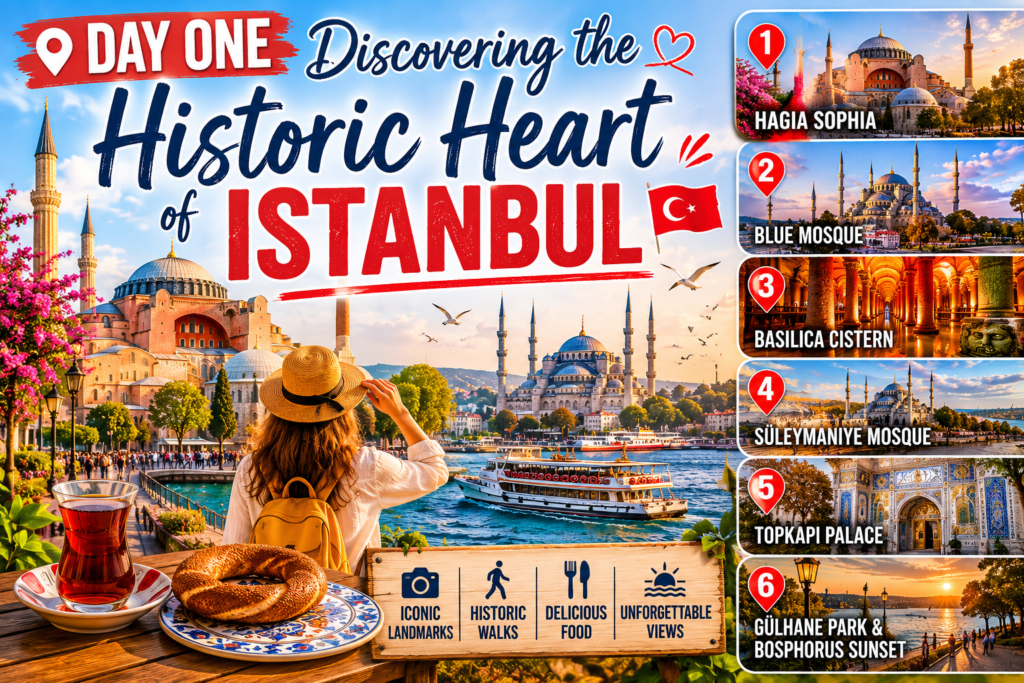
Your first day should be dedicated to the historic district of Sultanahmet, where centuries of history unfold around every corner.
Start your morning with a traditional Turkish breakfast. Fresh bread, olives, cheeses, eggs, honey, tomatoes, cucumbers, and strong Turkish tea create a feast that provides plenty of energy for the day ahead.
After breakfast, make your way to Hagia Sophia.
Few buildings in the world can match its historical significance. Originally constructed in 537 AD as a Byzantine cathedral, Hagia Sophia later became an Ottoman mosque before serving as a museum and eventually returning to its role as a mosque.
Stepping inside feels like entering a living history book.
The massive dome appears to float above visitors, while Christian mosaics and Islamic calligraphy coexist under the same roof.
Arriving early is highly recommended because visitor numbers increase significantly throughout the day.
Just across the square stands the magnificent Blue Mosque.
Its official name is Sultan Ahmed Mosque, but most visitors know it as the Blue Mosque due to the stunning blue İznik tiles decorating its interior.
The six minarets dominate Istanbul’s skyline and have become one of the city’s most recognizable symbols.
Inside, sunlight filters through hundreds of windows, creating a peaceful atmosphere despite the large number of visitors.
A short walk brings you to another remarkable site.
The Basilica Cistern lies beneath the streets of Istanbul like a hidden underground kingdom.
Built during the reign of Emperor Justinian in the sixth century, this enormous water reservoir once supplied water to the city.
Rows of marble columns rise from the water below while soft lighting creates a mysterious atmosphere.
The famous Medusa heads hidden among the columns continue to spark debate among historians and archaeologists.
After exploring these extraordinary landmarks, enjoy lunch at a traditional Turkish restaurant.
Sample local specialties such as lentil soup, kebabs, grilled meats, fresh salads, and Turkish bread.
The afternoon is perfect for visiting the magnificent Süleymaniye Mosque.
Designed by the legendary architect Mimar Sinan, the mosque sits atop one of Istanbul’s hills and offers spectacular views across the Golden Horn.
Unlike some of the city’s more crowded attractions, Süleymaniye often feels peaceful and contemplative.
Many visitors consider its gardens among the best viewpoints in Istanbul.
Continue your exploration at Topkapi Palace.
For nearly four centuries, this vast palace complex served as the political and administrative center of the Ottoman Empire.
Walking through its courtyards provides a fascinating glimpse into the lives of Ottoman sultans.
Highlights include the Imperial Treasury, ornate chambers, sacred relics, and the famous Harem section.
The palace offers endless opportunities to learn about one of history’s most influential empires.
Before dinner, enjoy a relaxing walk through Gülhane Park.
Once part of the palace gardens, this green oasis provides a welcome break from sightseeing.
As evening approaches, head toward the Bosphorus waterfront to watch the sunset.
The golden light reflecting off the domes and minarets creates one of Istanbul’s most memorable scenes.
Finish your first day with a traditional Ottoman-inspired dinner while reflecting on the incredible history you have experienced.
Day Two Exploring Markets Towers And Modern Istanbul
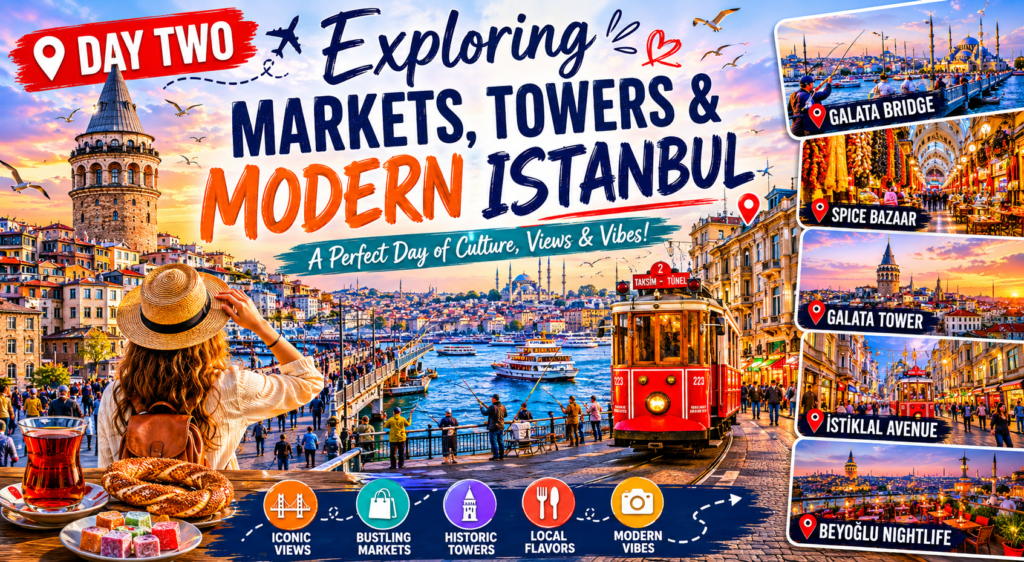
Day two introduces a different side of Istanbul.
Begin in Karaköy, one of the city’s most dynamic neighborhoods.
Formerly a busy commercial district, Karaköy has evolved into a vibrant area filled with cafés, art galleries, restaurants, and boutique shops.
Start with breakfast featuring Turkish cheeses, olives, pastries, honey, and freshly brewed tea.
After breakfast, stroll toward the famous Galata Bridge.
This bridge offers one of Istanbul’s most iconic views.
Fishermen line the railings, ferries pass beneath, and the historic skyline stretches across the horizon.
Crossing the bridge provides an excellent introduction to the city’s daily rhythm.
At the opposite end lies the Spice Bazaar.
The moment you enter, your senses are overwhelmed by colorful displays of spices, teas, dried fruits, Turkish delights, and aromatic herbs.
The bazaar has been attracting traders and travelers for centuries.
Even visitors who do not plan to buy anything often find themselves captivated by the atmosphere.
Take your time exploring the narrow passageways and interacting with local merchants.
Nearby, the Eminönü waterfront buzzes with activity.
Ferries arrive and depart constantly while street vendors sell roasted chestnuts, simit, and fresh seafood.
This area perfectly captures Istanbul’s energy and diversity.
For lunch, enjoy a meal overlooking the Golden Horn.
Traditional kebabs remain among the city’s most celebrated dishes, and many restaurants offer spectacular views alongside excellent food.
After lunch, make your way to Galata Tower.
Built during the medieval period, the tower provides panoramic views across Istanbul.
From the observation deck, visitors can see the Bosphorus, the Golden Horn, the historic peninsula, and the modern districts stretching into the distance.
The view offers a powerful perspective on the city’s immense scale and unique geography.
Descending from the tower, explore the surrounding streets of Galata.
This neighborhood combines historical charm with contemporary creativity.
Independent cafés, artisan shops, bookstores, and galleries line the cobbled streets.
Continue toward Istiklal Avenue.
This bustling pedestrian boulevard represents modern Istanbul at its most energetic.
Street musicians perform throughout the day while historic trams move through the crowds.
Shopping opportunities range from international brands to local boutiques.
The side streets branching off Istiklal Avenue often reveal hidden treasures, including historic passages, antique stores, and charming cafés.
Spend time simply wandering and absorbing the atmosphere.
As evening arrives, Beyoğlu comes alive.
Restaurants, bars, rooftop terraces, and live music venues create a vibrant nightlife scene.
Enjoy dinner featuring traditional Anatolian cuisine before ending your evening with views across the illuminated city skyline.
Day Three Crossing Continents And Discovering Local Istanbul
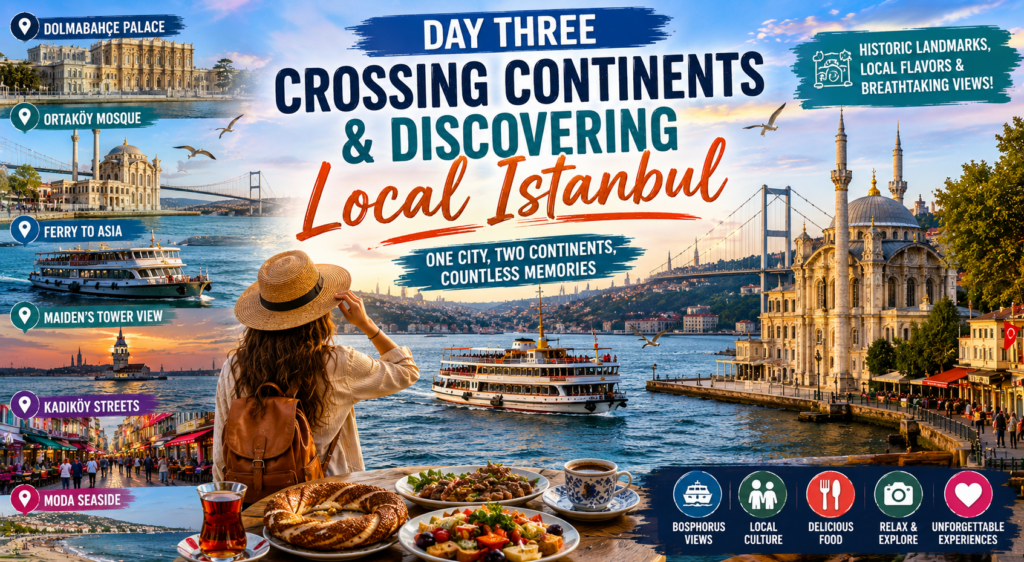
One of Istanbul’s greatest attractions is the opportunity to visit two continents in a single day.
Begin your final day in Beşiktaş, a lively district popular with locals.
The neighborhood offers an authentic glimpse into daily life away from the main tourist zones.
Enjoy breakfast at a traditional Turkish café where endless tea accompanies a wide variety of breakfast dishes.
After breakfast, head to Dolmabahçe Palace.
This spectacular nineteenth-century palace represents the Ottoman Empire’s embrace of European architectural influences.
Crystal chandeliers, gold leaf decorations, grand staircases, and luxurious reception halls create an atmosphere of extraordinary elegance.
The palace contrasts sharply with the older Ottoman architecture found in Topkapi Palace.
Visitors gain valuable insight into the final years of the Ottoman Empire.
Following your palace visit, continue along the Bosphorus shoreline toward Ortaköy.
This charming waterfront district is one of Istanbul’s most photogenic locations.
The beautiful Ortaköy Mosque sits beside the water with the Bosphorus Bridge rising dramatically behind it.
The combination creates one of the city’s most iconic images.
Spend time exploring local shops and cafés before enjoying lunch overlooking the Bosphorus.
Watching ships, ferries, and fishing boats pass by is part of the experience.
After lunch, board a ferry and cross to the Asian side of Istanbul.
The short journey offers magnificent views of the city skyline and serves as a reminder of Istanbul’s unique position between continents.
Arriving in Üsküdar, you’ll immediately notice a different atmosphere.
Life moves at a slightly slower pace, and the crowds tend to be more local than international.
Walk along the waterfront toward the famous Maiden’s Tower viewpoint.
Standing alone in the Bosphorus, the tower has inspired countless legends over the centuries.
The views from this area are especially beautiful during late afternoon.
Continue onward to Kadıköy.
Many travelers discover that Kadıköy becomes one of their favorite parts of Istanbul.
The district combines creativity, culture, food, and authenticity.
Independent bookstores, artisan cafés, street art, local markets, and seaside promenades create a welcoming environment.
Explore the neighborhood at your own pace.
Stop for Turkish coffee.
Browse local shops.
Watch daily life unfold around you.
From Kadıköy, continue into the Moda district.
Moda’s relaxed atmosphere makes it the perfect place to slow down after several busy days of sightseeing.
The waterfront paths offer excellent walking opportunities while cafés provide ideal places to sit and reflect on your journey.
As sunset approaches, the Bosphorus and Sea of Marmara glow in shades of gold and orange.
The scene perfectly captures the magic of Istanbul.
Return to the European side for your final dinner.
A traditional döner kebab or other local specialty provides a fitting farewell meal before your adventure comes to an end.
The Best Food Experiences To Try In Istanbul
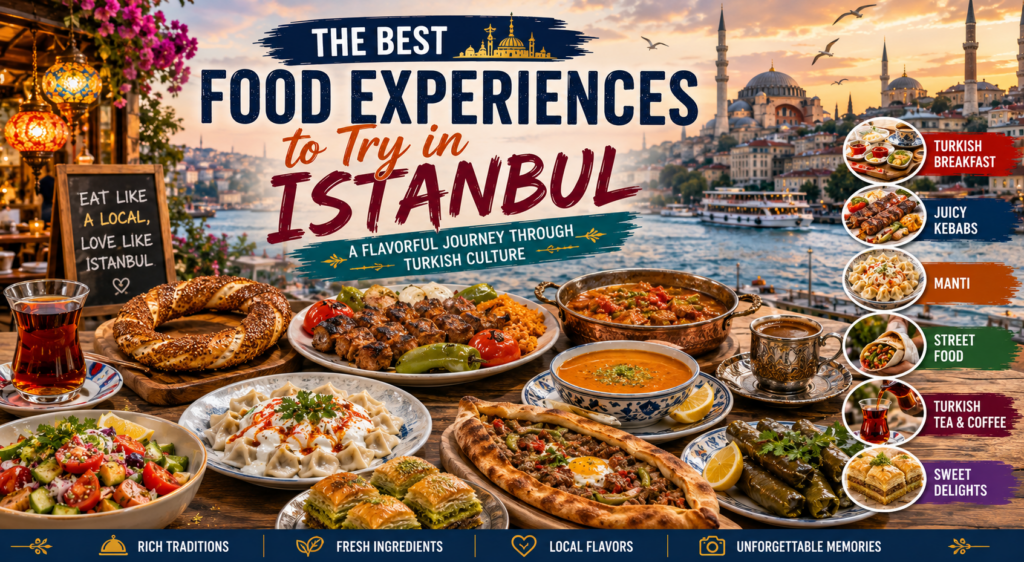
No trip to Istanbul is complete without exploring its extraordinary culinary traditions.
Turkish cuisine reflects influences from Central Asia, the Middle East, the Mediterranean, and the Balkans.
The result is one of the world’s most diverse and delicious food cultures.
Start each morning with a traditional Turkish breakfast.
Known as kahvaltı, it typically includes fresh bread, cheeses, olives, tomatoes, cucumbers, jams, honey, eggs, and tea.
Lunch and dinner opportunities are equally impressive.
Kebabs remain among Turkey’s most famous dishes, but there is far more to discover.
Manti, often described as Turkish dumplings, are served with yogurt and spices.
Lahmacun resembles a thin Turkish pizza topped with minced meat and herbs.
Pide is a boat-shaped flatbread filled with cheese, meat, vegetables, or eggs.
Seafood is particularly popular along the Bosphorus.
Fresh fish sandwiches sold near the waterfront have become a classic Istanbul experience.
Street food also plays an important role in local culture.
Simit, a sesame-covered bread ring, is available throughout the city.
Roasted chestnuts fill the air with enticing aromas during cooler months.
Turkish delight offers a sweet taste of local tradition.
For dessert lovers, baklava is essential.
Layers of pastry, nuts, and syrup create one of Turkey’s most beloved treats.
Pair it with Turkish coffee for a truly authentic experience.
Throughout your stay, don’t hesitate to explore neighborhood cafés and family-run restaurants.
Many of the city’s most memorable meals are found away from major tourist areas.
Essential Travel Tips For Visiting Istanbul
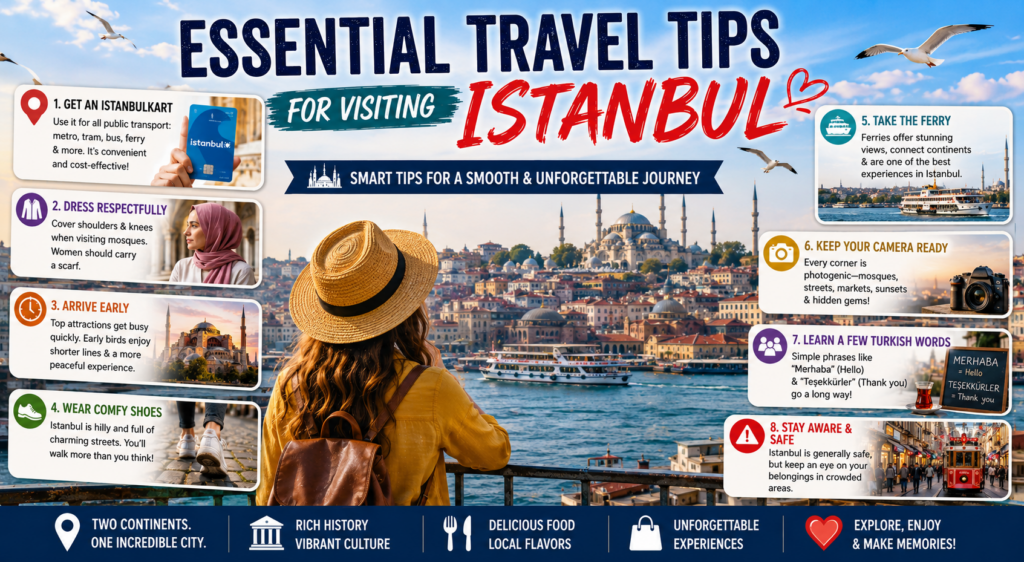
A few practical tips can significantly improve your Istanbul experience.
Purchase an Istanbulkart shortly after arriving. This rechargeable transportation card saves money and simplifies travel across the city’s extensive public transportation network.
Wear comfortable walking shoes.
Istanbul’s hills, cobblestone streets, and large attractions often require more walking than visitors expect.
Dress respectfully when visiting mosques.
Women should carry a scarf, while both men and women should ensure shoulders and knees are covered.
Arrive early at major attractions whenever possible.
Popular sites such as Hagia Sophia, Topkapi Palace, and the Basilica Cistern become increasingly crowded throughout the day.
Take advantage of ferries whenever possible.
They provide affordable transportation while offering some of the city’s best views.
Allow extra time when moving around the city.
Traffic can be unpredictable, especially during peak hours.
Learning a few basic Turkish phrases can also enhance your experience.
Simple greetings and expressions of thanks are always appreciated.
Most importantly, leave room for spontaneous discoveries.
Some of Istanbul’s greatest moments happen when you wander down an unexpected street, find a hidden café, or stumble upon a local market.
The city rewards curiosity.
Three days may seem brief, but this itinerary allows you to experience the essence of Istanbul. From Byzantine wonders and Ottoman palaces to bustling bazaars and scenic ferry rides, every day reveals another layer of this remarkable city. Istanbul is not simply a destination. It is an experience that blends history, culture, food, architecture, and human connection into something truly unforgettable. Long after you return home, the memories of crossing continents, hearing the call to prayer echo across the skyline, and watching the sunset over the Bosphorus will remain with you, inspiring future journeys back to one of the world’s most extraordinary cities.
Disclaimer
The information provided in this article is for general informational and educational purposes only. While every effort has been made to ensure the accuracy of the information at the time of writing, travel conditions, entry requirements, opening hours, ticket prices, local regulations, and accessibility may change without notice.
Readers are encouraged to verify all travel information with official tourism boards, government agencies, airlines, accommodation providers, and local authorities before making travel plans or bookings.
The destinations featured in this article are based on their historical, cultural, natural, and tourism significance. The opinions expressed are for informational purposes only and should not be considered professional travel, legal, health, safety, or financial advice.
FoxiManna.com and its authors are not responsible for any losses, injuries, inconveniences, travel disruptions, or damages that may result from the use of information contained in this article. Travelers are responsible for conducting their own research and making informed decisions based on their individual circumstances.
By using this website and reading this article, you agree that any reliance on the information provided is at your own risk.