
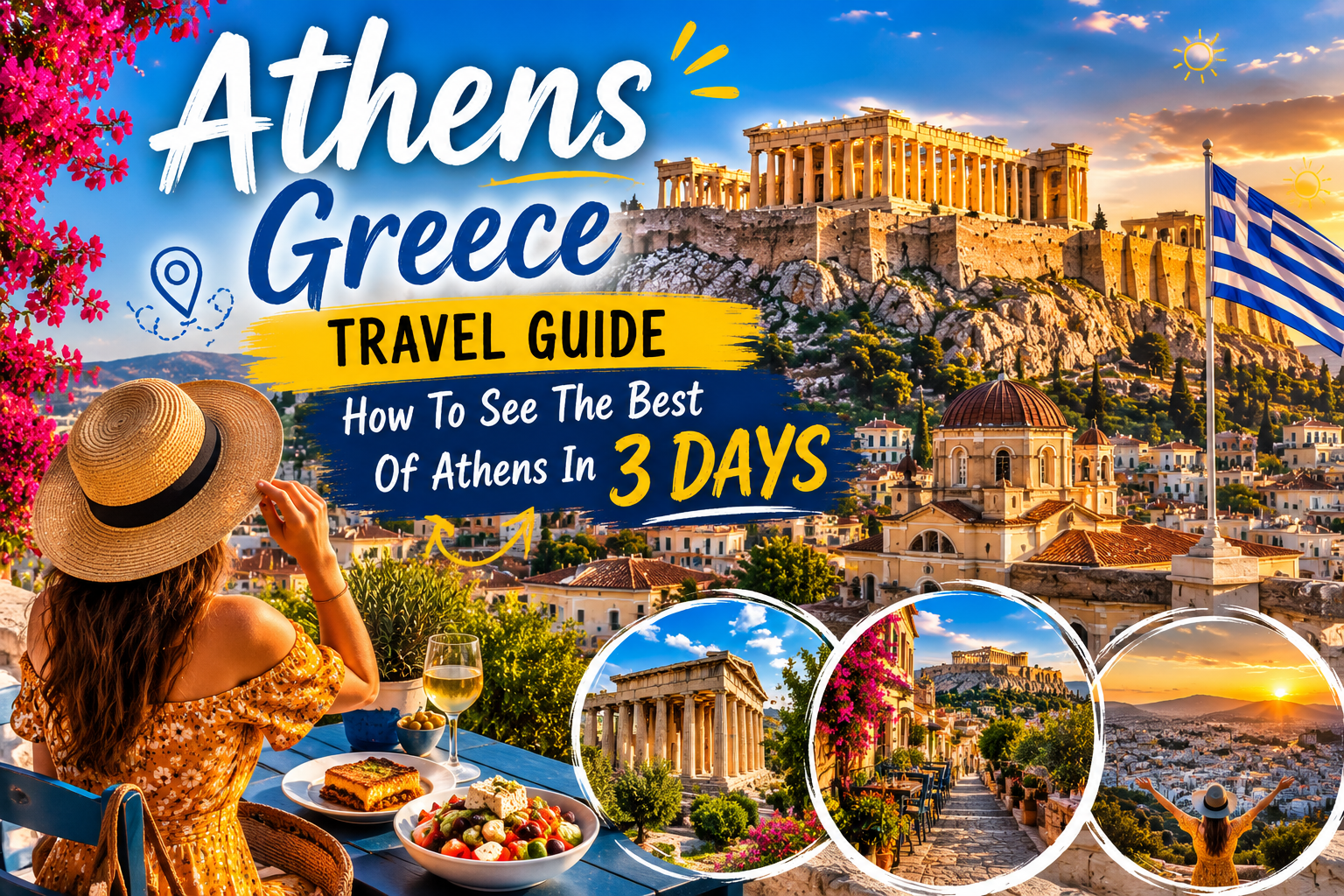
Athens is one of the most fascinating cities on Earth. It is a place where ancient history and modern life exist side by side. The birthplace of democracy, philosophy, theatre, and some of the world’s greatest thinkers, Athens offers visitors a chance to walk through thousands of years of history while enjoying vibrant neighborhoods, incredible food, lively nightlife, and breathtaking views.
For many travelers, Athens serves as the gateway to Greece’s famous islands. However, those who rush through the city often miss one of Europe’s greatest destinations. Athens deserves time. It deserves exploration. Most importantly, it deserves to be experienced beyond the famous Acropolis.
This three-day itinerary has been carefully designed to help first-time visitors experience the very best of Athens. From world-famous archaeological sites and charming neighborhoods to local tavernas and hidden viewpoints, this guide will help you enjoy an unforgettable journey through one of the most historic cities in the world.
Planning Your Athens Adventure
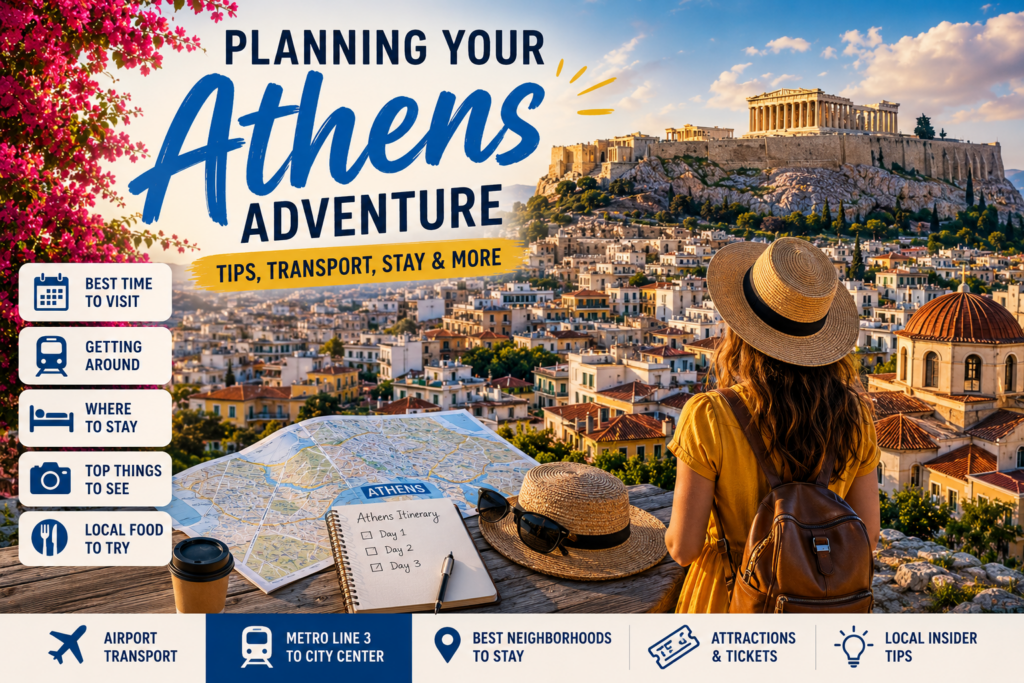
Before beginning your three-day adventure, it is important to understand when to visit and how to navigate the city.
Athens enjoys a Mediterranean climate with hot summers and mild winters. While the city welcomes visitors year-round, the best time to visit is during spring and autumn. Between March and May, the weather is pleasantly warm, flowers bloom throughout the city, and tourist crowds remain manageable. September and October also offer ideal conditions, with warm temperatures and beautiful golden evenings.
Summer brings a different atmosphere. The city buzzes with energy, outdoor events, and nightlife. However, temperatures frequently exceed 32°C and can make sightseeing challenging, particularly when exploring exposed archaeological sites.
Winter offers quieter streets, lower accommodation prices, and a more authentic local experience. Although some attractions operate shorter hours, visitors can enjoy Athens without the intense crowds.
Getting from Athens International Airport to the city center is straightforward. The Metro Line 3 connects the airport with central Athens efficiently and affordably. Airport buses provide a budget-friendly alternative, while taxis and private transfers offer convenience for travelers carrying luggage.
When choosing accommodation, location matters greatly.
Plaka remains the most popular area for visitors. Located beneath the Acropolis, it offers charming streets, traditional architecture, and easy access to major attractions.
Monastiraki provides a lively atmosphere filled with restaurants, markets, and nightlife.
Syntagma Square serves as Athens’ transportation hub and is ideal for first-time visitors wanting easy access to the entire city.
Koukaki offers a quieter local atmosphere while remaining within walking distance of major attractions.
The Athens Metro system is modern, reliable, and affordable. Many of the city’s most famous attractions are located close together, making walking one of the most enjoyable ways to explore.
With your accommodation chosen and transportation understood, it is time to begin your Athens adventure.
Day One Discovering The Cradle Of Western Civilization
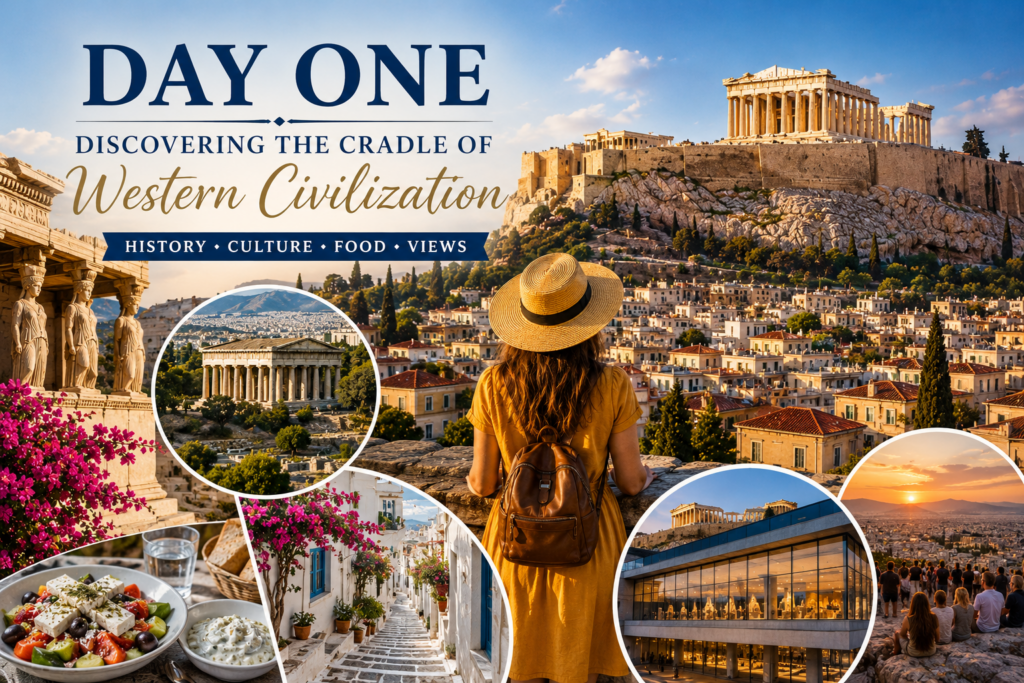
Your first day in Athens focuses on the city’s most iconic landmarks and introduces you to the ancient world that shaped modern civilization.
Begin your morning in Plaka, one of Athens’ oldest and most charming neighborhoods. Narrow streets lined with colorful buildings, flowering balconies, and traditional cafés create the perfect introduction to the city.
Enjoy breakfast at a rooftop café overlooking the Acropolis. Fresh Greek yogurt drizzled with honey, pastries, fruit, and strong Greek coffee provide excellent fuel for a day of exploration.
After breakfast, head directly to the Acropolis.
Standing atop a rocky hill above Athens, the Acropolis has watched over the city for more than 2,500 years. This UNESCO World Heritage Site represents one of humanity’s greatest architectural and cultural achievements.
As you ascend the hill, you pass through the monumental Propylaea before reaching the magnificent Parthenon.
Dedicated to Athena, the city’s patron goddess, the Parthenon remains one of the most recognizable monuments in the world. Its elegant Doric columns and perfect proportions influenced architecture across Europe and beyond.
Nearby, visitors can explore the Erechtheion, famous for its Caryatid statues, and the Temple of Athena Nike.
Walking through these ancient structures creates an extraordinary connection with history. Philosophers, politicians, artists, and ordinary Athenians once gathered here during the height of Classical Greece.
After exploring the Acropolis, continue to the Acropolis Museum.
This modern museum perfectly complements the ancient ruins above. Its beautifully designed galleries house sculptures, artifacts, pottery, and architectural fragments recovered from the Acropolis.
The Parthenon Gallery is particularly impressive. Designed to mirror the dimensions and orientation of the original temple, it allows visitors to understand the building’s artistic significance while enjoying direct views of the Acropolis itself.
Following a morning immersed in history, enjoy lunch in Plaka.
Traditional Greek cuisine is one of Athens’ greatest pleasures. Order a selection of meze dishes including tzatziki, dolmades, grilled vegetables, fresh bread, and seafood. Sharing multiple dishes provides an excellent introduction to Greek flavors.
In the afternoon, explore Anafiotika.
Many visitors overlook this hidden neighborhood despite its unique beauty. Built by workers from the Cycladic islands during the nineteenth century, Anafiotika resembles a Greek island village transplanted beneath the Acropolis.
Whitewashed houses, narrow pathways, blue shutters, and colorful flowers create a magical atmosphere that feels far removed from the bustling city below.
Photography enthusiasts will find endless opportunities here.
As the afternoon transitions into evening, stop for a traditional Greek dessert or artisan gelato inspired by local flavors such as honey, pistachio, fig, or Greek yogurt.
Next, make your way to Areopagus Hill.
This rocky outcrop offers one of the finest viewpoints in Athens. Historically, it served as a gathering place for philosophers and public debates. Today, it attracts visitors seeking spectacular panoramic views.
Sunset is particularly magical.
As the sun descends, the marble structures of the Acropolis glow in shades of gold, orange, and pink. The surrounding city gradually illuminates, creating one of Europe’s most memorable urban landscapes.
For dinner, head to the Psiri district.
Known for its vibrant atmosphere and authentic tavernas, Psiri offers excellent opportunities to sample traditional Greek cuisine. Grilled lamb, fresh fish, moussaka, and local wines feature prominently on menus throughout the neighborhood.
After dinner, experience Athens’ nightlife.
Music spills from bars and tavernas onto cobblestone streets. Locals gather late into the evening, creating a lively atmosphere that showcases the social heart of modern Greek culture.
Day Two Exploring Democracy History And Local Culture

Your second day explores the foundations of democracy and reveals how Athens evolved through different historical eras.
Begin with a traditional Athenian breakfast.
A sesame-covered koulouri paired with a refreshing Freddo Cappuccino provides an authentic local start to the day.
Your first destination is the Ancient Agora.
While the Acropolis served religious purposes, the Agora functioned as the political and social center of ancient Athens. This was where democracy developed, merchants traded goods, and philosophers such as Socrates shared ideas.
Walking through the Agora allows visitors to imagine daily life in Classical Greece.
The highlight is undoubtedly the Temple of Hephaestus.
Remarkably preserved after nearly 2,500 years, it stands as one of the finest surviving examples of ancient Greek architecture.
The surrounding olive trees and views toward the Acropolis create a particularly picturesque setting.
Continue your historical exploration at Hadrian’s Library and the Roman Agora.
These sites reveal Athens’ importance during the Roman period. Although often overshadowed by the Acropolis, they offer valuable insights into the city’s continuing development over centuries.
By late morning, make your way to Monastiraki.
This vibrant district combines history, shopping, street life, and local culture. The famous flea market offers everything from antiques and handmade crafts to souvenirs and vintage treasures.
The atmosphere here feels energetic and authentic.
Street performers entertain crowds while local vendors negotiate sales in bustling market stalls.
Lunch in Monastiraki provides an excellent opportunity to sample traditional cured meats, local cheeses, olives, and freshly prepared Greek specialties.
Following lunch, head to Syntagma Square.
This central square serves as the political heart of modern Greece. The Greek Parliament overlooks the square, and visitors can witness the famous changing of the guard ceremony.
The Evzones, dressed in traditional uniforms complete with pleated skirts and distinctive shoes, perform highly choreographed movements that have become one of Athens’ most recognizable traditions.
The ceremony offers a fascinating glimpse into Greek heritage and national pride.
From Syntagma, enter the National Garden.
This peaceful green oasis provides a welcome contrast to the city’s busy streets. Shaded pathways, fountains, and lush vegetation create a tranquil environment perfect for a relaxing stroll.
Continue to the Panathenaic Stadium.
Constructed entirely from white marble, this extraordinary venue hosted the first modern Olympic Games in 1896. Walking onto the track and climbing the seating areas allows visitors to connect with both ancient athletic traditions and modern Olympic history.
The views from the upper rows are spectacular.
As evening approaches, enjoy coffee or wine at a café overlooking the Acropolis.
Watching the Parthenon gradually illuminate against the darkening sky creates another unforgettable Athens experience.
Dinner offers an opportunity to explore modern interpretations of traditional Greek cuisine.
Many restaurants combine classic recipes with contemporary presentation and innovative techniques, showcasing the evolution of Greek gastronomy.
Afterward, stroll along Ermou Street, Athens’ premier shopping avenue, or visit a rooftop bar for one final view of the illuminated Acropolis.
Day Three Experiencing Modern Athens And The Athenian Riviera
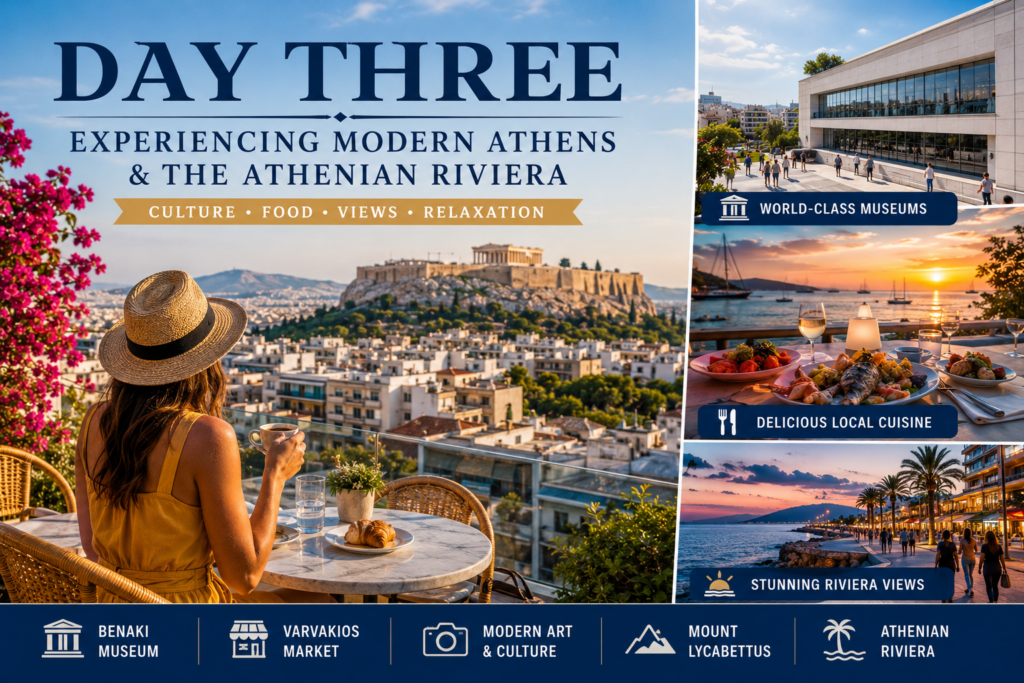
The final day focuses on contemporary Athens while still celebrating the city’s rich cultural heritage.
Begin in Kolonaki, one of Athens’ most elegant neighborhoods.
Known for upscale boutiques, galleries, and stylish cafés, Kolonaki presents a different side of the city. Here, modern Athens flourishes among sophisticated streets and fashionable residents.
Enjoy a leisurely breakfast featuring Greek yogurt, fresh fruit, honey, and locally roasted coffee.
Your first stop should be the Benaki Museum.
Unlike archaeological museums focused solely on antiquity, the Benaki Museum tells the complete story of Greece. Exhibits span thousands of years, from prehistoric artifacts to Byzantine treasures, Ottoman influences, and modern Greek culture.
The museum provides valuable context for understanding Greece’s complex and fascinating history.
Afterward, visit Varvakios Market.
This bustling food market offers an authentic glimpse into daily Athenian life. Local shoppers browse stalls filled with seafood, meats, cheeses, olives, herbs, and spices.
The market engages every sense.
The vibrant colors, rich aromas, and lively conversations create an unforgettable atmosphere.
Lunch should include one of Greece’s most beloved street foods.
A freshly prepared souvlaki wrapped in warm pita bread, filled with grilled meat, tomatoes, onions, and herbs, represents a simple yet delicious culinary experience.
Spend the afternoon exploring contemporary culture at the National Museum of Contemporary Art.
Located within a converted industrial building, the museum showcases innovative works by Greek and international artists. The exhibitions provide thought-provoking perspectives on modern society and culture.
Athens continues to evolve creatively, and this museum demonstrates the city’s vibrant artistic scene.
Later, treat yourself to dessert at one of Athens’ imaginative cafés.
Many establishments transform ordinary dining into memorable experiences through elaborate decorations, creative menus, and unique themes.
As evening approaches, prepare for one of the highlights of your trip.
The Best Food Views And Hidden Experiences In Athens

No visit to Athens would be complete without fully embracing the city’s incredible food culture and spectacular viewpoints.
Greek cuisine remains one of the Mediterranean’s greatest culinary traditions.
Fresh ingredients form the foundation of every meal. Olive oil, herbs, seafood, vegetables, cheeses, and locally sourced meats combine to create dishes that are both healthy and flavorful.
Visitors should try moussaka, souvlaki, dolmades, spanakopita, grilled octopus, fresh seafood, and traditional Greek salads.
Equally important are the desserts.
Baklava, loukoumades, galaktoboureko, and Greek yogurt with honey offer delicious endings to any meal.
Coffee culture also plays a central role in daily life.
Athenians often spend hours socializing in cafés. The Freddo Espresso and Freddo Cappuccino have become iconic drinks, particularly during warmer months.
For panoramic views, few places rival Mount Lycabettus.
Rising above the city at 277 meters, it offers the finest viewpoint in Athens. Visitors can hike to the summit or take the funicular railway.
The reward is extraordinary.
From the top, Athens stretches endlessly in every direction. The Acropolis dominates the cityscape while the Aegean Sea shimmers in the distance.
Sunset transforms the view into something truly magical.
The changing colors of the sky combined with the illuminated city below create one of Greece’s most memorable experiences.
Many visitors consider this viewpoint the highlight of their entire trip.
Why Athens Should Be On Every Traveller’s Bucket List
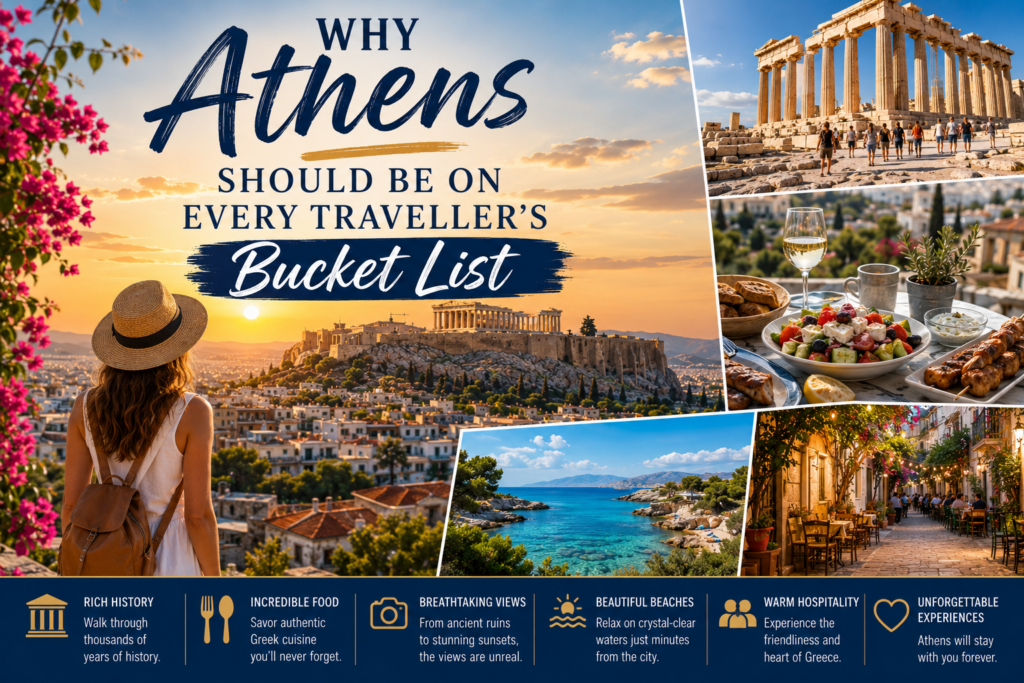
Athens is far more than an ancient city filled with ruins.
It is a living, breathing destination where history, culture, food, and modern life combine to create an unforgettable travel experience.
Over three days, visitors can stand where democracy was born, explore monuments that shaped Western civilization, wander charming neighborhoods, enjoy world-class museums, and experience the warmth of Greek hospitality.
The city rewards curiosity.
Behind every corner lies another fascinating story, another hidden café, another spectacular viewpoint, or another reminder of Athens’ extraordinary influence on human history.
Whether you are fascinated by ancient civilizations, passionate about food, interested in culture, or simply looking for an exciting European city break, Athens delivers.
The glowing Parthenon at sunset, the aroma of freshly grilled souvlaki, the lively conversations in neighborhood tavernas, and the breathtaking views from Mount Lycabettus remain with visitors long after they leave.
Athens is not simply a place you visit.
It is a place you experience.
And once you experience it, you will understand why this remarkable city continues to captivate travelers from around the world thousands of years after its golden age.
Disclaimer
The information provided in this article is for general informational and educational purposes only. While every effort has been made to ensure the accuracy of the information at the time of writing, travel conditions, entry requirements, opening hours, ticket prices, local regulations, and accessibility may change without notice.
Readers are encouraged to verify all travel information with official tourism boards, government agencies, airlines, accommodation providers, and local authorities before making travel plans or bookings.
The destinations featured in this article are based on their historical, cultural, natural, and tourism significance. The opinions expressed are for informational purposes only and should not be considered professional travel, legal, health, safety, or financial advice.
FoxiManna.com and its authors are not responsible for any losses, injuries, inconveniences, travel disruptions, or damages that may result from the use of information contained in this article. Travelers are responsible for conducting their own research and making informed decisions based on their individual circumstances.
By using this website and reading this article, you agree that any reliance on the information provided is at your own risk.