
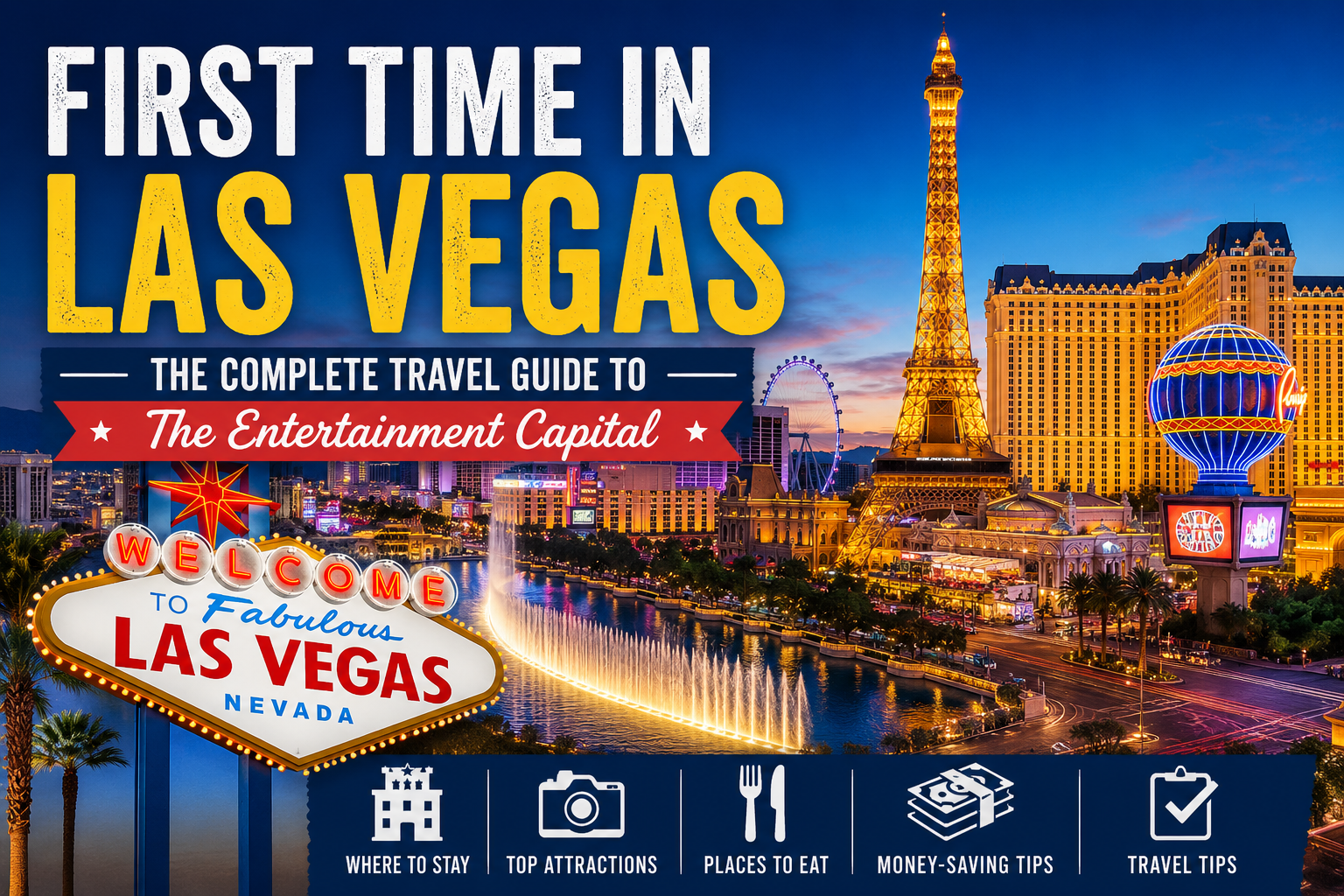
Las Vegas is one of those destinations that almost everyone thinks they understand before they arrive. People picture flashing lights, casino floors, showgirls, huge hotels, loud music, fountains, buffets, cocktails, luxury shopping, and late nights that seem to blur into early mornings. All of that is true, but it is only one side of the story.
Modern Las Vegas has changed dramatically. It is no longer just the gambling capital of America. It has become one of the world’s great entertainment cities, a major sporting destination, a global conference hub, a food lover’s playground, a luxury hotel showcase, and surprisingly, even a place where families can build a full holiday itinerary.
Vegas is still wild, expensive, flashy, strange, exciting, and unforgettable. But it is also a city where planning matters. The advertised price is rarely the final price. A hotel room that looks cheap can become expensive after resort fees. A short walk on the Strip can turn into a long mission through casino corridors. A simple taxi ride can cost more during traffic. A drink in the wrong bar can feel like a small financial mistake.
That is why this Las Vegas travel guide is designed to help you visit smarter. Whether it is your first trip or your first visit in several years, this guide covers how to arrive, where to stay, how to get around, what to eat, what to do, what to avoid, and how to make the most of one of America’s most fascinating cities.
Understanding Las Vegas And The Main Areas To Explore
Las Vegas is famous around the world as Sin City, but the city has grown far beyond that old nickname. For decades, visitors came mainly for casinos, gambling, cheap hotel rooms, budget buffets, and the promise of wild nights. Today, that old Vegas still exists, but it sits alongside a new version of the city built around sports, fine dining, luxury shopping, concerts, family entertainment, conventions, and high-end experiences.
The biggest change many visitors notice is the price. The days of easy $29 rooms and $5 meals are mostly gone, especially on the Las Vegas Strip. Modern Vegas is built around the experience economy. Hotels, restaurants, shows, pools, parking, resort fees, drinks, and attractions all come with premium pricing. The sticker price is often only the beginning.
That does not mean Vegas is not worth visiting. It absolutely is. It simply means you need to understand how the city works before you arrive.
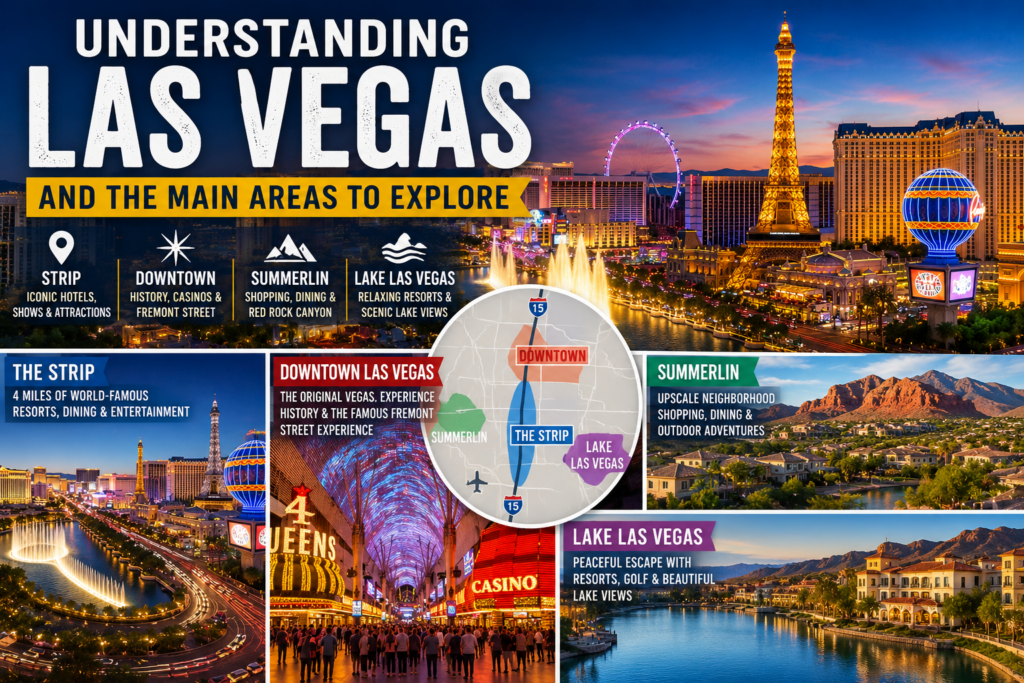
The most famous part of Las Vegas is the Las Vegas Strip. This is the four-mile stretch of Las Vegas Boulevard where you will find many of the city’s most iconic resorts, casinos, restaurants, shops, shows, and attractions. Technically, much of the Strip is not actually inside the City of Las Vegas. It sits in the unincorporated areas of Paradise and Winchester. For visitors, however, it all feels like Las Vegas.
The Strip is where most first-time visitors should focus their stay. This is where you will find famous hotels such as Bellagio, Caesars Palace, Venetian, Palazzo, Wynn, Encore, MGM Grand, Aria, Cosmopolitan, Mandalay Bay, Luxor, Excalibur, New York New York, Paris Las Vegas, Resorts World, and many more. The hotels are not just places to sleep. They are attractions in themselves.
You can walk through a pyramid at Luxor, explore a Venetian-inspired resort with canals and gondolas, wander through a Roman-style palace at Caesars, watch fountains dance at Bellagio, see the Eiffel Tower replica at Paris, and experience a skyline-themed resort at New York New York. Few cities in the world use hotel design as entertainment quite like Las Vegas.
Downtown Las Vegas is the other major visitor area. Many people call downtown the real Vegas because this is where the city’s gambling history began before the Strip became dominant. The heart of downtown is Fremont Street, especially the Fremont Street Experience. This is a covered pedestrian area filled with lights, music, casinos, street performers, bars, and hourly light shows after dark.
Downtown feels different from the Strip. It is rougher around the edges, louder, more casual, and often cheaper. Some visitors love that old-school atmosphere. Others find it too smoky, too chaotic, or too far from the Strip. If you enjoy slot machines or lower table game minimums, downtown can be appealing. If you want polished luxury, the Strip is likely better.
Beyond the Strip and downtown, Las Vegas is also a real city where people live, work, shop, go to school, raise families, and enjoy quieter neighbourhoods. Summerlin is one of the more upscale areas, with good shopping, restaurants, Red Rock Casino, JW Marriott, and easy access to Red Rock Canyon for hiking. Lake Las Vegas is another interesting area, especially if you want a peaceful resort-style stay away from the noise. It has a Mediterranean-inspired feel around a lake and is located on the way toward Hoover Dam.
For most first-time visitors, however, the Strip and downtown will be the main focus. If you have extra time, a car, or a desire to see more than casinos and shows, then Red Rock Canyon, Lake Las Vegas, Hoover Dam, Valley of Fire, and other surrounding areas can add a completely different side to your trip.
Getting To Las Vegas And Moving Around The City
Most visitors arrive in Las Vegas by air. The main airport is Harry Reid International Airport, formerly known as McCarran International Airport. It is one of the busiest airports in the United States and is very close to the Strip, which makes arrival fairly convenient compared with many major cities.
One of the airport’s famous features is that you can gamble as soon as you arrive. Slot machines are located inside the airport, reminding you immediately that you have landed in Vegas. The airport is not a major hub for the big legacy airlines in the same way some other airports are, but it is heavily served by budget and leisure carriers, making it popular for visitors from across the United States and beyond.
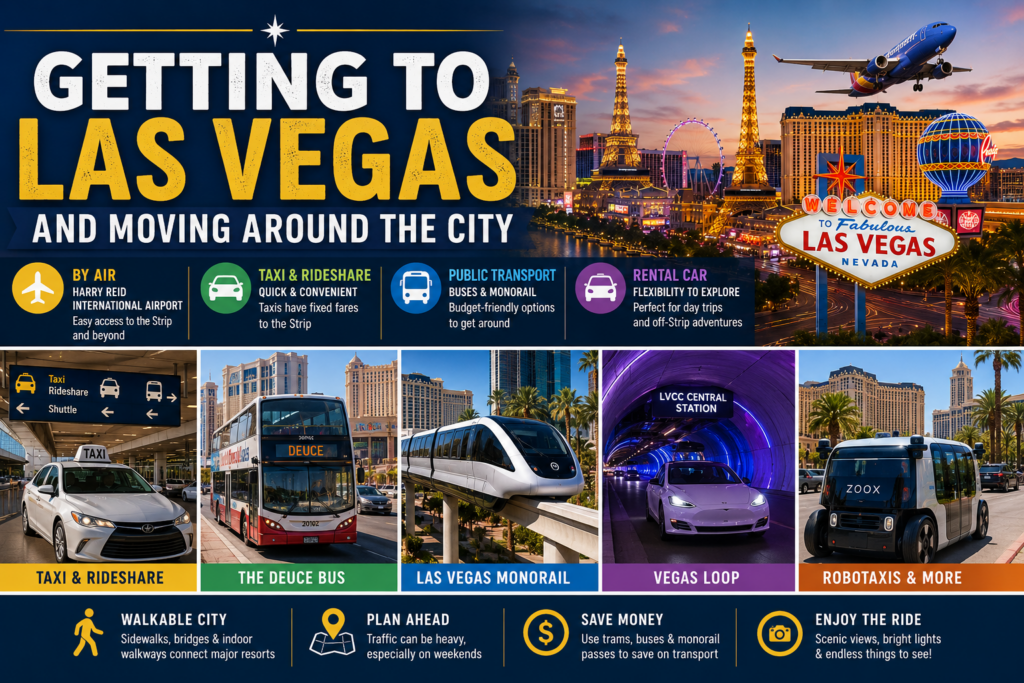
Once you land, the easiest way to get to your hotel is usually by taxi or rideshare. Uber and Lyft are widely used, and many travellers like them because they show the price upfront. However, surge pricing and long waits can happen, especially during busy events, conventions, weekends, or peak arrival times.
Taxis can be a good option from the airport to the Strip because fixed zone fares are often available. The drive to the Strip can be as little as 15 minutes without traffic, but it can take much longer when traffic is bad. If you are heading downtown, the fare is usually higher because it is farther from the airport.
Shared airport shuttles may look cheaper, but they are often not worth the time. You may wait for other passengers, stop at multiple hotels, and spend far longer in transit than expected. After a flight, especially if you are only in Vegas for a short stay, paying a little more for a taxi or rideshare is usually worth it.
Some travellers consider renting a car. Whether you need one depends on your plans. If you only want to stay on the Strip, see shows, eat at restaurants, gamble, and visit downtown once or twice, you probably do not need a rental car. Driving on the Strip can be slow, parking can be expensive, and parking garages are often located far from hotel entrances.
A rental car makes more sense if you plan to visit Hoover Dam, Valley of Fire, Red Rock Canyon, Lake Las Vegas, Death Valley, Zion, or the Grand Canyon. It also helps if you are staying off the Strip or want to explore local restaurants and neighbourhoods.
Driving into Las Vegas is common for visitors from Southern California. The drive from Los Angeles, Orange County, or San Diego usually takes around four to five hours without heavy traffic. On holiday weekends, however, it can become much longer. If you are driving back to California after a busy weekend, leaving early in the morning is much better than leaving in the afternoon with everyone else.
Once you are in Vegas, walking is one of the best ways to explore the Strip, but you should not underestimate the distances. The Strip may only be around four miles long, but walking through hotels, casinos, bridges, shops, restaurants, and crowds can make a short distance feel much longer. Many first-time visitors walk too much on the first day and end up with sore feet for the rest of the trip.
Comfortable shoes are essential. The Strip is walkable, but it is not always quick. Casinos are designed to keep you inside, and getting from your room to the street can sometimes feel like a journey. You may walk through gaming floors, shopping corridors, food courts, escalators, pedestrian bridges, and hotel lobbies before reaching your destination.
The Deuce bus is a useful public transport option. It runs along the Strip and continues to downtown Las Vegas. It is relatively affordable and can be a good sightseeing ride, especially from the upper deck. The downside is that it gets stuck in the same Strip traffic as everyone else, so it is not always fast.
There are also free trams connecting some hotels. One tram links Mandalay Bay, Luxor, and Excalibur. Another connects Park MGM, Aria, Crystals, and Bellagio or Vdara. These free trams are very useful when exploring certain parts of the Strip.
The Las Vegas Monorail is a paid option running along the east side of the Strip, with stops including MGM Grand, Horseshoe, Flamingo, Harrah’s, the Convention Center, Westgate, and Sahara. It is especially useful if you are attending a convention or staying on the east side of the Strip. It is less useful if you are staying on the west side near Caesars Palace, Bellagio, or Cosmopolitan because the stations are not directly there.
Vegas is also experimenting with newer transport options, including the Vegas Loop by The Boring Company. This uses Tesla vehicles in underground tunnels and currently serves limited areas, including parts of the convention centre and selected nearby resorts. Driverless taxi services are also beginning to appear in the city, though availability depends on when you visit.
If you do drive in Las Vegas, avoid driving down Las Vegas Boulevard on Friday and Saturday nights unless you are doing it purely for the experience. Traffic can be painfully slow. Parallel roads and Interstate 15 may be better options, although they also get busy during peak times.
Parking is another major consideration. Free parking on the Strip is much less common than it used to be. Many resorts charge daily parking fees, often around $18 to $25 or more depending on the property and day. Some hotels still offer free parking, including places like Treasure Island, Circus Circus, Sahara, and limited options elsewhere, but this can change.
If you park in a large casino garage, take a photo of your parking level and nearby locator sign. Garages are huge, and it is very easy to forget where you parked. Also, do not leave visible luggage or valuables in your car. If you place bags in your car and then return to the hotel, move your vehicle to another floor or area so anyone watching does not know where your luggage is stored.
Choosing Where To Stay In Las Vegas
Choosing the right hotel can make or break your Las Vegas trip. The city has everything from cheap rooms to ultra-luxury suites, but the cheapest option is not always the smartest option.
Vegas hotel prices change dramatically depending on dates. A room that costs very little on a quiet weekday can become extremely expensive during a major convention, sports event, concert, holiday weekend, or big fight. Before booking, check what events are happening in the city. If you are not attending those events, avoid those dates if possible.
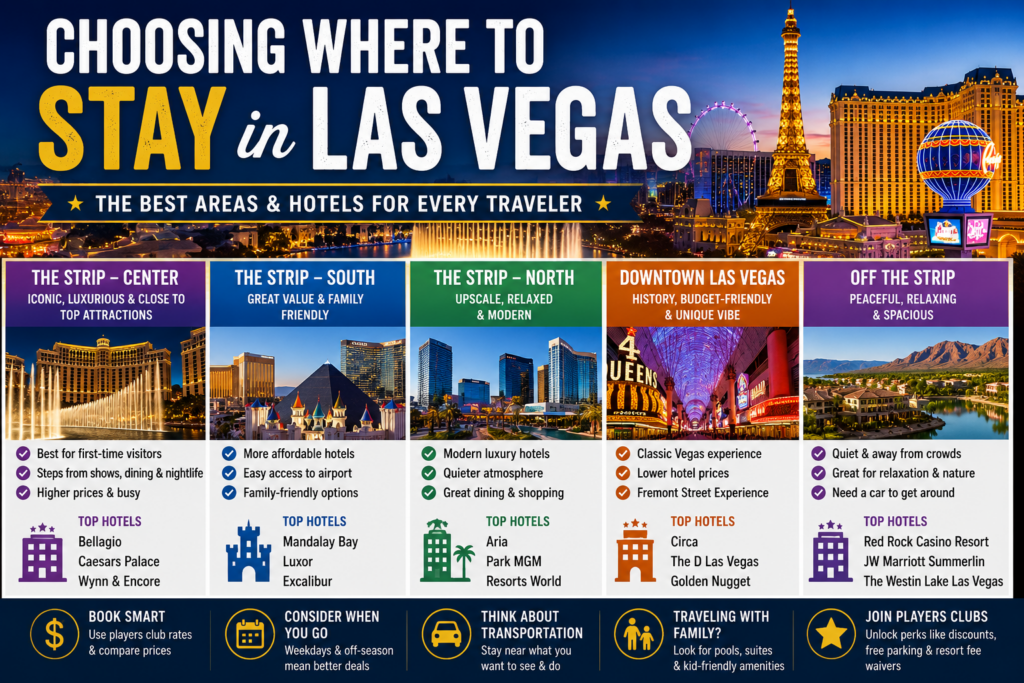
The centre of the Strip is usually the most convenient and expensive area. Hotels near Bellagio, Caesars Palace, Cosmopolitan, Paris, Aria, and the Venetian give you excellent access to attractions, restaurants, shows, and other resorts. The farther you move toward either end of the Strip, the cheaper rooms may become, although this is not always the case.
Resort fees are one of the biggest frustrations in Las Vegas. A room may appear affordable online, but the final cost can jump significantly once daily resort fees are added. These fees may cover things like Wi-Fi, gym access, pool access, local calls, or other amenities, but many travellers simply see them as unavoidable extra charges. Always check the final price before booking.
Joining casino loyalty programmes can help. MGM Rewards, Caesars Rewards, Venetian Rewards, Wynn Rewards, and other hotel programmes may offer member rates, discounts, special deals, or perks. Even if you are not a serious gambler, signing up can sometimes reduce your room price.
If you want a classic Vegas experience, staying on the Strip is best. The Venetian and Palazzo are popular with visitors who want large rooms, strong theming, good restaurants, and easy access to the Sphere. The rooms are spacious, often suite-style, and the resort feels grand without being quite as expensive as the very top luxury properties during quieter times.
For high-end luxury, Wynn and Encore are among the best choices on the Strip. They offer elegant rooms, excellent service, beautiful design, luxury shopping, fine dining, and a more polished atmosphere. They are less budget-friendly and may feel less family-focused than some other resorts, but for a premium Vegas stay, they are hard to beat.
Resorts World is another interesting option. It is located toward the north end of the Strip, which some people see as a disadvantage, but the property itself is modern, clean, stylish, and often better value than central Strip luxury hotels. It includes Hilton, Conrad, and Crockfords hotel options, giving travellers different price and luxury levels within one resort.
If you prefer quiet, consider a non-casino hotel. The Waldorf Astoria near CityCenter offers luxury without a casino floor. Marriott Grand Chateau, just off the Strip, is another good option for travellers who want more space and less casino noise. Off-Strip hotels from Marriott, Hilton, Hyatt, and similar brands may also offer better value, cheaper parking, and fewer resort-style add-ons.
Families may prefer resorts with better pools, arcades, food courts, and activities. Mandalay Bay is known for its huge pool complex and wave pool. New York New York has a fun theme and good casual food options. Horseshoe has added more family-friendly entertainment such as arcade-style attractions.
Adults seeking a more grown-up experience may prefer Wynn, Encore, Cosmopolitan, Venetian, Palazzo, Aria, or Circa downtown. However, note that Circa and El Cortez downtown are 21-and-over properties, which means children cannot stay or enter.
When choosing a hotel, ask yourself what matters most. Do you want luxury, location, low price, family facilities, nightlife, quiet rooms, easy parking, big pools, casino action, or easy access to specific shows? Vegas has a hotel for almost every travel style, but the wrong choice can leave you walking too far, paying too much, or feeling trapped in an atmosphere you do not enjoy.
Eating Drinking Gambling And Managing Your Money
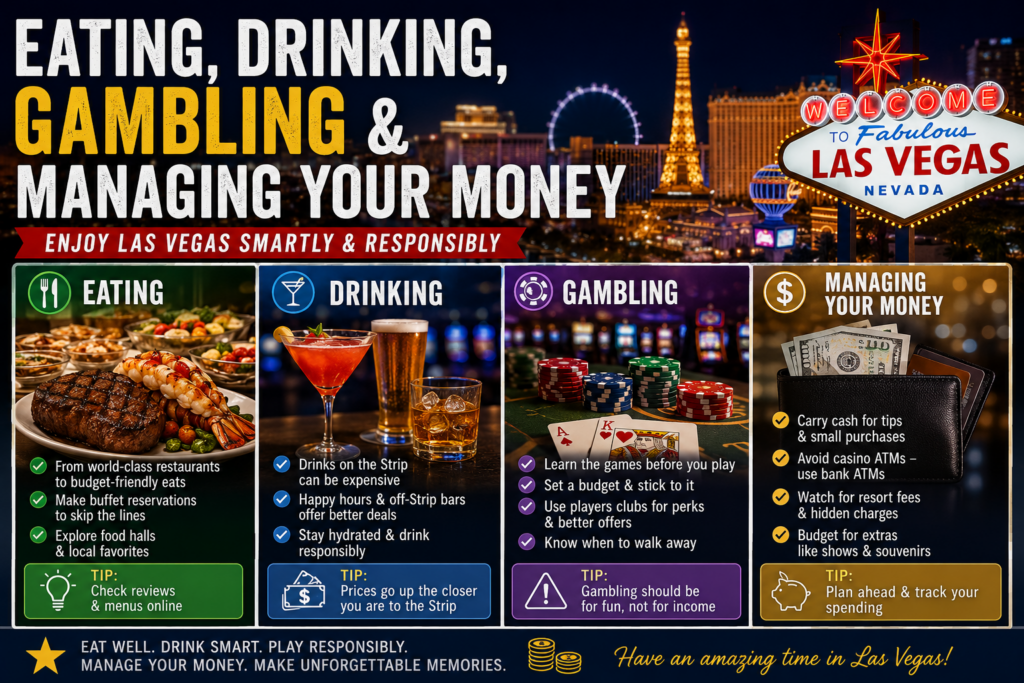
Las Vegas is one of America’s great food cities. It has celebrity chef restaurants, legendary buffets, luxury dining rooms, international food halls, casual food courts, cheap eats, steakhouses, bakeries, cocktail bars, and late-night fast food. You can spend a fortune on dinner or still find good value if you know where to look.
Buffets remain a major part of the Vegas food experience, although they are no longer as cheap as they once were. The Bacchanal Buffet at Caesars Palace is often considered one of the best in the city. It offers a huge selection of dishes, with many items served in small plated portions rather than the old-fashioned buffet style. It is expensive, but many visitors feel it is worth trying at least once.
Other popular buffet options include The Buffet at Wynn and Wicked Spoon at Cosmopolitan. If you plan to visit a buffet, check whether reservations are available. Many now accept reservations, which can save you a long wait. Also, one buffet per day is enough for most people. Vegas buffets can be heavy, and trying to do more than one in a day can leave you feeling exhausted.
Food halls have become a major trend on the Strip. The food court at New York New York is one of the most fun because it is themed like a New York street, with pizza, sandwiches, hot dogs, fish and chips, and deli-style meals. Greenberg’s Deli is a good option for pastrami, corned beef, and classic deli sandwiches.
Fashion Show Mall has one of the better budget-friendly food courts on the Strip. Prices are more normal compared with casino restaurants, and you can find options such as burgers, pizza, Chinese food, Japanese-style dishes, sandwiches, and fast food favourites.
Famous Foods Street Eats at Resorts World offers a more international food hall experience, with several Asian-inspired vendors and dishes. It is not necessarily cheap, but it is interesting and varied. Proper Eats at Aria is another modern food hall with breakfast, deli sandwiches, pizza, burgers, ramen, salads, and other casual options.
Block 16 at Cosmopolitan is one of the best food hall-style spots in Las Vegas. It includes Hattie B’s Nashville Hot Chicken, Tekka Bar, Lardo, District Donuts, Bang Bar, and nearby favourites such as Eggslut, Milk Bar, and the famous not-so-secret pizza hallway.
For cheaper eats, In-N-Out Burger at the LINQ Promenade is a classic choice, especially if you have never tried the chain before. Tacos El Gordo is another favourite, known for Tijuana-style tacos, especially adobada. Earl of Sandwich is a reliable option for hot sandwiches, and Ellis Island, slightly off the Strip, is known for affordable steak specials.
Drinking in Las Vegas is everywhere, but it can be expensive. Cocktails at prime Strip bars can cost a lot, especially in hotel lobbies or bars facing Las Vegas Boulevard. The closer you are to the Strip, the more you will usually pay. Drinks often become cheaper if you go deeper inside hotels, visit off-Strip bars, or buy from pharmacies and convenience shops.
One unusual feature of Las Vegas is that you can walk around many public areas with alcoholic drinks, including the Strip and Fremont Street, as long as they are not in glass containers. Many casinos provide plastic cups if you want to take your drink with you.
Still, it is wise not to overdo it on your first night. A serious hangover can ruin the next day of your trip, especially when you have shows, restaurants, sightseeing, and walking planned.
For basic necessities, avoid hotel gift shops where possible. Bottled water, snacks, medicine, and toiletries can be outrageously expensive inside casino shops. Walgreens, CVS, ABC Stores, and Target are usually much better options. The Target on the Strip near Park MGM is especially useful for affordable snacks, drinks, travel items, and basics.
Gambling is everywhere in Vegas. You will see it in casinos, bars, gas stations, and even at the airport. If you want to gamble, learn the games before you play. Many casinos offer free lessons for games such as blackjack, craps, roulette, and poker. Do not sit at a table if you do not understand the rules.
Set a gambling budget before you begin. Decide exactly how much you are willing to lose, and once it is gone, stop. Chasing losses is one of the easiest ways to turn a fun trip into a financial disaster. Vegas is designed to keep you playing, drinking, and spending. The best defence is discipline.
Sign up for players clubs if you gamble, eat, shop, or stay at casino resorts. Using a players card can earn points, discounts, room offers, buffet access, and other perks over time. Even casual visitors may benefit from membership offers.
Cash is still useful in Vegas, especially for tips. Bring small bills, particularly $1 and $5 notes. Casino ATMs often charge high fees, so it is better to bring cash with you or use a bank ATM away from the casino floor if possible.
Tipping is part of the Vegas experience. You may tip taxi drivers, rideshare drivers, bell staff, housekeeping, cocktail servers, bartenders, restaurant staff, valet attendants, and tour guides. Keeping small bills makes this much easier.
The Best Things To Do In Las Vegas
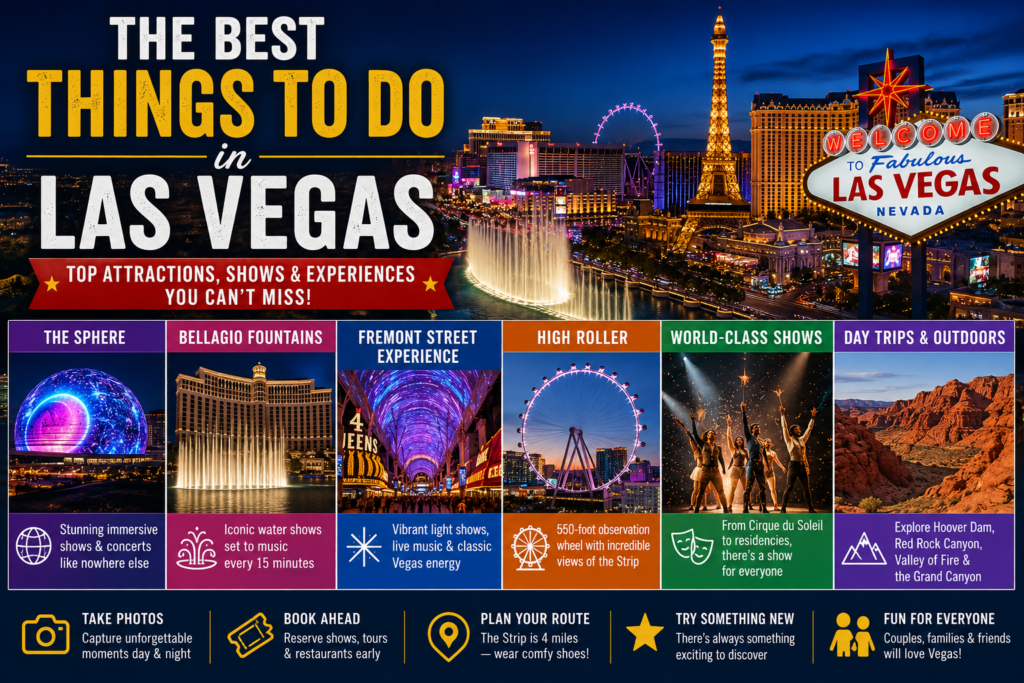
Las Vegas has far more to do than gambling. In fact, many visitors come to Vegas and barely gamble at all. The city is now one of the world’s top destinations for shows, concerts, sports, attractions, restaurants, shopping, pools, and immersive entertainment.
The Sphere is one of the biggest modern attractions in Las Vegas. This enormous round venue near the Venetian and Palazzo is both a concert space and an immersive visual experience. It has a huge exterior screen and an incredible interior screen used for concerts, films, and special productions. Tickets can be expensive, but it is one of the most unique entertainment venues in the world.
The Bellagio Fountains remain one of the greatest free attractions in Las Vegas. The fountains perform choreographed shows with music and lights in front of the Bellagio hotel. Even if you have seen videos online, watching them in person feels special. The Bellagio Conservatory and Botanical Gardens are also worth visiting. The displays change seasonally and are especially beautiful around major holidays.
The Flamingo Wildlife Habitat is another free attraction on the Strip. It is a peaceful outdoor area behind the Flamingo hotel with real flamingos, ducks, koi fish, waterfalls, greenery, and a calmer atmosphere than the surrounding casino areas. It is a nice stop during the day, especially for families.
Fremont Street Experience in downtown Las Vegas is a must-see at least once. The massive overhead LED canopy creates hourly light shows at night, while the street below is filled with music, performers, casinos, bars, and crowds. It is loud, chaotic, colourful, and very Vegas. Families may prefer to visit earlier, as the atmosphere becomes more adult and rowdy later in the evening.
Las Vegas is also a major show city. Cirque du Soleil productions, magic shows, comedy acts, residencies, concerts, tribute acts, burlesque shows, and specialty performances are available almost every night. If there is a specific show you want to see, book in advance, especially during busy periods.
Sports have become a huge part of the Las Vegas experience. The city now hosts major professional teams, boxing, UFC, racing, college sports, and large-scale events. Allegiant Stadium, T-Mobile Arena, and other venues bring huge crowds into the city. This is great if you are attending an event, but it can also push hotel prices up dramatically.
Shopping is another major activity. Luxury shoppers can visit the Forum Shops at Caesars Palace, the Shops at Crystals, Wynn Plaza, and the Grand Canal Shoppes. For more practical shopping, Fashion Show Mall and Miracle Mile Shops offer a wider range of options.
Pool culture is also important in Vegas. In summer, pools become one of the main attractions. Some are family-friendly, while others operate more like dayclubs with DJs, drinks, cabanas, and party crowds. Mandalay Bay is especially popular with families because of its large pool complex and wave pool.
Vegas can also be family-friendly if planned properly. Children can enjoy pools, arcades, attractions, themed hotels, food courts, shows suitable for families, and daytime sightseeing. However, parents should be realistic. Kids cannot linger on casino floors, and the Strip after 9pm can become rowdier. Fremont Street can also feel too adult for younger children.
Smoking is another thing visitors should understand. Smoking is still allowed in many casino areas, although some properties have improved ventilation or added non-smoking sections. Park MGM is fully non-smoking, making it a good choice for travellers who are sensitive to smoke. You may also smell cigar smoke or cannabis on the Strip, even where public use is not technically allowed.
There are also scams and annoying street hustles to watch for. Be cautious of anyone offering something for free on the Strip. Bracelets, CDs, photos, or other items often come with pressure for a donation or payment. Costumed characters and showgirls may offer photos, then demand high tips afterward. If you want a photo, agree on the price before taking it.
Avoid casino ATMs when possible because fees can be extremely high. Also, be cautious of aggressive promoters, timeshare pitches, and anyone trying to rush you into a deal. Vegas is fun, but it is also a city built around separating visitors from their money.
Day Trips Practical Tips And Planning The Perfect Vegas Stay
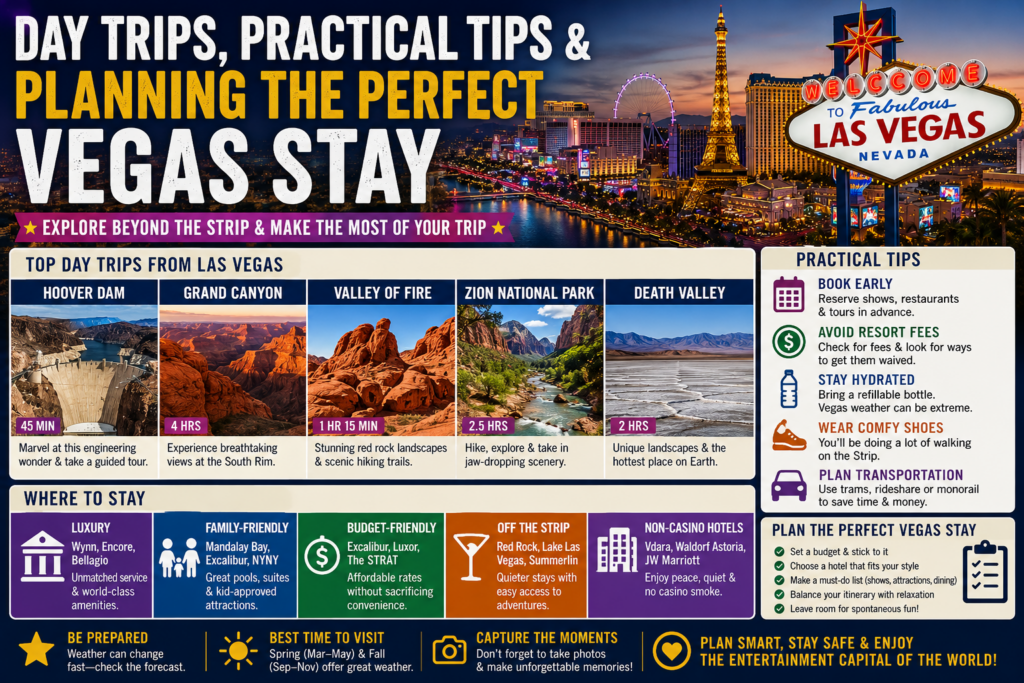
The best time to visit Las Vegas depends on what you want from your trip. Summer is great for pool season, but it can be brutally hot. If you struggle with heat, avoid the hottest months or plan indoor activities during the day. Winter is much cooler and can be very pleasant, but many visitors underestimate how cold mornings and evenings can feel. Bring layers, especially if visiting between November and February.
Spring and autumn are often ideal because temperatures are more comfortable. However, hotel prices depend less on weather and more on events. Large conventions, sports events, concerts, festivals, and holidays can make rooms extremely expensive. Always check the event calendar before booking.
For a first trip, three days in Las Vegas is a good minimum. That gives you enough time to explore the Strip, visit a few major hotels, eat at good restaurants, see a show, watch the Bellagio Fountains, and maybe visit downtown. Five days is better if you want a more relaxed trip with shows, restaurants, shopping, pool time, Fremont Street, and a few off-Strip experiences.
If you want to include day trips, consider staying for a week. Las Vegas is surrounded by incredible landscapes and attractions. Hoover Dam is one of the easiest and most popular day trips, located around 45 minutes away by car. You can visit the dam, learn about its history, and take tours inside depending on availability.
The Grand Canyon is another famous trip from Las Vegas, but understand the distance before booking. The West Rim, located on Native American land, is closer and known for the Skywalk. Grand Canyon National Park’s South Rim is farther away and can take around four hours each way, making it a very long day trip.
Valley of Fire State Park is one of the best nearby natural attractions. It is about an hour or so from Las Vegas and features dramatic red rock formations, scenic drives, and hiking trails. The Fire Wave Trail is especially popular, but some trails may close during extreme heat, especially in summer. Bring water, wear proper shoes, and avoid hiking in dangerous temperatures.
Red Rock Canyon is closer to the city and excellent for scenic drives, hiking, photography, and escaping the Strip. It is especially convenient if you are staying near Summerlin or have a rental car. Like all desert areas, it is best explored in cooler weather.
Death Valley National Park and Zion National Park are also possible from Las Vegas, but they require more time. Both can be done as long day trips, though overnight stays are better if you want a deeper experience.
Back on the Strip, construction is something visitors should expect. Las Vegas is always changing. Hotels close, reopen, rebrand, and rebuild. The former Mirage site is being transformed into the new Hard Rock Hotel with a guitar-shaped tower. The former Tropicana site is being prepared for a future baseball stadium and resort development. These projects can affect walking routes, pedestrian bridges, traffic, and views.
Because Vegas changes constantly, check maps and recent updates before your trip, especially if you plan to walk around areas with major construction. A route that worked a few years ago may now be blocked.
Packing for Las Vegas depends on the season and your plans. Comfortable walking shoes are essential. Bring smart casual outfits if you plan to visit nice restaurants, lounges, or shows. Bring swimwear for pool season. Bring a jacket in winter. Bring sunscreen, sunglasses, and lip balm because the desert air can be dry. Bring small cash for tips and avoid relying on casino ATMs.
If you are visiting from outside the United States, remember that tax and tips are often not included in displayed prices. A meal, drink, taxi ride, or hotel stay may cost more than the first number you see. Resort fees, parking fees, tips, taxes, and service charges can add up quickly.
Las Vegas is best enjoyed when you accept what it is. It is not a cheap destination anymore, but it can still offer excellent value if you plan well. It is not only for gamblers, but gambling is everywhere. It is not only for adults, but some areas are very adult. It is not only artificial, because the surrounding desert landscapes are genuinely beautiful. It is not relaxing in the traditional sense, but it can be thrilling, memorable, and unlike anywhere else.
A good Vegas trip balances energy and rest. Do not try to see every hotel in one day. Do not walk the entire Strip in uncomfortable shoes. Do not eat three huge meals back to back. Do not gamble more than you can afford. Do not forget to drink water. Do not assume the cheapest hotel is the best deal. Do not leave your planning until the last minute if big events are in town.
Instead, choose a good location, book early, check the full hotel price, make restaurant reservations, plan one or two main activities per day, leave room for spontaneous exploring, and give yourself time simply to wander.
That is when Las Vegas becomes magical. You may start your morning with coffee and a walk through a themed resort, spend the afternoon by a pool, eat tacos or a world-class buffet, watch the fountains at sunset, see a show at night, ride downtown under the Fremont lights, and return to your hotel surrounded by the glow of one of the most recognisable skylines in the world.
Las Vegas is loud, expensive, entertaining, excessive, impressive, and constantly changing. It is a city of neon, desert heat, grand hotels, hidden restaurants, smoky casinos, luxury suites, cheap tacos, high-end cocktails, street performers, mega venues, and unforgettable moments.
Visit with realistic expectations, a sensible budget, comfortable shoes, and an open mind. Whether you go for food, shows, casinos, sport, nightlife, family fun, or desert adventure, Las Vegas is one of those places that gives you a story to tell long after you leave.
Disclaimer
The information provided in this article is for general informational and educational purposes only. While every effort has been made to ensure the accuracy of the information at the time of writing, travel conditions, entry requirements, opening hours, ticket prices, local regulations, and accessibility may change without notice.
Readers are encouraged to verify all travel information with official tourism boards, government agencies, airlines, accommodation providers, and local authorities before making travel plans or bookings.
The destinations featured in this article are based on their historical, cultural, natural, and tourism significance. The opinions expressed are for informational purposes only and should not be considered professional travel, legal, health, safety, or financial advice.
FoxiManna.com and its authors are not responsible for any losses, injuries, inconveniences, travel disruptions, or damages that may result from the use of information contained in this article. Travelers are responsible for conducting their own research and making informed decisions based on their individual circumstances.
By using this website and reading this article, you agree that any reliance on the information provided is at your own risk.