
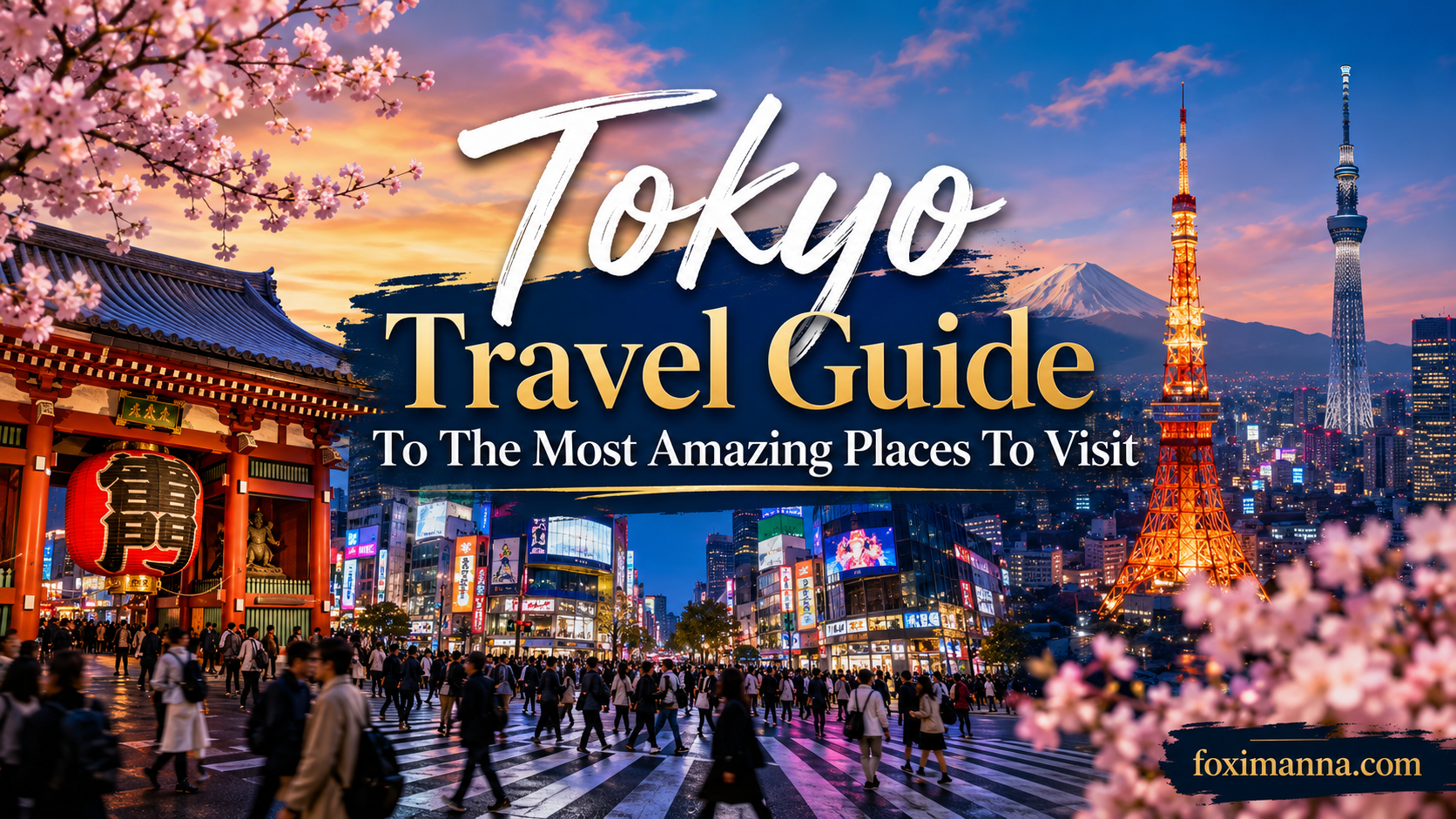
Tokyo is not simply a large city. It is a collection of worlds compressed into one extraordinary urban landscape.
One moment, you are standing beneath giant digital screens in Shibuya as thousands of people move across the road in every direction. A few minutes later, you are walking beneath towering trees towards a peaceful Shinto shrine where the sound of traffic seems to disappear. Travel east and you can explore historic temples, traditional markets and neighbourhoods shaped by old Edo. Head towards Tokyo Bay and you enter a futuristic landscape of artificial islands, illuminated bridges, immersive digital art and driverless trains.
This is what makes visiting Tokyo so memorable. The city is fast without always feeling aggressive, crowded without appearing completely disorganised and technologically advanced without abandoning its traditions. Ancient shrines stand beside fashion boutiques. Tiny noodle counters operate beneath railway tracks. Luxury cars pass convenience stores selling inexpensive rice balls and coffee. Office workers, students, gamers, families, monks, fashion lovers and international visitors all share the same complex but remarkably efficient city.
A first visit can feel overwhelming. Tokyo has numerous railway operators, enormous stations and neighbourhoods that appear to have little in common with one another. However, once you begin exploring district by district, the city becomes much easier to understand.
This Tokyo travel guide covers the best areas to visit, unforgettable attractions, local food, public transport, cultural experiences, accommodation choices and day trips. It also explains why Tokyo feels less like a single destination and more like an entire country waiting to be discovered.
Why Tokyo Feels Like A City From Another Planet
Tokyo creates its strongest impression through contrasts.
The city is often presented through photographs of neon lights, bullet trains, capsule machines, animated billboards and busy pedestrian crossings. Those images are accurate, but they show only one part of Tokyo. The deeper experience comes from seeing how modern technology, public discipline, local culture and historic traditions work together.
Tokyo can feel chaotic when you first arrive. Railway lines stretch in every direction, crowds flow through underground passages and signs compete for attention. Yet there is usually a system behind the movement. People queue before boarding trains. Escalator lanes remain orderly. Streets are clean despite the limited number of public bins. Trains arrive frequently, and stations are filled with signs designed to guide millions of passengers.
The city rewards travellers who pay attention to small details. You may notice that taxi doors open automatically, convenience stores sell surprisingly good meals and vending machines appear in quiet residential streets. Public toilets can look like miniature architectural projects, while department-store food halls display fruit, cakes and boxed meals with the precision of luxury jewellery.
Tokyo does not need to announce that it is advanced. Technology is often integrated quietly into ordinary life.
A transport card can be used to board trains, pay for buses and make small purchases. A restaurant may allow you to order through a vending machine before entering. Luggage can be forwarded between hotels. Train platforms display detailed information about which carriage will place you closest to the exit you need.
At the same time, many parts of daily life remain deeply traditional. Visitors still wash their hands before approaching shrines. Seasonal festivals continue to fill neighbourhood streets. Sumo, tea ceremonies, flower viewing and local religious customs remain visible across the capital.
Tokyo’s official tourism organisation describes the city as a destination with distinct seasonal personalities. Spring brings cherry blossoms, summer delivers festivals and fireworks, autumn produces colourful foliage and winter introduces illuminations and clearer views of the surrounding mountains. Spring and autumn generally offer the mildest weather, while summer can be extremely hot and humid.
Even Tokyo’s skyline reflects this combination of old and new. The Imperial Palace occupies the historic centre, surrounded by moats, gardens and remains connected to Edo Castle. Beyond the palace rise office towers, railway stations, financial institutions and modern shopping complexes.
Tokyo Skytree reaches 634 metres into the sky, while observation decks around Shibuya, Shinjuku, Roppongi and Marunouchi reveal urban development stretching towards the horizon. Tokyo Skytree’s official specifications confirm its 634-metre height, and its lower observation deck provides a panoramic view from 350 metres above ground.
However, Tokyo is not impressive only because of its size.
What makes the city feel almost unreal is the way different experiences exist within a short railway journey. You can begin your morning in a forested shrine, spend lunch eating sushi beside a market, browse vintage video games in the afternoon, watch the sunset from a skyscraper and finish the night inside a five-seat bar hidden in an alley.
There are few cities where history, fantasy, commerce, spirituality and entertainment sit so comfortably beside one another.
Shibuya Harajuku And Shinjuku Reveal Tokyo’s Electric Energy
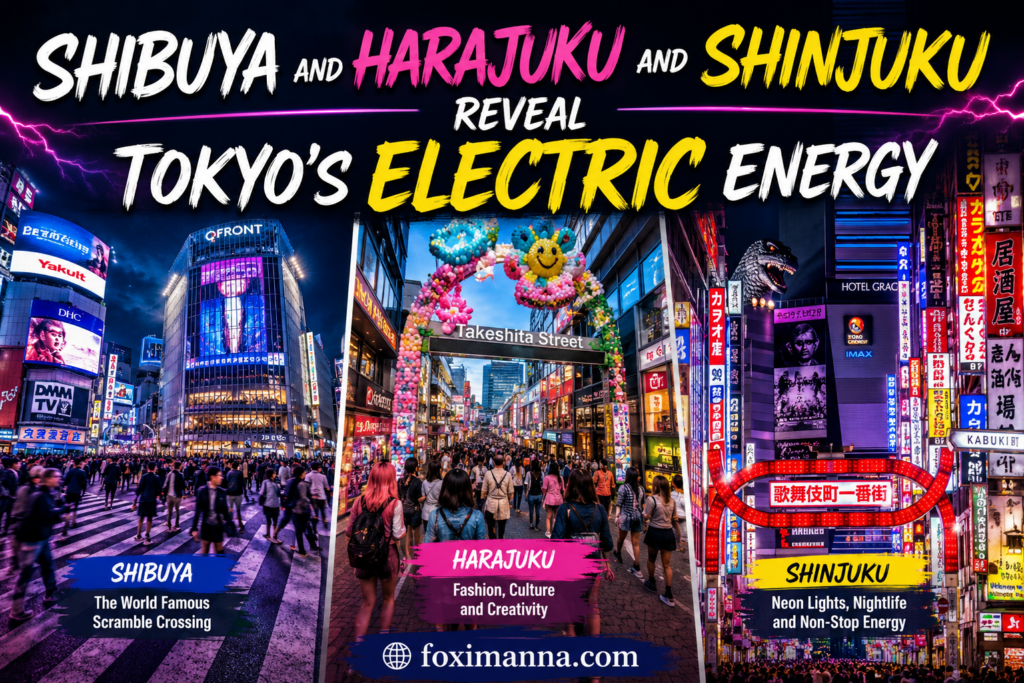
For many visitors, Shibuya provides the first image that comes to mind when they imagine Tokyo.
The district is loud, youthful, commercial and constantly moving. Digital screens cover buildings, music escapes from shops and enormous crowds flow around Shibuya Station. The famous Shibuya Scramble Crossing sits directly outside the station’s Hachiko Exit and can accommodate between roughly 1,000 and 2,500 pedestrians during particularly busy crossing cycles.
Crossing the road is part of the experience, but watching it from above reveals the scale more clearly. Cafés and shopping centres around the intersection provide elevated viewpoints, although Shibuya Sky offers one of the district’s most dramatic perspectives.
The observation experience rises above Shibuya Scramble Square and includes indoor viewing areas and an open-air rooftop. On clear evenings, visitors can watch Tokyo’s buildings change colour as daylight disappears and the city’s signs begin to glow. Shibuya Sky currently operates timed entry and is generally open from 10 am until 10.30 pm, with final admission earlier in the evening. Popular sunset slots should be reserved well ahead of a visit.
Close to the crossing stands the statue of Hachiko, the loyal Akita dog remembered for returning to Shibuya Station for years after the death of his owner. The statue has become both a Tokyo landmark and one of the city’s busiest meeting points.
Shibuya is particularly atmospheric after dark. Restaurants fill with customers, shops remain bright and modified Japanese cars occasionally pass through the surrounding streets. Ramen restaurants appear almost everywhere, offering different broths, toppings and noodle styles.
Yet Shibuya is not only concrete and advertising. Walk north and the environment begins to soften as the city leads towards Harajuku, Yoyogi Park and Meiji Jingu.
Meiji Jingu is one of Tokyo’s most important Shinto shrines. Its forested approach feels surprisingly isolated from the roads and railway stations surrounding it. Visitors pass beneath large torii gates and follow wide paths towards the main shrine complex. Depending on the time of year, you may encounter traditional ceremonies, cultural demonstrations or families wearing formal clothing for special occasions.
Nearby Harajuku reveals a different kind of Tokyo creativity.
Takeshita Street is associated with youth fashion, colourful sweets, character shops, costume-inspired clothing and small boutiques. It can become extremely crowded, particularly on weekends, but its energy makes it worth experiencing at least once.
Harajuku is also one of the best places to encounter Tokyo’s obsession with themed cafés, photogenic desserts and capsule toys. Gachapon machines sell small collectible items in sealed plastic capsules. The designs change frequently, encouraging both children and adults to keep trying their luck.
Walk towards Omotesando and the atmosphere changes again. The narrow, colourful streets around Harajuku give way to a wide avenue lined with international fashion brands, polished cafés and striking modern architecture. Omotesando feels calmer and more mature, showing how quickly Tokyo can shift from playful street culture to refined luxury.
Shinjuku delivers another dramatic transformation.
Shinjuku Station is one of the world’s busiest transport hubs and can be confusing even for people who use it regularly. Underground corridors connect numerous exits, shopping areas, railway lines and office buildings. The simplest strategy is to identify the exact exit you need before leaving the train and follow station signs carefully.
Above ground, skyscrapers dominate western Shinjuku. The Tokyo Metropolitan Government Building offers free observation facilities, making it an excellent choice for travellers who want skyline views without buying another attraction ticket.
Eastern Shinjuku is brighter, louder and more entertainment-focused. Kabukicho contains restaurants, cinemas, bars, amusement centres and the famous Godzilla head overlooking the district. It is one of Tokyo’s major nightlife areas, although travellers should remain cautious around aggressive promoters and establishments with unclear pricing.
For a more intimate evening, explore Omoide Yokocho or Golden Gai.
Omoide Yokocho is a compact network of lanes filled with tiny restaurants serving grilled meat, noodles and other casual dishes. Golden Gai contains narrow alleys and miniature bars, many with room for only a handful of customers. Some welcome international visitors, while others are designed mainly for regular local customers. Check entrance charges and seating fees before ordering.
Shinjuku’s combination of skyscrapers, railway crowds, late-night food and hidden alleys makes it one of the most exciting districts for a first-time visitor. Tokyo’s official guide describes the area as a neon-lit centre for shopping, restaurants and evening entertainment.
Ginza Akihabara And Roppongi Show Tokyo’s Modern Obsessions
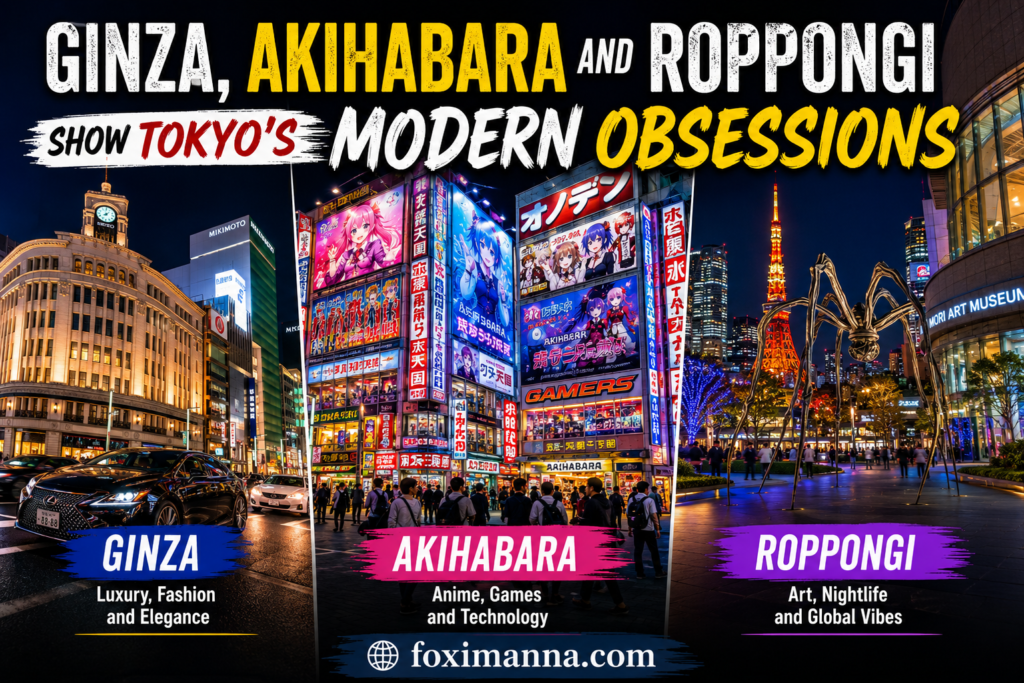
Tokyo’s modern identity is not expressed in only one way.
Ginza represents refinement and luxury. Akihabara celebrates gaming, electronics and popular culture. Roppongi combines international influences with art, architecture and nightlife. Together, they reveal three very different versions of contemporary Tokyo.
Ginza is one of the capital’s most famous shopping districts. Its wide streets are lined with department stores, luxury fashion houses, jewellery shops, cafés and dramatic flagship buildings. Even travellers with no intention of making an expensive purchase may enjoy walking through the area and examining its architecture.
On selected weekend days, parts of the main avenue are closed to traffic, allowing pedestrians to walk through the centre of the road. The district becomes an urban promenade where people stop for photographs, visit department-store food halls or explore rooftop gardens.
Luxury in Japan is often presented through craftsmanship and presentation rather than size alone. Ginza shops may sell beautifully packaged sweets, carefully selected tea, handmade stationery and premium fruit intended as gifts. A single melon, bunch of grapes or mango can be displayed with extraordinary attention to detail.
More affordable pleasures are easy to find. Mochi, pastries, coffee and takeaway snacks allow budget travellers to enjoy Ginza without entering a designer boutique. Department-store basements are particularly useful for discovering high-quality Japanese food, regional specialities and beautifully prepared bento boxes.
The district also attracts car enthusiasts. Nissan Crossing regularly displays vehicles and concept designs at a prominent Ginza intersection. Elsewhere, polished Japanese and European cars pass between immaculate storefronts, reinforcing Ginza’s reputation for understated wealth.
Akihabara feels completely different.
Known internationally as Electric Town, it developed as an important electronics district before becoming a global centre for anime, manga, gaming and collector culture. Giant character images cover buildings, arcade centres rise across multiple floors and shops specialise in everything from modern consoles to forgotten cartridges.
Even people who are not serious anime fans may find Akihabara fascinating. The district demonstrates how thoroughly Tokyo can build a physical environment around a hobby. Entire floors are dedicated to trading cards, model figures, comic books, retro computers, cameras or collectible toys.
Large electronics retailers sell cameras, laptops, household appliances, audio equipment and advanced bathroom technology. Smaller shops may contain rare parts or second-hand products. Travellers interested in buying electronics should check voltage compatibility, warranty restrictions and language settings before purchasing.
Akihabara is also known for themed cafés, including maid cafés where staff wear costume-inspired uniforms and guide customers through playful performances. These venues are part restaurant, part entertainment experience. Rules around photography, minimum orders and seating charges vary, so read the information before entering.
Tokyo’s car culture provides another form of modern obsession.
Japan’s performance cars became internationally famous through motorsport, films and video games. Enthusiasts visit specialist tuning shops to see rare components, customised vehicles and merchandise linked to models such as the Nissan GT-R, Toyota Supra, Mazda RX-7 and Mitsubishi Lancer Evolution.
Daikoku Parking Area is one of the best-known meeting locations associated with this culture. However, it is situated within a motorway interchange and cannot be reached safely on foot or by ordinary public transport. Events are informal, conditions are unpredictable and police may close access without warning. Travellers should use a reputable legal tour and avoid operators that encourage dangerous driving.
Roppongi offers a more international form of modern Tokyo.
The district contains embassies, galleries, restaurants, hotels, nightlife venues and major developments such as Roppongi Hills and Tokyo Midtown. The Mori Tower combines shopping and dining with art facilities and elevated city views. The giant spider sculpture at its base has become a popular meeting and photography point.
Roppongi can be glamorous during the day and energetic after dark. Rooftop spaces, modern museums and landscaped public areas make it more than a nightlife district. Seasonal illuminations also transform the streets during winter, often creating views towards Tokyo Tower.
Tokyo Tower stands 333 metres tall and remains one of the capital’s most recognisable symbols. Although newer observation structures rise higher, its red-and-white frame carries historical importance as an emblem of Japan’s post-war development.
Ginza, Akihabara and Roppongi demonstrate that Tokyo’s futuristic reputation is not built only on technology. It also comes from the city’s ability to turn fashion, gaming, design, cars, art and entertainment into complete cultural environments.
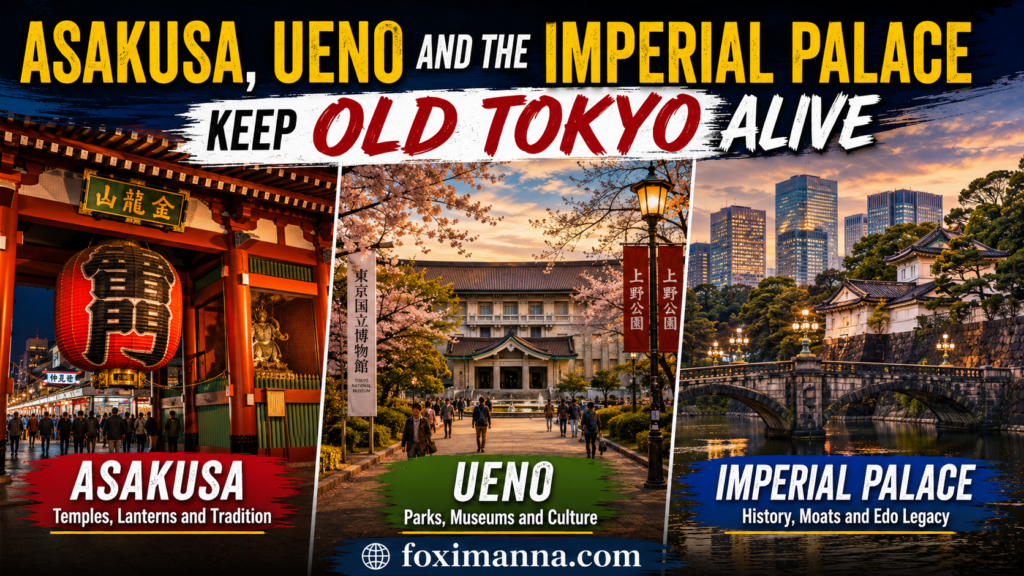
Asakusa Ueno And The Imperial Palace Keep Old Tokyo Alive
Tokyo’s modern skyline can make it easy to forget that the city has centuries of history.
Before it became Tokyo, the settlement was known as Edo. Its growth accelerated when Tokugawa Ieyasu established his political centre there at the beginning of the seventeenth century. The city developed around the shogunate, waterways, markets, temples and neighbourhoods that supported one of the world’s largest urban populations of its time.
The Imperial Palace occupies part of the former Edo Castle grounds and provides one of the best places to understand this history.
Much of the inner palace remains restricted, although official guided visits are available. The East Gardens are open to the public on operating days and include stone walls, defensive structures, guardhouses, landscaped gardens and the base of the former castle keep. The Imperial Household Agency confirms that the East Gardens occupy the eastern section of the palace grounds and are accessible to visitors.
The gardens provide an unusual sense of space in central Tokyo. Broad lawns, trees and historic ruins sit within walking distance of financial towers and railway stations. From certain viewpoints, the contrast between stone fortifications and modern office buildings becomes especially striking.
Marunouchi lies beside the palace and forms one of Tokyo’s principal business districts. The restored red-brick Tokyo Station building faces a landscape of contemporary towers, hotels, shops and offices. Elevated terraces in nearby buildings offer impressive views of the station’s roof and the railway lines beyond.
Continue towards Nihonbashi and the city’s commercial history becomes more visible. This district developed as a centre of trade during the Edo period. Today, traditional businesses stand among banks, modern offices and department stores.
Eastern Tokyo provides an even stronger connection with the past.
Asakusa is centred around Sensoji, widely recognised as Tokyo’s oldest Buddhist temple. Visitors approach through Kaminarimon, the famous gate with its enormous red lantern, before walking along Nakamise Street.
Nakamise is lined with shops selling souvenirs, rice crackers, sweets, fans, clothing and traditional crafts. It is extremely popular and can become congested during the middle of the day. Arriving early in the morning allows you to appreciate the temple’s architecture with fewer tour groups.
The surrounding streets deserve time as well. Smaller shrines, traditional restaurants, kitchenware shops and older buildings provide a slower atmosphere than central Shibuya or Shinjuku. Tokyo’s official Asakusa guide presents the district as one of the capital’s most important areas for traditional culture and historic character.
From Asakusa, Tokyo Skytree rises across the Sumida River. The contrast is almost symbolic. An ancient temple district occupies one side of the water, while one of the world’s tallest towers dominates the other.
A river cruise can connect Asakusa with Tokyo Bay, offering a different view of the city’s bridges, waterways and layered infrastructure. This route also helps travellers understand how Edo’s historic river network influenced Tokyo’s development. The official Tokyo waterfront guide notes that the city’s modern waterfront still reflects waterways created to serve the seventeenth-century capital.
Ueno sits a short journey away and combines culture, markets and green space.
Ueno Park contains museums, temples, a zoo and walking paths. The Tokyo National Museum holds an extensive collection of Japanese and Asian art and archaeology, while the National Museum of Nature and Science provides exhibitions covering natural history, scientific discovery and technology.
The Ameyoko shopping streets near Ueno Station present another version of historic Tokyo. Vendors sell seafood, snacks, clothing, cosmetics and other goods beneath and beside railway tracks. The atmosphere is louder and more informal than Ginza, with narrow lanes and constant movement.
Asakusa, Ueno and the Imperial Palace should not be treated as secondary attractions behind Tokyo’s neon districts. They provide the history that makes the modern city more meaningful.
Without Edo, there would be no Tokyo.
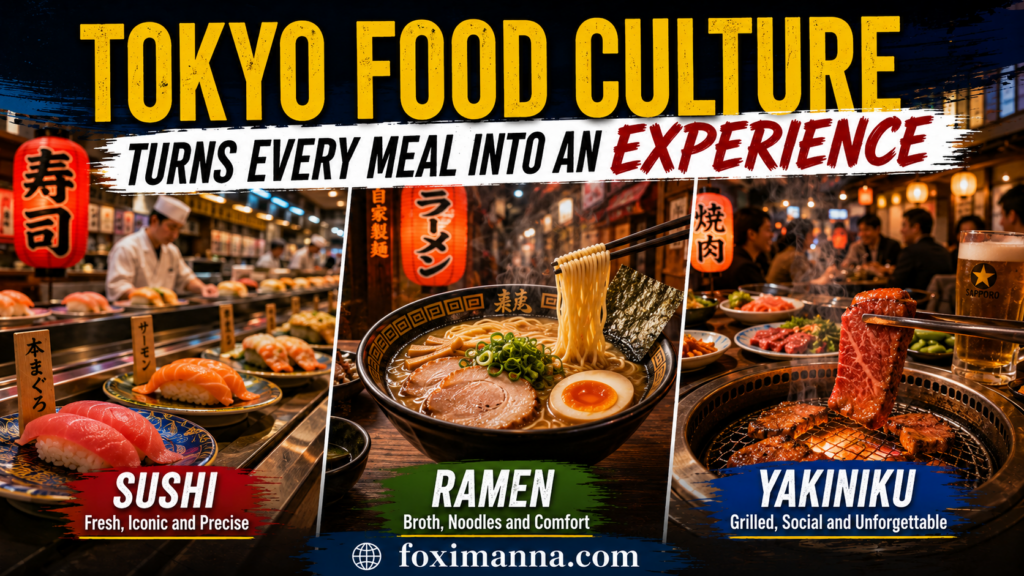
Tokyo Food Culture Turns Every Meal Into An Experience
Food is one of the strongest reasons to visit Tokyo.
The city offers everything from inexpensive standing noodle counters to internationally celebrated restaurants. However, Tokyo’s food culture is not memorable simply because of its variety. Meals are often shaped by specialisation.
A restaurant may devote itself to one particular dish and spend decades refining it. One counter serves only tempura. Another concentrates on eel. A small shop may prepare a limited number of ramen bowls each day. Sushi chefs develop long-term relationships with suppliers and adjust their selections according to season and quality.
Ramen is one of the easiest foods for first-time visitors to explore.
Different shops specialise in broths based on miso, soy sauce, salt, pork bones, chicken or seafood. Noodles vary in thickness and texture, while toppings may include sliced pork, eggs, spring onions, seaweed, bamboo shoots or vegetables.
Many ramen restaurants use ticket machines. Customers select a dish, pay and hand the printed ticket to a member of staff. This can initially feel unfamiliar, but photographs and multilingual options are increasingly common.
Udon and soba offer different noodle experiences. Udon noodles are usually thick and soft, while soba is traditionally made with buckwheat and has a thinner texture. Cold soba can be served with dipping sauce, while hot versions arrive in broth. Tempura vegetables or prawns are often ordered alongside them.
Sushi ranges from affordable conveyor-belt restaurants to formal counter experiences.
Conveyor-belt sushi is ideal for travellers who want to try several items without committing to an expensive meal. Plates are normally priced by colour or ordered through a touchscreen. Tuna, salmon, prawns, eel, squid and egg are common choices, although menus vary widely.
For a fresher market experience, visit the Toyosu area.
Toyosu Market replaced the wholesale operations formerly associated with Tsukiji. Visitors can observe parts of the market from designated areas, explore restaurants and learn about Tokyo’s enormous seafood trade. Travellers hoping to see the tuna auction should check current viewing arrangements and reservation requirements before travelling early in the morning.
Nearby teamLab Planets offers a completely different attraction. The official museum describes it as a body-immersive environment where visitors walk through water and interact with artworks that respond to human presence.
This makes Toyosu a useful area for combining food and digital art in a single half-day itinerary.
Japanese barbecue is another enjoyable group experience.
At yakiniku restaurants, diners cook small cuts of meat over a grill built into the table. Menus may include different grades of beef, vegetables, chicken and seafood. Wagyu is famous for its marbling and tenderness, but travellers do not need to order the most expensive option to have a satisfying meal.
Yakitori restaurants serve grilled skewers, commonly prepared with chicken, vegetables or other ingredients. Small establishments around Shinjuku are particularly atmospheric, although smoke and limited seating can make them less comfortable for families with young children.
Convenience stores deserve a place in any Tokyo food guide.
Seven-Eleven, Lawson and FamilyMart outlets appear throughout the city. They sell rice balls, sandwiches, noodles, salads, pastries, fried snacks, desserts, coffee and ready-made meals. Quality is generally reliable, making them useful for breakfast, late-night food or a quick meal between attractions.
An onigiri rice ball and coffee can provide an inexpensive breakfast, while heated meals offer a practical option after a long day of walking. Convenience stores are also useful for withdrawing cash, purchasing basic toiletries and finding small travel essentials.
Department-store food halls provide a more elegant alternative. Known as depachika, these underground areas contain beautifully arranged counters selling sushi, grilled food, sweets, bread, fruit and regional products. Visit near closing time and some prepared foods may be reduced.
Tokyo’s dessert culture is equally diverse.
Harajuku is known for crepes and colourful sweets. Traditional shops sell mochi, dorayaki pancakes and wagashi confectionery. Modern cafés create elaborate parfaits, character drinks and decorative latte art.
Travellers with dietary restrictions should plan carefully. Vegetarian, vegan, halal and gluten-free options are increasing, but fish-based stock, cooking alcohol or animal-derived ingredients may not always be obvious. Translation cards and specialist restaurant apps can help.
Tipping is not generally expected in Japan. Good service is treated as part of the experience rather than something that requires an additional payment. Some small restaurants remain cash-based, although contactless and card payments are becoming more common.
Most importantly, do not judge Tokyo dining only by appearances. A modest restaurant beneath railway tracks may produce an exceptional meal, while an expensive-looking building may contain affordable counters on its lower floors.
In Tokyo, some of the best food is found by joining a quiet queue and discovering what everyone is waiting for.
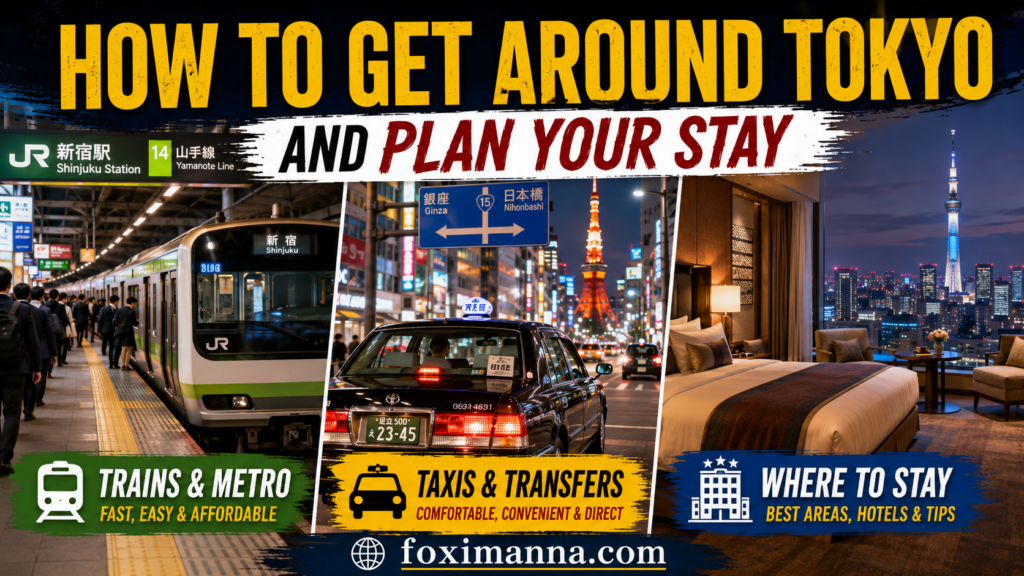
How To Get Around Tokyo And Plan Your Stay
Tokyo’s transport system looks intimidating but becomes manageable once you understand a few basic principles.
The city is served by JR railway lines, Tokyo Metro, Toei Subway, private railways, buses, taxis and local transport systems. These networks are operated by different companies, but rechargeable IC cards simplify the experience.
Welcome Suica can be used for rail and bus journeys as well as purchases in participating shops. The physical visitor card is valid for 28 days, while JR East also operates a mobile option for compatible devices.
Instead of calculating individual fares, tap the card at the station gate when entering and leaving. The correct fare is deducted automatically.
The JR Yamanote Line is particularly useful for visitors. It loops around major areas including Tokyo Station, Ueno, Akihabara, Shinjuku, Shibuya and other important districts. However, it is not always the fastest route, so use a reliable navigation application to compare JR, subway and private railway options.
Navigation apps may tell you the platform, departure time, transfer station, exit number and recommended train carriage. Follow this information closely. Choosing the correct exit can save a long walk, particularly at enormous stations such as Shinjuku.
Allow extra time for your first few journeys. A five-minute transfer on a map may involve escalators, underground passages and several levels.
Public transport etiquette is important.
Queue behind the platform markings and allow passengers to leave before boarding. Keep conversations quiet, avoid blocking doors and place large bags where they do not inconvenience other travellers. Priority seats should be left available for passengers who need them.
Rush hour can be extremely crowded. Travellers with luggage, children or mobility requirements may find journeys easier between approximately 10 am and 4 pm, although crowd levels vary by line and district.
Taxis are more expensive than trains but can be useful when travelling with luggage, returning late at night or moving between places that require inconvenient transfers. Taxi doors usually open automatically, so allow the driver to operate them.
Tokyo has two major international airports.
Haneda Airport is closer to central Tokyo and is directly connected to the Keikyu Line and Tokyo Monorail.
Narita Airport is farther away but offers several rail and bus choices. Official airport information lists JR services, the Keisei network and the Narita Sky Access line, while direct buses connect the airport with areas including Tokyo Station, Ginza, Shibuya and Ikebukuro.
Choose accommodation according to your itinerary rather than searching only for the cheapest room.
Shibuya is suitable for nightlife, shopping and first-time visitors who want to be surrounded by activity. Shinjuku offers outstanding transport connections and a huge selection of restaurants and hotels. Ginza is more polished and convenient for Tokyo Station, while Asakusa provides a traditional atmosphere and access to eastern Tokyo.
Ueno can offer better-value accommodation with convenient connections to Narita Airport. Akihabara suits gaming and anime enthusiasts, while Roppongi attracts travellers interested in contemporary art, nightlife and international restaurants.
Staying in two different districts can improve a longer trip. Three nights in Shibuya followed by three nights in Asakusa, for example, can make Tokyo feel like two separate holidays while reducing repeated cross-city journeys.
Hotel rooms are often smaller than visitors from Britain or North America expect. Read the room dimensions before booking rather than relying only on photographs. A difference of several square metres can significantly affect comfort when travelling with large luggage.
Tokyo works well as a five-to-seven-day destination.
Three days can cover major highlights, but the pace will be demanding. Five days allows time for Shibuya, Shinjuku, Asakusa, Ueno, Ginza, Akihabara and Tokyo Bay. Seven days provides space for quieter neighbourhoods or a day trip.
Tokyo’s official tourism guide currently offers both three-day and five-day itinerary suggestions, reflecting how easily the city can be adapted to different trip lengths.
British passport holders visiting for tourism can currently receive permission to stay for up to 90 days without applying for a visa in advance, but entry conditions can change. Check the latest UK government and Japanese immigration guidance before booking.
Travel insurance is strongly recommended. Japan experiences earthquakes, typhoons, extreme heat and occasional transport disruption. The UK government’s Japan travel advice was updated in July 2026 with additional information concerning extreme heat, underlining the importance of checking conditions before travelling.
Planning matters in Tokyo, but do not schedule every minute. Some of the city’s best experiences come from entering an alley, following a local queue or discovering a peaceful shrine between two busy attractions.
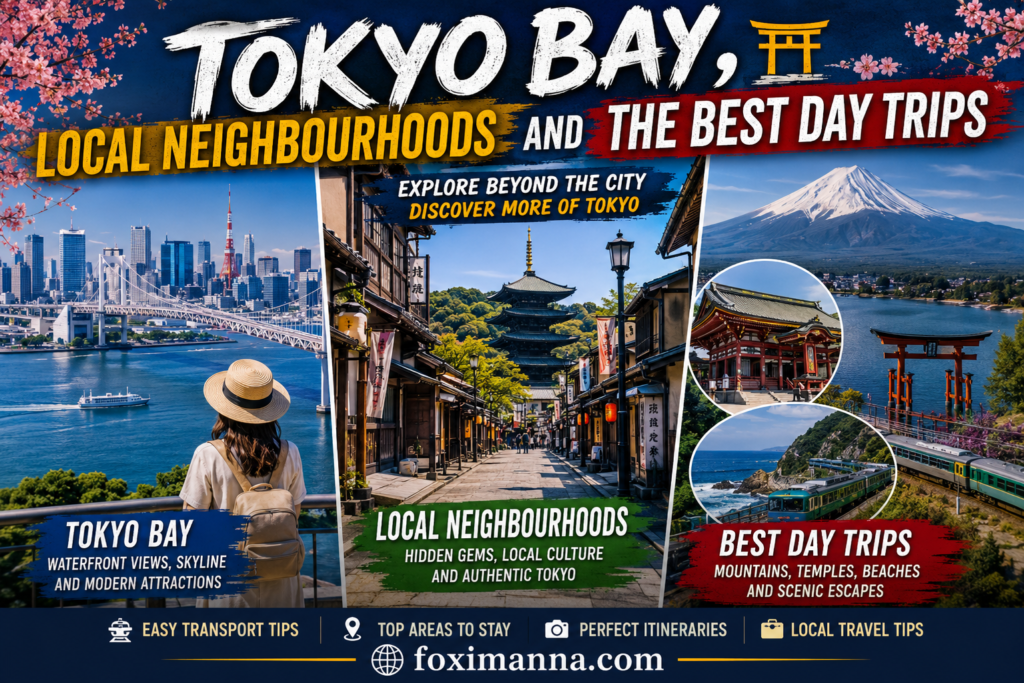
Tokyo Bay Local Neighbourhoods And The Best Day Trips
Central Tokyo receives most of the attention, but the city becomes even more interesting when you move towards its waterfront and residential edges.
Odaiba sits on artificial islands in Tokyo Bay and feels deliberately futuristic. The journey on the Yurikamome Line provides elevated views of roads, buildings, water and Rainbow Bridge before reaching shopping centres and entertainment attractions.
The waterfront includes promenades, views across the bay, the Fuji TV building and a replica of the Statue of Liberty. A large Gundam figure reflects the area’s connection with Japanese popular culture, while spacious walkways make Odaiba easier to explore than denser districts such as Shibuya.
Tokyo’s international cruise terminal is also located in the Odaiba area and is served by the Yurikamome and Rinkai lines.
Families can spend much of a day around Tokyo Bay, although some attractions and shopping centres are spread far apart. Check walking distances rather than assuming neighbouring buildings are close.
Toyosu lies nearby and can be combined with Odaiba. A possible itinerary begins with an early market visit, continues through teamLab Planets and ends with sunset views around the bay.
Local neighbourhoods reveal another side of Tokyo.
Travel beyond the principal tourist districts and the city becomes quieter. Apartment buildings, schools, small restaurants, supermarkets and neighbourhood temples replace giant digital screens. Residents cycle to local shops, children play sport and compact cars fill small parking areas.
These outer areas help visitors understand how people actually live within the wider Tokyo region.
Homes may contain traditional features such as tatami rooms or a kotatsu, a low table with a heater beneath it. Newer apartments tend to maximise limited space through compact kitchens, separate storage and carefully designed bathrooms.
Convenience remains central to daily life. Local railway stations are often surrounded by supermarkets, cafés, clinics and shops. Even suburban neighbourhoods can offer bowling centres, gaming areas and excellent public transport.
Visitors interested in onsen bathing can find hot-spring facilities within and beyond Tokyo. Most require guests to wash thoroughly before entering communal baths, and swimwear is usually not permitted. Tattoo restrictions vary, so check individual rules before visiting.
When you are ready to leave the city for a day, Mount Fuji is the most iconic option.
The Fuji Five Lakes region provides several celebrated viewpoints. Arakurayama Sengen Park offers the famous composition of Mount Fuji behind a five-storey pagoda, while Lake Kawaguchi provides lakeside scenery and seasonal foliage.
From central Tokyo, the Fuji area can be reached by railway or highway bus. Official Tokyo tourism information estimates journeys of around two hours from Tokyo Station or Shibuya to the Five Lakes region by bus, depending on traffic and destination.
Clear visibility is never guaranteed. Mount Fuji can disappear behind cloud even on otherwise pleasant days. Check forecasts and live cameras before travelling, and consider keeping the day trip flexible.
Autumn is particularly beautiful, while colder months often provide clearer mountain views. Spring brings blossoms, and summer attracts people during the official climbing season.
Nikko offers a different type of escape.
Located north of Tokyo, Nikko combines ornate religious architecture, mountain scenery, waterfalls and forest. Toshogu Shrine forms part of a UNESCO World Heritage complex associated with Tokugawa Ieyasu.
Kegon Falls and Lake Chuzenji can be added to a longer itinerary, although transport between the station, shrine area and mountain attractions requires planning. Tokyo’s official guide estimates approximately two hours from Asakusa to Tobu-Nikko by limited express train.
Hakone is another popular option for travellers interested in hot springs, mountain landscapes and possible views of Mount Fuji. The classic route includes Lake Ashi, the ropeway and the volcanic landscape around Owakudani.
Kamakura, Yokohama and Mount Takao are also practical additions, depending on your interests. Kamakura offers temples and the Great Buddha, Yokohama provides a waterfront city experience and Mount Takao gives travellers an accessible walking destination west of central Tokyo.
The official Tokyo tourism guide highlights the Fuji Five Lakes, Kamakura, Nikko and other surrounding areas as some of the capital’s leading excursions.
However, do not rush to leave Tokyo too quickly.
The capital contains enough variety to fill several weeks. One journey may focus on temples and museums, while another could revolve around food, fashion, cars, technology or family attractions. Even returning to the same district at a different time of day can create a new experience.
Shibuya before breakfast feels different from Shibuya at midnight. Asakusa is peaceful at sunrise and crowded by lunch. Ginza becomes a pedestrian promenade on selected afternoons, while Shinjuku transforms when its signs illuminate the streets.
Tokyo gradually reveals itself through repetition.
It may not immediately overwhelm you with one monumental skyline or a single historic centre. Instead, the city grows more impressive each time you notice how carefully everything connects.
The trains, temples, convenience stores, gardens, restaurants, towers, residential streets and social customs form a city that should not work as smoothly as it does. Yet millions of people move through it every day with remarkable order.
That is why Tokyo can feel like another planet.
It is not because the city is disconnected from the human world. It is because Tokyo shows how complex urban life can become when technology, tradition, organisation and imagination are allowed to develop together.
Visit for the neon lights and famous landmarks, but pay attention to the quieter moments as well. Watch people queue before a train. Eat noodles at a small counter. Walk through a shrine forest. Explore a suburban shopping street. Take a river boat towards the bay.
Those are the experiences that turn Tokyo from a spectacular destination into an unforgettable one.
Disclaimer
The information provided in this article is for general informational and educational purposes only. While every effort has been made to ensure the accuracy of the information at the time of writing, travel conditions, entry requirements, opening hours, ticket prices, local regulations, and accessibility may change without notice.
Readers are encouraged to verify all travel information with official tourism boards, government agencies, airlines, accommodation providers, and local authorities before making travel plans or bookings.
The destinations featured in this article are based on their historical, cultural, natural, and tourism significance. The opinions expressed are for informational purposes only and should not be considered professional travel, legal, health, safety, or financial advice.
FoxiManna.com and its authors are not responsible for any losses, injuries, inconveniences, travel disruptions, or damages that may result from the use of information contained in this article. Travelers are responsible for conducting their own research and making informed decisions based on their individual circumstances.
By using this website and reading this article, you agree that any reliance on the information provided is at your own risk.